Pakistan Senate Resolution Reflects Tensions Over India-Israel Relations
Synopsis
The recent resolution by the Pakistan Senate condemning Israel’s alliances with India reveals Islamabad's growing unease. The strengthening ties between India and Israel, particularly in defense, have raised concerns in Pakistan, highlighting the shifting geopolitical landscape in West Asia.
Key Takeaways
Pakistan's Senate resolution reflects anxiety over the India-Israel alliance.
India's defense ties with Israel are growing stronger.
Recent MoU allows for co-development of weapon systems in India.
Criticism from Pakistan highlights its hypocrisy regarding support for terrorist organizations.
Geopolitical shifts in West Asia are causing concern for Pakistan.
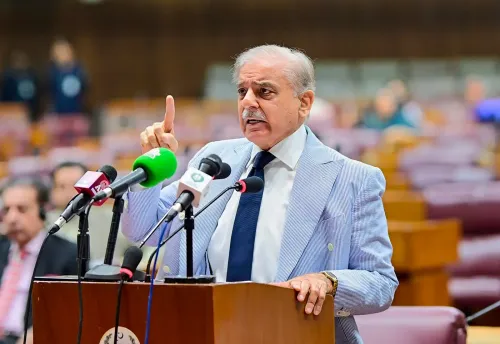
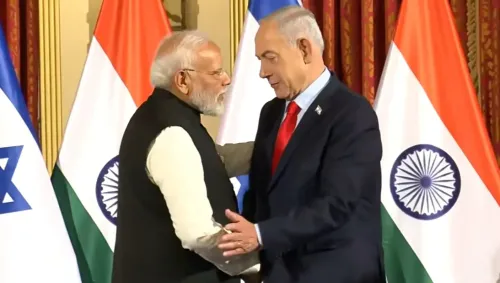
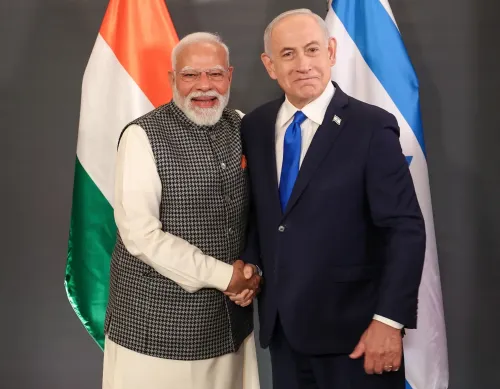
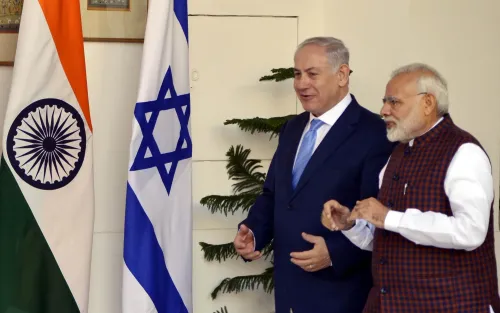
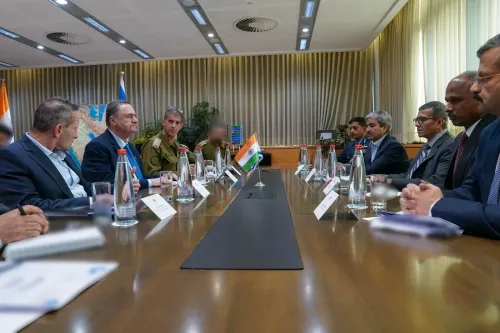
New Delhi, Feb 26 (NationPress) A resolution by the Senate of Pakistan denouncing Israeli Prime Minister Benjamin Netanyahu for his comments about potential regional alliances with India and other nations reflects Islamabad's evident unease. Prime Minister Narendra Modi is currently on a two-day visit to Israel, concentrating on enhancing bilateral relations in defense, trade, and security.
During this visit, India and Israel formalized a security memorandum of understanding (MoU) aimed at co-developing weapon systems within India.
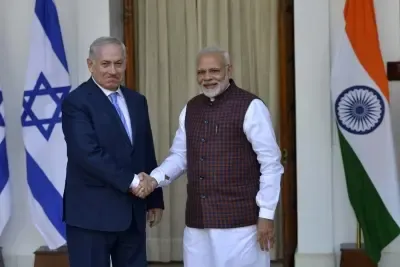
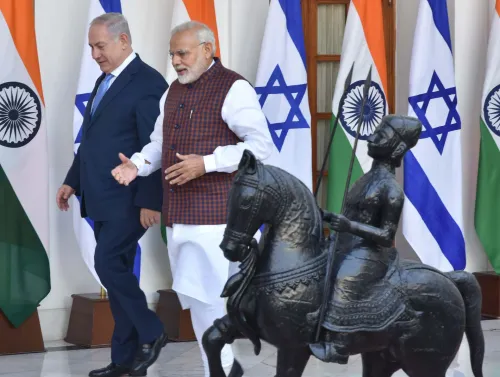
The relationship between India and Israel was elevated to a strategic partnership during Modi's inaugural visit to the nation in July 2017.
This recent trip has further solidified the bond between the two countries.
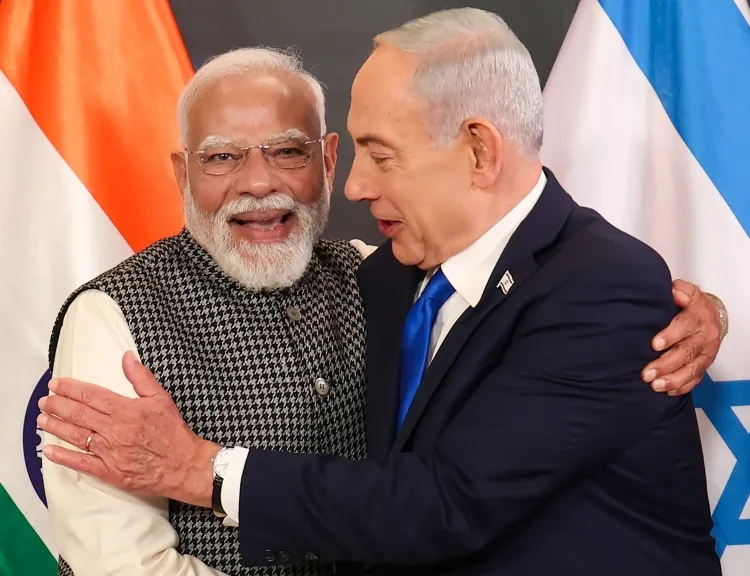
The mutual trust between Modi and Netanyahu has significantly bolstered the connection between their nations.
Analysts suggest that Pakistan has valid reasons to feel threatened by these developments.
On June 17, 1999, amid the Kargil War, the Indian Air Force employed its Mirage-2000 jets to target infiltrators from Pakistan in the Drass and Batalik sectors.
The Israeli Litening pods were utilized on the Indian Mirage aircraft to engage targets using laser-guided munitions.
The robustness of the defense collaboration between India and Israel was also showcased during both 'Operation Bandar' in Balakot and 'Operation Sindoor'.
In these operations, India deployed Israeli loitering munitions, laser-guided bombs, and precision missiles to dismantle terror camps deep within Pakistan.
Since the days of the Kargil War, India has been using Israeli drones, including the Heron-TO and Searcher Mark 11.
The recent MoU signed for collaborative weapon development in India has exacerbated Pakistan's anxieties.
Observers of Pakistan's politics assert that the rhetoric leading to the resolution against Netanyahu was fueled by this alliance.
The resolution branded the alignment of India, Israel, and other nations as a menace to regional peace and broader global stability.
Israel has faced accusations of creating blocs intended to isolate Muslim-majority nations.
Discussions surrounding the India-Israel alliance have dominated Pakistani media, with prime-time debates scrutinizing the partnership.
Notable figures, such as Chairman of the Pak-China Institute Mushahid Hussain Syed and former diplomat Maleeha Lodhi, voiced their disapproval of the alliance.
They contend that this partnership is designed to undermine China and Pakistan.
Furthermore, they assert that the India-Israel alliance is fundamentally anti-Muslim and anti-Pakistan.
An official highlighted Pakistan's duplicity, noting that while it denounces the India-Israel strategic partnership, it simultaneously supports terrorist organizations like Hamas.
For the past two years, the Pakistani establishment has been backing Hamas, while also promoting the Muslim Brotherhood.
This support is perceived as a strategy to bolster terror factions such as Jaish-e-Mohammad and Lashkar-e-Tayyiba.
A report from the Afghan Diaspora Network indicated that this trend poses risks of ideological spillover and proxy conflicts in the already volatile regions of South Asia and West Asia.
Another official remarked that this reality underscores Pakistan's hypocrisy. While India fosters defense ties with Israel and other nations like Russia, it has not employed these capabilities as aggressively.
The focus of India's defense partnerships is to safeguard its national security in a region that includes Pakistan, the official stated.
Conversely, Pakistan has utilized its defense alliances to take on an aggressor's role.
Another official noted that the warm reception given to Modi in Israel and the agreements signed have alarmed Pakistan, as it fears larger geopolitical shifts in West Asia.
Experts assert that while Pakistan is discontented with the India-Israel strategic alignment, its primary concern lies in Israel's emergence as India's principal defense supplier.
India has consistently maintained that its relationship with Israel is rooted in national security and mutual benefit, and is not aimed at any specific country, as reiterated by New Delhi.
Point of View
The resolution passed by the Pakistan Senate illustrates a defensive stance against the evolving India-Israel relationship. It reflects broader geopolitical anxieties in South Asia. The focus should remain on fostering dialogue to ensure regional stability and peace.
NationPress
6 Oct 2026
Frequently Asked Questions
What was the purpose of the Pakistan Senate's resolution?
The resolution aimed to condemn Israeli Prime Minister Netanyahu's remarks about forming alliances with India, signaling Pakistan's concerns about regional geopolitical shifts.
How have India and Israel's relations evolved?
India and Israel's relations have deepened into a strategic partnership, especially following PM Modi's visit in July 2017, focusing on defense and security cooperation.
What are the implications of the India-Israel defense MoU?
The defense MoU allows India and Israel to co-develop weapon systems, which has raised concerns in Pakistan regarding regional security dynamics.
What is Pakistan's stance on the India-Israel partnership?
Pakistan views the India-Israel partnership as a threat to regional peace and has criticized it while also supporting groups like Hamas, highlighting a perceived hypocrisy.
Why is there concern over Israel's defense ties with India?
There is concern because Israel is becoming a key defense supplier for India, which could shift the balance of power in the region and impact Pakistan's national security strategy.