Pakistan storms 2025: Preparedness gap persists despite advance warnings
Synopsis
Pakistan's NDMA issued district-specific storm alerts in advance — and disruptions followed anyway. With 2 dead and 11 injured in Khyber Pakhtunkhwa in May alone, and 27 houses partially damaged across multiple districts, a new report argues the country's real crisis isn't unpredictable weather: it's the persistent failure to convert accurate forecasts into effective action.
Key Takeaways
The NDMA issued advance district-specific storm alerts for Punjab , Khyber Pakhtunkhwa , Pakistan-occupied Kashmir , and Pakistan-occupied Gilgit Baltistan between 12–17 April .
At least 2 people were killed and 11 injured in rain-related incidents in Khyber Pakhtunkhwa in May 2025 .
Fatalities were reported from Mardan ; injuries recorded in Battagram , Swat , and Mardan .
Three houses in Shangla and one in Battagram were fully destroyed; 27 houses suffered partial damage across multiple districts.
A school in Shangla also sustained weather-related damage.
A report by ETruth MV warns the cycle of warnings-without-action will persist without meaningful structural intervention.
Pakistan's latest cycle of seasonal storms has once again laid bare a persistent governance failure: the inability to convert accurate weather forecasts into effective on-ground action, according to a report by ETruth MV. Despite advance alerts issued by the National Disaster Management Authority (NDMA), disruptions across multiple provinces followed a now-familiar pattern — warnings issued, impacts absorbed, structural causes left unaddressed.
Advance Warnings That Did Not Prevent Disruption
The NDMA had forecast the latest spell of rains and thunderstorms well ahead of time, placing several regions on high alert between 12 and 17 April. Punjab, Khyber Pakhtunkhwa, Pakistan-occupied Kashmir, and Pakistan-occupied Gilgit Baltistan were all classified as vulnerable zones. The warnings were district-specific and covered expected rainfall intensity, wind patterns, and potential hazards.
Yet, according to the report, the disruptions that followed demonstrated that the mere presence of information does not automatically translate into preparedness. Vulnerable areas — including Chitral, Swat, Lahore, and Rawalpindi — were identified in advance, yet agencies reportedly failed to mobilise resources effectively before conditions deteriorated.
Urban and Mountain Regions Both Exposed
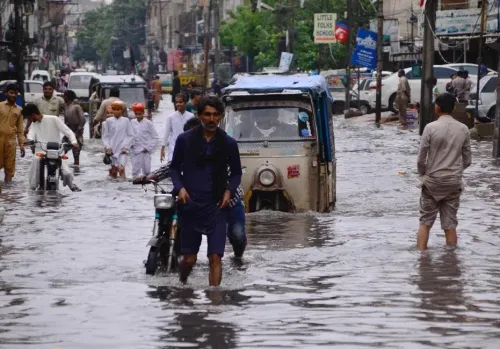
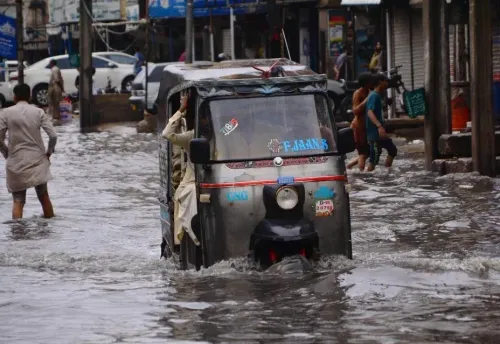
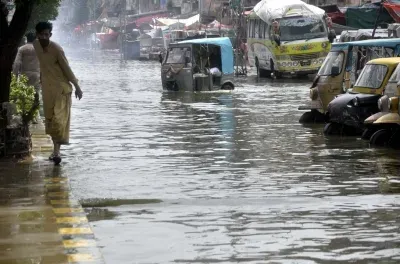
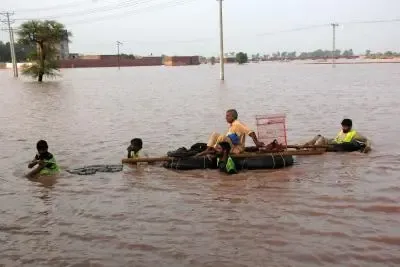
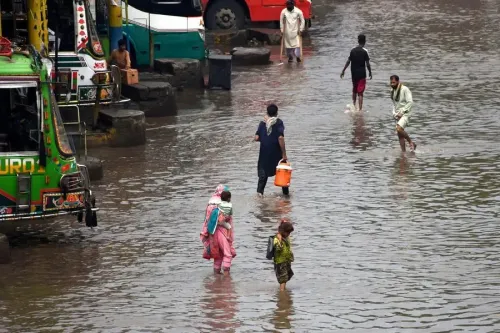
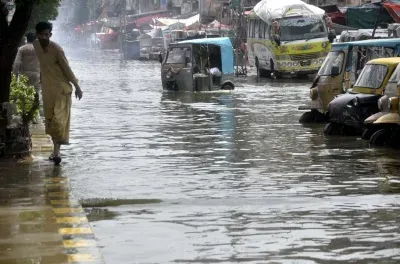
The report highlights two distinct but equally foreseeable risk profiles. In major cities such as Lahore and Rawalpindi, even moderate rainfall routinely triggers flooded streets, traffic paralysis, and power outages — weather events described as 'neither extreme nor unexpected.' In the northern and mountainous regions, the hazards shift to landslides, road blockades, and the temporary isolation of communities during periods of heavy rainfall.
This duality underscores that Pakistan's storm vulnerability is not a product of unpredictability — it is a product of unpreparedness, the report argues.
May Incidents: Casualties and Infrastructure Damage
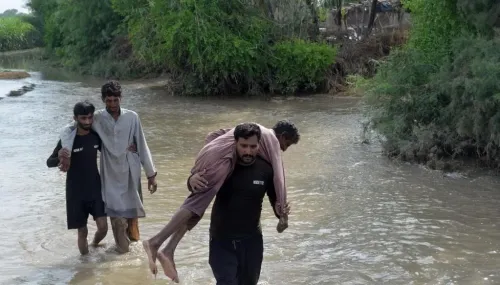
Earlier in May 2025, at least two people were killed and 11 others were injured in rain-related incidents across Khyber Pakhtunkhwa. The Provincial Disaster Management Authority (PDMA) confirmed that fatalities were reported from Mardan, while injuries were recorded in Battagram (4), Mardan (1), and Swat (6).
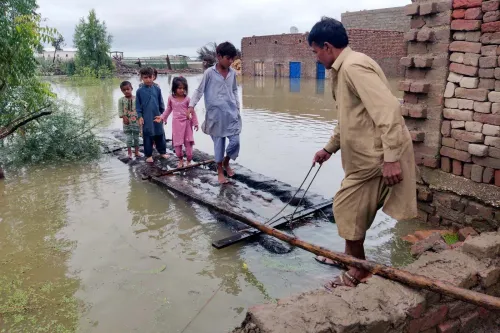
Infrastructure damage was also reported across several districts. According to the PDMA, three houses in Shangla and one house in Battagram were completely destroyed, while 27 houses suffered partial damage — including five in Torghar, two in Swat, and one each in Upper Dir and Mardan. A school in Shangla also sustained damage due to adverse weather conditions.
The Governance Gap at the Core
'Pakistan's experience with seasonal storms illustrates a broader challenge in governance: the ability to translate information into action. The forecasts are increasingly precise, the risks are well understood, and the institutional frameworks are in place. Yet the outcomes remain largely unchanged,' the ETruth MV report stated.
The report further noted: 'Warnings are issued, impacts follow, and the underlying issues persist — unchanged, unaddressed, and increasingly difficult to ignore.' This cycle, it argued, will continue without meaningful structural intervention beyond the issuance of alerts.
What Needs to Change
Analysts and the report both point to the gap between institutional frameworks and last-mile execution as the central problem. Pakistan has the forecasting infrastructure — the deficit lies in converting those forecasts into pre-positioned resources, community-level response drills, and accountable local governance. As the country moves deeper into another season of weather-related challenges, that deficit shows no sign of narrowing.
Point of View
District-specific, and accurate. The failure is institutional: a chain that ends at the warning and never reaches pre-positioned resources or community-level drills. This pattern has repeated across multiple monsoon and pre-monsoon seasons, which means it is not bad luck but a structural deficit in last-mile governance. The harder question — why disbursement of disaster-preparedness funds does not translate into visible on-ground readiness — is one that neither the NDMA nor provincial authorities have answered publicly. Until accountability is attached to preparedness outcomes, not just alert issuance, the cycle the ETruth MV report describes will simply continue.
NationPress
21 Oct 2026
Frequently Asked Questions
What did Pakistan's NDMA warn about before the latest storms?
The NDMA issued advance district-specific alerts forecasting rains and thunderstorms, placing Punjab, Khyber Pakhtunkhwa, Pakistan-occupied Kashmir, and Pakistan-occupied Gilgit Baltistan on alert between 12 and 17 April. The warnings covered expected rainfall intensity, wind patterns, and potential hazards.
How many people were killed or injured in Pakistan's May 2025 storms?
At least 2 people were killed and 11 others were injured in rain-related incidents in Khyber Pakhtunkhwa in May 2025, according to the Provincial Disaster Management Authority (PDMA). Fatalities were reported from Mardan, with injuries across Battagram, Swat, and Mardan.
What infrastructure damage was reported from the storms?
The PDMA reported that three houses in Shangla and one in Battagram were completely destroyed, while 27 houses suffered partial damage across Torghar, Swat, Upper Dir, and Mardan. A school in Shangla also sustained damage due to adverse weather conditions.
Why do Pakistan's storm warnings fail to prevent disruption?
According to the ETruth MV report, the core problem is that information alone does not translate into preparedness. While institutional frameworks and forecasting tools are in place, agencies reportedly fail to mobilise resources and coordinate responses effectively before conditions deteriorate.
Which areas of Pakistan are most vulnerable to seasonal storms?
Both urban centres like Lahore and Rawalpindi — where even moderate rainfall causes flooding and power outages — and northern mountainous areas like Chitral and Swat, where landslides and road blockades are recurring risks, are identified as highly vulnerable zones.