Khyber Pakhtunkhwa storms kill 7, injure 33 in 24 hours
Synopsis
Seven people are dead and 33 injured in Khyber Pakhtunkhwa after storms on 14 June — the second deadly weather event in the province within days. Warnings were issued in advance, yet deaths followed anyway, underlining a documented gap between Pakistan's improving forecast systems and its on-ground disaster response.
Key Takeaways
At least 7 people were killed and 33 injured in Khyber Pakhtunkhwa over a 24-hour period ending 14 June .
Fatalities — comprising 4 men, 1 woman, and 2 children — were reported from Bannu , Shangla , and Mansehra districts.
Deaths occurred when walls and rooftops collapsed due to strong winds and heavy rain, per the PDMA damage assessment.
A separate storm spell earlier in June had already killed at least 2 and injured 31 in the same province.
The Pakistan Meteorological Department has forecast continued rainfall in upper KPK and parts of Pakistan-occupied Gilgit-Baltistan and Pakistan-occupied Kashmir.
The NDMA had issued advance, district-specific alerts, but analysts note a persistent gap between early warnings and effective ground response.
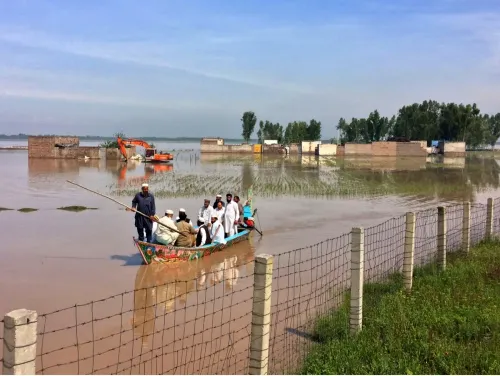
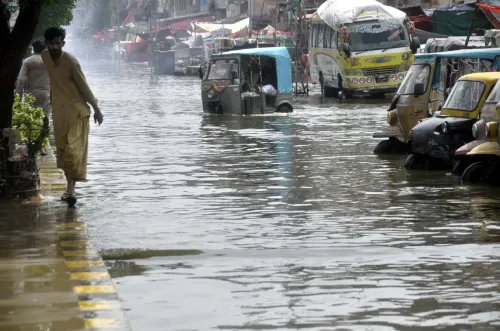
At least seven people were killed and 33 others injured across several districts of Khyber Pakhtunkhwa (KPK), Pakistan, over a 24-hour period ending Sunday, 14 June, after powerful winds, lightning strikes, and heavy rainfall battered the province. The Provincial Disaster Management Authority (PDMA) confirmed the toll in an official statement.
Who Was Killed and Where
According to the PDMA's damage assessment report, the deceased include four men, one woman, and two children. Fatalities were recorded in the districts of Bannu, Shangla, and Mansehra. In each case, deaths occurred when walls and rooftops of residential structures collapsed under the force of strong winds and sustained rainfall.
A Recurring Pattern This Month
The latest deaths come within days of a separate weather event earlier in June, when at least two people were killed and 31 others injured in rain and wind-related incidents across the same province. Cumulatively, the back-to-back spells have claimed at least nine lives and left over 60 people injured in Khyber Pakhtunkhwa this month alone.
More Rain Forecast for the Region
The Pakistan Meteorological Department has warned of continued rainfall in upper Khyber Pakhtunkhwa and parts of Pakistan-occupied Gilgit-Baltistan and Pakistan-occupied Kashmir through Sunday. The rest of Pakistan is expected to remain hot and dry, according to the department's advisory.
Warning Systems in Place, Response Lagging
The National Disaster Management Authority (NDMA) had issued advance warnings ahead of this storm cycle, placing Punjab, Khyber Pakhtunkhwa, Pakistan-occupied Kashmir, and Pakistan-occupied Gilgit-Baltistan on alert between April 12 and 17. The alerts were district-specific and issued in time. Vulnerable areas including Chitral, Swat, Lahore, and Rawalpindi were identified well in advance.
Yet the disruptions that followed exposed a persistent gap between early warning and effective action. As one analysis noted, 'Pakistan's experience with seasonal storms illustrates a broader challenge in governance: the ability to translate information into action. The forecasts are increasingly precise, the risks are well understood, and the institutional frameworks are in place. Yet the outcomes remain largely unchanged.' The same report observed that 'warnings are issued, impacts follow, and the underlying issues persist — unchanged, unaddressed, and increasingly difficult to ignore.'
With another active weather spell underway, authorities in Khyber Pakhtunkhwa face renewed pressure to move beyond alerts and deploy timely, on-ground relief.
Point of View
And the meteorological data was actionable. The recurring death toll points instead to a last-mile failure: alerts are not converting into pre-positioned resources, reinforced shelters, or evacuation readiness in high-risk districts like Chitral and Swat. Two lethal storm events within days in the same province, both predicted, both deadly, suggest that institutional frameworks exist on paper but not in practice. Until disbursement of relief and structural reinforcement of vulnerable housing is treated as a pre-monsoon obligation rather than a post-disaster scramble, the cycle will repeat every season.
NationPress
14 Sept 2026
Frequently Asked Questions
How many people were killed in the Khyber Pakhtunkhwa storms on 14 June?
At least seven people were killed and 33 others were injured across Khyber Pakhtunkhwa in a 24-hour period ending 14 June, according to the Provincial Disaster Management Authority (PDMA). The deceased included four men, one woman, and two children from the districts of Bannu, Shangla, and Mansehra.
What caused the deaths in Khyber Pakhtunkhwa?
The fatalities occurred when walls and rooftops of residential buildings collapsed due to strong winds and heavy rainfall, according to the PDMA's damage assessment report. Lightning strikes were also reported as part of the storm system that hit several parts of the province.
Is more rain expected in Pakistan after the 14 June storms?
Yes. The Pakistan Meteorological Department has forecast continued rainfall in upper Khyber Pakhtunkhwa and parts of Pakistan-occupied Gilgit-Baltistan and Pakistan-occupied Kashmir. The rest of Pakistan is expected to remain hot and dry.
Were authorities warned about these storms in advance?
Yes. The National Disaster Management Authority (NDMA) had issued advance, district-specific alerts placing Punjab, Khyber Pakhtunkhwa, Pakistan-occupied Kashmir, and Pakistan-occupied Gilgit-Baltistan on alert. Analysts have noted, however, that timely warnings did not translate into effective on-ground preparedness or response.
How does this compare to earlier weather incidents in KPK this month?
This is the second deadly storm event in Khyber Pakhtunkhwa within a short span in June 2025. An earlier spell this month killed at least two people and injured 31 others in rain and wind-related incidents in the same province, bringing the combined June toll to at least nine dead and over 60 injured.