Khyber Pakhtunkhwa storms kill 7, injure 8 as rains batter Pakistan

Synopsis
Seven people are dead and eight injured after a windstorm and heavy rains tore through Khyber Pakhtunkhwa on 19 June — and Pakistan's NDMA had seen it coming. The disaster has reignited a familiar debate: the country's forecasting has improved, but its ability to turn warnings into action has not.
Key Takeaways
Seven people were killed and eight others injured in storms across Khyber Pakhtunkhwa on 19 June .
The worst-hit area was Paharpur city and surrounding villages in Dera Ismail Khan district , where structural collapses caused most casualties.
An additional three people were killed and four injured by lightning in Orakzai tribal district .
Power supply was disrupted across multiple areas; a government school boundary wall collapsed in Bajaur's War Mamund tehsil .
The NDMA had issued advance, district-specific storm warnings, but critics argue the warnings did not translate into effective preparedness on the ground.
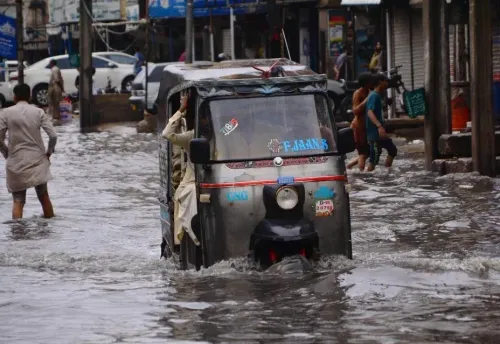
At least seven people were killed and eight others injured after heavy rains and a powerful windstorm swept through multiple districts of Pakistan's Khyber Pakhtunkhwa (KP) province on Thursday, 19 June, local media reported. The worst-affected areas included Paharpur city and surrounding villages in Dera Ismail Khan district, where structural collapses caused the bulk of the casualties.
How the Destruction Unfolded
Torrential rain and high-speed winds caused roofs and walls of several houses and shops to collapse in Paharpur and nearby villages. Rescue teams and local volunteers conducted relief operations, pulling victims from rubble and transporting the injured to hospitals, according to reports citing Pakistani daily Dawn.
Among the deceased were a man from Paharpur, a man from Chah Dyal Bagwani, and two women from Zandar village. One injured person was identified as Ahmed Ali; the identities of the remaining victims were yet to be confirmed at the time of reporting.
Scale of Damage Across the Province
The windstorm uprooted several trees across the tehsil and blew solar panels off houses and commercial buildings. In one suburban locality, a collapsed boundary wall and a damaged livestock shelter resulted in the deaths of several animals.
The electricity distribution network sustained significant damage, disrupting power supply across Paharpur and surrounding areas. Restoration work could not begin immediately due to hazardous conditions and the extent of infrastructure damage.
Separately, three people were killed and four others injured due to lightning strikes in Orakzai tribal district. A Rescue 1122 official confirmed the deaths occurred in the Sam Ferozkhel area of lower Orakzai. In Bajaur tribal district's War Mamund tehsil, the windstorm disrupted power supply and brought down the boundary wall of a government school.
A Recurring Gap Between Warning and Response
This comes amid growing concern over Pakistan's ability to convert disaster forecasts into effective on-ground action. The National Disaster Management Authority (NDMA) had issued advance warnings for the latest spell of rains and thunderstorms, placing Punjab, Khyber Pakhtunkhwa, Pakistan-occupied Kashmir, and Pakistan-occupied Gilgit Baltistan on alert between April 12 and 17. The warnings were district-specific and issued in a timely manner, yet the disruptions that followed suggest that the presence of information alone does not translate into preparedness.
Vulnerable areas — including Chitral, Swat, Lahore, and Rawalpindi — had been identified well in advance. Forecasts provided details on expected rainfall intensity, wind patterns, and potential hazards. Critics argue, however, that these opportunities are not being fully utilised. According to a report published in ETruth MV, 'Pakistan's experience with seasonal storms illustrates a broader challenge in governance: the ability to translate information into action. The forecasts are increasingly precise, the risks are well understood, and the institutional frameworks are in place. Yet the outcomes remain largely unchanged.'
Pattern of Predictable Disruption
The same report added: 'The latest spell of storms, despite being clearly anticipated, has once again exposed the gap between preparedness and response. The recurrence of disruption under predictable conditions highlights a cycle that continues without meaningful interruption. As the country moves through another season of weather-related challenges, the pattern remains consistent. Warnings are issued, impacts follow, and the underlying issues persist — unchanged, unaddressed, and increasingly difficult to ignore.'
Notably, this is not an isolated event — KP and Pakistan's tribal districts have faced repeated storm-related casualties in recent years, raising questions about the structural adequacy of disaster response infrastructure. With the monsoon season approaching, authorities face renewed pressure to move beyond issuing alerts and into sustained preparedness action.
Point of View
District-specific alerts, yet the outcomes were predictably grim. The pattern is now well-documented: warnings are issued, casualties follow, and systemic fixes are deferred. What is missing is not information but accountability — a mechanism that ties early warning to mandatory pre-positioning of rescue resources. Until that link is institutionalised, each storm season will produce the same headlines.
NationPress
21 Sept 2026
Frequently Asked Questions
How many people were killed in the Khyber Pakhtunkhwa storms on 19 June?
At least seven people were killed and eight others were injured after heavy rains and a windstorm struck multiple districts of Khyber Pakhtunkhwa on 19 June. The deaths occurred primarily in Dera Ismail Khan district, with additional fatalities from lightning in Orakzai tribal district.
Which areas were worst affected by the Pakistan storm?
Paharpur city and surrounding villages in Dera Ismail Khan district bore the brunt of the windstorm, with roofs and walls collapsing on residents. Orakzai tribal district and Bajaur's War Mamund tehsil also reported deaths, injuries, and infrastructure damage.
Did Pakistan's authorities issue any warning before the storm?
Yes, the National Disaster Management Authority (NDMA) had issued advance, district-specific warnings for the rain and thunderstorm spell, placing Khyber Pakhtunkhwa, Punjab, Pakistan-occupied Kashmir, and Pakistan-occupied Gilgit Baltistan on alert. Critics argue the warnings were not converted into effective preparedness or pre-positioned rescue resources.
What infrastructure damage did the storm cause?
The windstorm uprooted trees, blew solar panels off buildings, disrupted the electricity distribution network across Paharpur and nearby areas, and collapsed the boundary wall of a government school in Bajaur's War Mamund tehsil. Livestock shelters also collapsed, killing several animals.
Is this part of a broader pattern of storm-related disasters in Pakistan?
Yes, Khyber Pakhtunkhwa and Pakistan's tribal districts have faced repeated storm casualties in recent years. Analysts note that while forecasting has improved, the gap between issuing warnings and executing effective disaster response remains a persistent structural problem, according to a report in ETruth MV.