Pakistan Strikes Kill Afghan Civilians in Kunar, 27,000 Families Displaced
Synopsis
Pakistani airstrikes have damaged homes in Afghanistan's Kunar province, with attacks starting at midnight and continuing into Wednesday morning. Over 27,000 Afghan families across nine provinces have been displaced, and 136,000 people face food shortages — yet no ceasefire is in sight as Taliban-Pakistan tensions hit a two-month high.
Key Takeaways
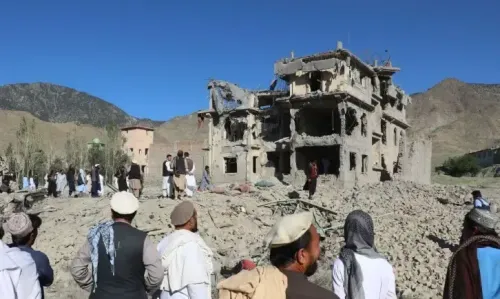
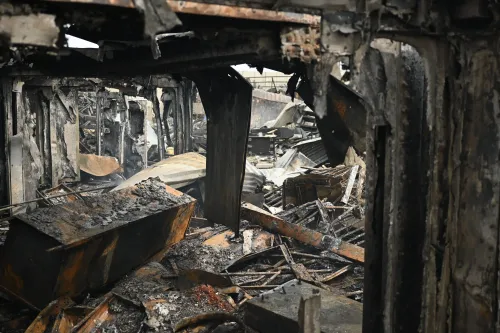
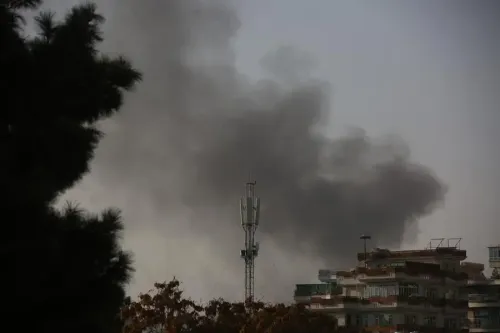
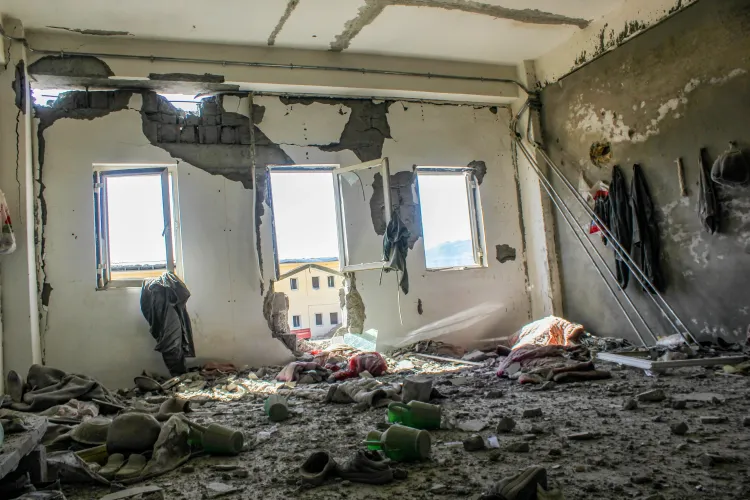
Pakistani forces struck residential areas in Sarkano district, Kunar province on April 23, 2025 , with attacks starting around midnight and damaging multiple homes.
Asadabad was also targeted, with video footage confirming at least one residential house was heavily damaged by Pakistani strikes.
More than 27,000 Afghan families across nine provinces have been displaced by Pakistan's military attacks, according to Economy Minister Qari Mohammad Hanif (statement dated April 2, 2025 ).
The ICRC reports 136,000 people in 17,000 households in Nooristan province are facing severe food shortages due to the ongoing border conflict.
On April 13 , Pakistani forces conducted rocket strikes in the Shali Dara area of Khas Kunar district , marking a pattern of repeated cross-border attacks.
Tensions between the Taliban and Pakistan have escalated sharply over the past two months , with Kunar province emerging as the primary conflict flashpoint.
Kunar, Afghanistan, April 23: Fresh Pakistani airstrikes and artillery fire have damaged multiple residential homes in the Sarkano district of Afghanistan's Kunar province, with attacks beginning around midnight and continuing into Wednesday morning, according to local media reports. The cross-border assault marks yet another escalation in a rapidly deteriorating conflict between Pakistan's military and Taliban-governed Afghanistan that has already displaced tens of thousands of civilians.
What Happened in Sarkano and Asadabad
Residents of Sarkano district reported hearing explosions across multiple areas throughout the night, with the strikes extending into the early hours of Wednesday, April 23. Afghanistan's Khaama Press reported that areas in Asadabad were also targeted, with video footage confirming at least one residential structure had been heavily damaged.
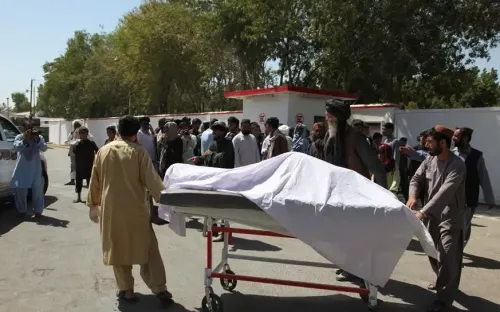
The pattern of strikes — targeting civilian-populated districts rather than isolated border outposts — has drawn sharp condemnation from Taliban authorities, who have accused Pakistani forces of deliberately violating Afghanistan's sovereignty. Eyewitness accounts describe families fleeing in the middle of the night with minimal belongings.
Scale of Displacement and Humanitarian Crisis
The humanitarian toll of the ongoing conflict is staggering. Afghanistan's Minister of Economy, Qari Mohammad Hanif, stated on April 2 that more than 27,000 Afghan families across nine provinces have been forcibly displaced due to attacks by Pakistan's military. He condemned the use of heavy weaponry in civilian zones as a serious humanitarian violation and contrary to Islamic principles.
The crisis extends beyond Kunar. According to an ICRC press release, severe food shortages are affecting 136,000 people — representing 17,000 households — in Nooristan province, directly linked to weeks of border clashes between Taliban forces and Pakistan.
On April 13, Pakistani forces conducted rocket strikes in the Shali Dara area of Khas Kunar district, further intensifying the crisis in this already volatile region.
Two Months of Escalating Pakistan-Taliban Tensions
The current wave of violence did not emerge in isolation. Over the past two months, tensions between the Taliban administration and Islamabad have intensified significantly, with repeated exchanges of fire reported along disputed border zones. Kunar province has emerged as the primary flashpoint, given its geographic proximity to Pakistan's Khyber Pakhtunkhwa region and the historically porous Durand Line — a colonial-era boundary that Afghanistan has never formally recognized.
Pakistan's military has justified its operations as counter-terrorism measures targeting Tehrik-i-Taliban Pakistan (TTP) militants allegedly sheltered on Afghan soil. The Taliban government, however, denies providing sanctuary to the TTP and frames Pakistan's strikes as unprovoked aggression against a sovereign nation.
Impact on Civilians and Daily Life
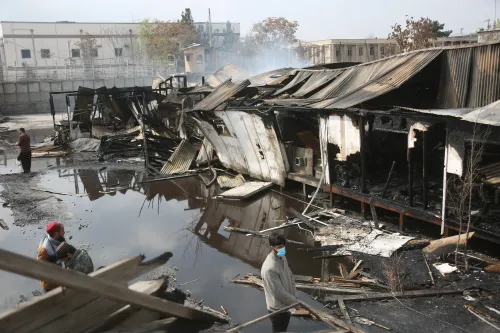
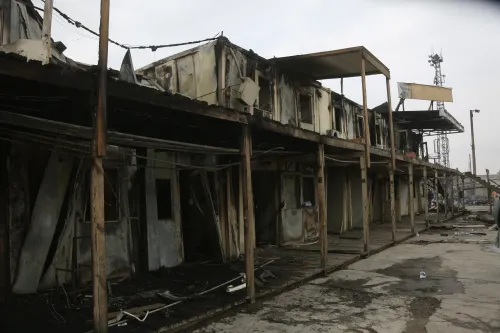
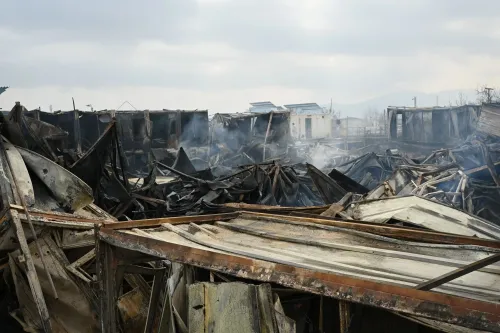
Residents of affected districts describe a collapse of normal life. Infrastructure including roads, homes, and local markets has been damaged by repeated strikes. Fear of further attacks has prompted families to abandon their homes, creating internal displacement on a scale that aid agencies warn could overwhelm already stretched humanitarian resources.
The ICRC and other international organizations have flagged the compounding effect of the conflict on food security, particularly in provinces like Nooristan, where supply chains were already fragile before the escalation began. With 136,000 people facing severe food shortages, the risk of a broader humanitarian emergency is no longer theoretical.
Geopolitical Context and What Comes Next
This conflict sits at the intersection of multiple unresolved geopolitical fault lines — the disputed Durand Line, the TTP insurgency, and Pakistan's increasingly strained relations with a Taliban government it once openly supported. Notably, Pakistan was among the first countries to advocate for international engagement with the Taliban post-August 2021, making the current military confrontation a striking reversal of that diplomatic posture.
Critics argue that Pakistan's cross-border operations, while framed as counter-insurgency, risk radicalizing Afghan communities further and deepening anti-Pakistan sentiment across eastern Afghanistan. The Taliban's consolidation of nationalist rhetoric around these strikes could also strengthen their domestic legitimacy, even as they face international isolation on human rights grounds.
With no ceasefire in sight and international mediators yet to intervene meaningfully, the situation in Kunar and surrounding provinces is expected to worsen in the coming weeks — raising urgent questions about regional stability and the international community's responsibility to protect Afghan civilians caught in this escalating conflict.
Point of View
Yet now bombs the very territory it sought to stabilize. The displacement of over 27,000 Afghan families and food shortages affecting 136,000 people are not collateral damage statistics; they are the predictable consequences of a military policy that conflates counter-terrorism with collective punishment. What mainstream coverage misses is the long-term blowback risk: every airstrike on a civilian home in Kunar is a recruitment poster for the TTP, potentially deepening the very insurgency Pakistan claims to be eliminating. India and the broader international community must recognize that a destabilized Afghanistan-Pakistan border is not a contained regional problem — it is a humanitarian and security crisis with cascading implications.
NationPress
3 Oct 2026
Frequently Asked Questions
What happened in Afghanistan's Kunar province on April 23, 2025?
Pakistani forces conducted fresh airstrikes and artillery attacks on the Sarkano district of Kunar province, with strikes beginning around midnight and continuing into Wednesday morning. Multiple residential homes were damaged, and areas in Asadabad were also targeted, according to Afghanistan's Khaama Press.
How many Afghan families have been displaced by Pakistan's military strikes?
More than 27,000 Afghan families across nine provinces have been displaced due to attacks by Pakistan's military, according to Afghanistan's Minister of Economy Qari Mohammad Hanif, who made the statement on April 2, 2025. He called the use of heavy weapons in civilian areas a serious humanitarian violation.
Why is Pakistan conducting strikes inside Afghanistan?
Pakistan justifies its cross-border operations as counter-terrorism measures targeting Tehrik-i-Taliban Pakistan (TTP) militants it claims are sheltered on Afghan soil. The Taliban government denies harboring TTP fighters and accuses Pakistan of violating Afghanistan's sovereignty.
What is the humanitarian situation in Nooristan province due to the Pakistan-Taliban conflict?
According to an ICRC press release, 136,000 people representing 17,000 households in Nooristan province are facing severe food shortages due to weeks of border clashes between Taliban forces and Pakistan. Aid agencies warn the situation could escalate into a broader humanitarian emergency.
What is the Durand Line and why does it matter in the Pakistan-Afghanistan conflict?
The Durand Line is a colonial-era boundary drawn in 1893 that serves as the official Pakistan-Afghanistan border, but Afghanistan has never formally recognized it. The disputed border is central to the current conflict, as both sides claim different territorial boundaries, making cross-border military operations a deeply sensitive sovereignty issue.