UN: Afghan-Pakistan Border Clashes Cut Schooling for 12,000 Kids
Synopsis
UN confirms Afghan-Pakistan border clashes have disrupted schooling for 12,000 children, destroying 22 schools in Kunar province. As Pakistani airstrikes and Taliban retaliation escalate, thousands of families are displaced. The crisis exposes how a bilateral military standoff is silently robbing an entire generation of Afghan children of their education.
Key Takeaways
12,000 Afghan children have had their education disrupted due to Afghanistan-Pakistan border clashes , according to the United Nations .
At least 22 schools in Kunar province have been damaged or destroyed, cutting off thousands of students from classrooms and basic educational services.
Pakistani airstrikes and artillery fire have killed dozens of Afghan civilians, with strikes in Sarkano district reported as recently as Thursday, April 24, 2025 .
The Taliban claims to have retaliated by targeting Pakistani military positions and command centres , while denying accusations of harbouring TTP militants .
Thousands of Afghan families are now displaced in temporary camps, facing shortages of food, shelter, and access to education for their children.
The crisis deepens Afghanistan's existing humanitarian emergency, which has worsened significantly since the Taliban's return to power in August 2021 .
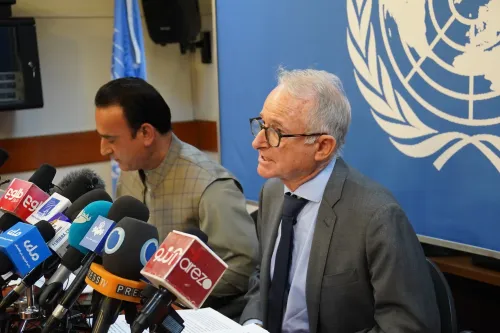
The United Nations has confirmed that ongoing military clashes between Afghanistan and Pakistan along their shared border have severely disrupted the education of approximately 12,000 Afghan children, with Kunar province bearing the heaviest toll. At least 22 schools have been damaged or destroyed, leaving thousands of students cut off from classrooms and basic learning services. The crisis, reported on Friday, April 25, 2025, marks a sharp escalation in the humanitarian fallout from the two-nation military standoff.
Scale of Educational Disruption in Kunar Province
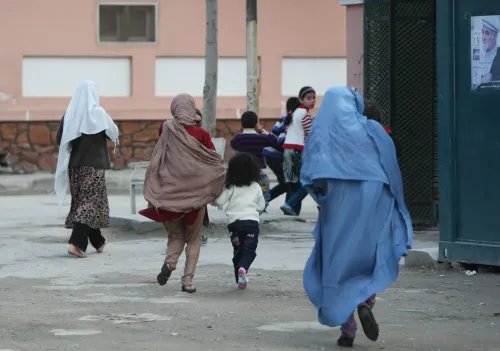
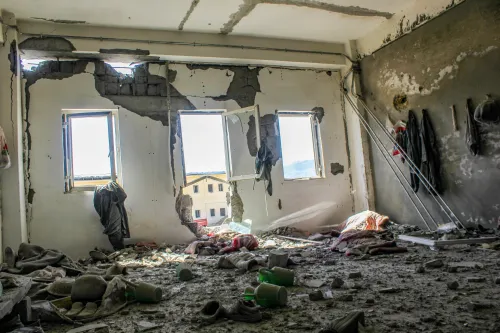
According to Afghanistan's Khaama Press, villages across Kunar province have been partially emptied as families flee Pakistani airstrikes and artillery bombardment. School buildings that once served thousands of children now lie damaged or abandoned, with local educators confirming that students who were regularly attending classes are now entirely cut off from learning opportunities.
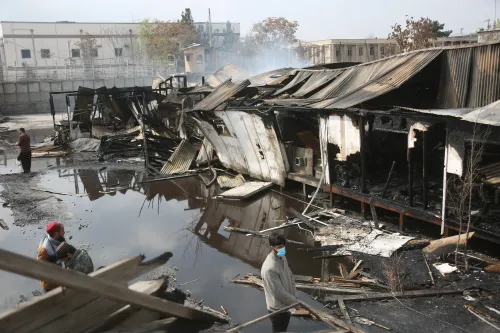
The destruction of 22 schools in a single province underscores the scale of the educational emergency. For communities already struggling with poverty and instability, the loss of schooling infrastructure represents a generational setback — one that international education experts warn could take years to reverse.
Displaced families, now sheltering in temporary camps under harsh conditions, have appealed to the international community for urgent assistance, citing acute shortages of food, shelter, and access to education for their children.
Military Escalation Between Kabul and Islamabad
Tensions between Kabul and Islamabad have escalated sharply over the past several months, with repeated exchanges of fire in border regions. Pakistani airstrikes and artillery fire have killed dozens of Afghan civilians, triggering strong condemnation from Taliban authorities.
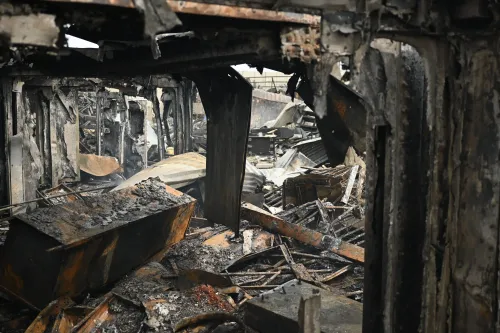
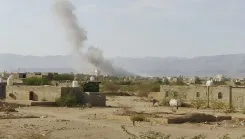
The Taliban has claimed it retaliated by targeting Pakistani military positions and command centres, though independent verification of such claims remains limited. On Thursday, local sources in Kunar reported that multiple houses in Sarkano district were damaged in Pakistani airstrikes that began around midnight and continued until Wednesday morning, with explosions heard across several parts of the district.
Separately, Pakistani forces reportedly targeted areas near Asadabad, though no casualties were confirmed in that specific incident.
Pakistan's Accusations and Taliban's Denial
Pakistan has consistently accused the Taliban of allowing militant groups — particularly the Tehreek-e-Taliban Pakistan (TTP) — to operate freely from Afghan soil and launch cross-border attacks on Pakistani security forces. These accusations have been a central flashpoint in the deteriorating bilateral relationship.
The Taliban administration has categorically denied these allegations, insisting it does not permit any group to use Afghan territory against neighbouring states. However, Islamabad has repeatedly cited TTP attacks as justification for its military operations inside Afghanistan.
This cycle of accusation and denial has made diplomatic de-escalation extremely difficult, with neither side showing meaningful signs of backing down.
Humanitarian Crisis Deepens for Afghan Civilians
Beyond the educational crisis, the military confrontation has triggered a broader humanitarian emergency. Thousands of Afghan residents have been forced to abandon their homes and relocate to temporary displacement camps, where access to basic necessities remains severely limited.
International humanitarian organisations have raised alarms about the conditions in these camps, particularly as winter temperatures in border regions can be extreme. The combination of displacement, food insecurity, and loss of schooling is creating compounding vulnerabilities for affected communities — especially children and women.
Notably, this crisis unfolds against the backdrop of Afghanistan already ranking among the world's worst humanitarian emergencies, with millions dependent on international aid following the Taliban's return to power in August 2021.
Broader Implications and What Comes Next
The Afghanistan-Pakistan border conflict is rapidly evolving from a bilateral security dispute into a full-scale humanitarian catastrophe with regional implications. If military exchanges continue at the current intensity, the number of displaced civilians and children losing access to education is expected to rise significantly in the coming weeks.
The UN's intervention in highlighting the educational disruption signals growing international pressure on both sides to exercise restraint. However, without a structured diplomatic process — potentially mediated by regional powers or international bodies — the cycle of strikes and retaliatory claims is unlikely to break on its own.
Observers note that the international community's response will be critical: sustained funding for emergency education programmes and humanitarian relief could mitigate some of the long-term damage, but political solutions remain the only durable path to stability for the 12,000 children currently denied their right to an education.
Point of View
But what the mainstream narrative consistently buries is its most devastating casualty: 12,000 children losing access to education in a country where girls were already banned from schools by the Taliban. Pakistan's justification of targeting TTP sanctuaries deserves scrutiny — military strikes that destroy 22 schools and displace thousands of civilians are not precision counter-terrorism operations, they are collective punishment. The international community's silence on this educational catastrophe, while loudly debating Taliban's governance failures, reveals a troubling double standard. If the world cannot protect Afghan children's right to learn from bombs, its commitments to Afghan human rights are little more than rhetoric.
NationPress
23 Sept 2026
Frequently Asked Questions
How many Afghan children have been affected by Afghanistan-Pakistan border clashes?
According to the United Nations, approximately 12,000 Afghan children have had their education disrupted due to border clashes between Afghanistan and Pakistan. The impact is most severe in Kunar province, where at least 22 schools have been damaged or destroyed.
Why are Pakistan and Afghanistan fighting along the border?
Pakistan accuses the Taliban of allowing the Tehreek-e-Taliban Pakistan (TTP) to operate from Afghan soil and launch attacks on Pakistani forces. The Taliban denies these allegations, and the resulting military exchanges — including Pakistani airstrikes — have escalated significantly in 2025.
Which Afghan province has been most affected by the Pakistan airstrikes?
Kunar province has suffered the worst damage, with at least 22 schools impacted or destroyed and villages partially emptied due to Pakistani airstrikes and artillery fire. The Sarkano district and areas near Asadabad have also been targeted.
What is the humanitarian situation for displaced Afghan families?
Thousands of Afghan residents have been forced to flee their homes and are now living in temporary displacement camps under harsh conditions. Displaced families report acute shortages of food, shelter, and educational access for children, and have appealed for international humanitarian assistance.
What is the TTP and why is it central to the Afghanistan-Pakistan conflict?
The Tehreek-e-Taliban Pakistan (TTP) is a militant group that has carried out numerous attacks on Pakistani security forces and is believed by Islamabad to operate from Afghan territory. Pakistan's military operations inside Afghanistan are largely justified by Islamabad as necessary to neutralise TTP threats, though the Taliban denies providing sanctuary to the group.