Is the Warning from Pakistan's Central Bank Chief a Sign that Time is Running Out?
Synopsis
As Pakistan's economic stability hangs by a thread, State Bank Governor Jameel Ahmad warns that the country's growth model is no longer viable for its vast population. With rising poverty and unemployment, is it time for urgent reforms? This report delves deep into the challenges facing Pakistan's economy.
Key Takeaways
Pakistan's growth model is deemed unsustainable.
Rising poverty levels are a critical concern.
Unemployment has reached a 21-year high.
Economic cycles are becoming shorter and weaker.
Structural issues remain unaddressed amidst stabilisation efforts.
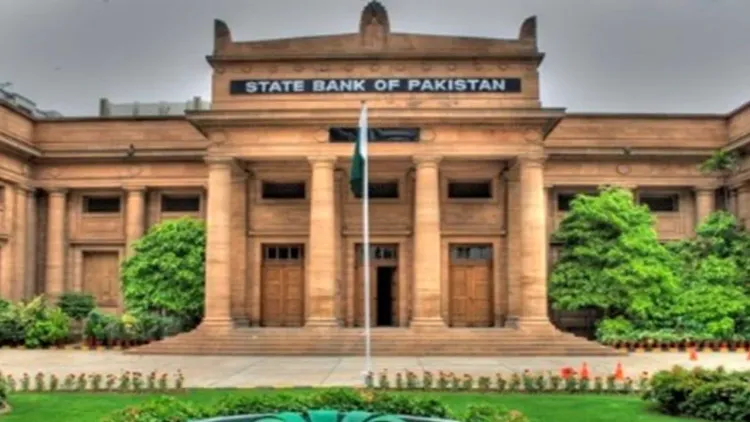
New Delhi, Dec 27 (NationPress) The Governor of the State Bank of Pakistan, Jameel Ahmad, has alerted that the nation’s growth framework is "unsustainable" for its 250 million populace. This caution arises amidst diminishing business cycles within the country, where each economic recovery appears to be weaker than its predecessor, according to a report released on Saturday.
The European Times report highlights that this statement comes at a critical juncture as Pakistan grapples with surging poverty levels, record unemployment, and a prolonged period of economic stabilisation that has adversely affected both households and enterprises.
"Pakistan may have been living on borrowed time. Now, its chief banker is saying the clock has all but run out," emphasized the report.
It outlines that Pakistan has found itself in a cycle of "corrections", each linked with overwhelming taxation, stringent energy tariffs, and significant cuts that primarily impact the average citizen.
"With every wave of stabilisation, the buffer for both households and industries diminishes, while the underlying issues necessitating stabilisation remain unresolved," the report elaborated.
The slowdown is characterized as a structural decline amid decades of economic stagnation. Growth has decreased from an average of approximately 3.9 percent over the last 30 years to a mere 3.4 percent in the past five years.
The economic model of Pakistan, which is founded on consumption surges, cyclical borrowing, and temporary stabilisation measures, falls short of meeting the requirements of its 250 million inhabitants.
The European media outlet pointed out that the narrative of apparent economic support recycles each year: "The country exhausts its reserves, inflation escalates, the currency falters, and the IMF is called for another rescue package. Stabilisation efforts ensue, growth plummets, poverty increases, and after the crisis subsides, the cycle repeats," it stated.
Unemployment has surged to a 21-year high of 7.1 percent, leaving millions struggling to secure employment in an economy that can no longer provide opportunities. Data from the World Bank indicates that poverty has risen to 44.7 percent within the nation, the report added.
Point of View
It is crucial to recognize the gravity of the situation in Pakistan. The challenges outlined by Jameel Ahmad highlight a systemic issue that demands immediate attention and reform. The future of the nation rests on addressing these economic failures with a sustainable approach that prioritizes the welfare of its citizens.
NationPress
23 Sept 2026
Frequently Asked Questions
What did the Governor of the State Bank of Pakistan say?
The Governor, Jameel Ahmad, warned that Pakistan's growth model is unsustainable for its population of 250 million, highlighting a cycle of economic challenges.
What are the current economic issues facing Pakistan?
Pakistan is currently experiencing rising poverty levels, record unemployment, and a prolonged economic stabilisation phase affecting households and businesses.
How does the economic growth rate look in Pakistan?
The economic growth rate has declined from an average of 3.9% over 30 years to just 3.4% in the last five years.
What has been the impact of stabilisation measures?
Stabilisation measures have led to increased taxation and energy tariffs, hitting ordinary citizens the hardest.
What is the current unemployment rate in Pakistan?
The unemployment rate in Pakistan has climbed to a 21-year high of 7.1%.