Is Pakistan Facing the Consequences of an Elite That Views Militancy as an Asset?
Synopsis
Pakistan is grappling with the dual challenges of militancy and the repercussions of a ruling elite that has long viewed violence as a tool for leverage. This report delves into the systemic issues stemming from decades of governance that prioritize strategic chaos over political accountability.
Key Takeaways
Pakistan faces dual challenges of militancy and elite governance.
Militancy was historically viewed as a strategic asset by the ruling elite.
The military establishment remains unaccountable for its actions.
Local unrest is often mischaracterized as foreign interference.
Community discontent can lead to increased recruitment for militant groups.
London, Feb 13 (NationPress) Pakistan is grappling not just with militancy but also with the repercussions of a ruling elite that has viewed militancy as a strategic asset, governance as a mere inconvenience, and accountability as something foreign, according to a report.
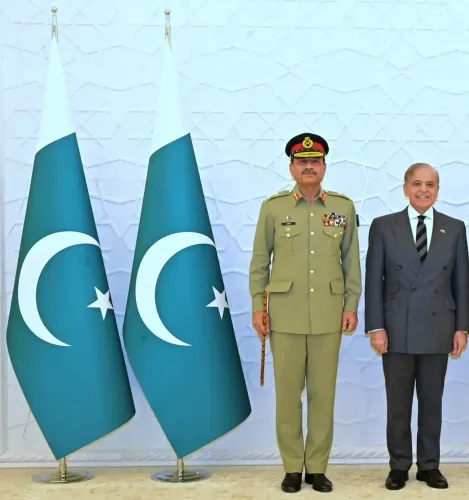
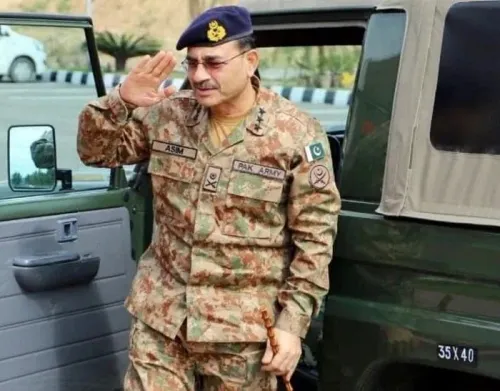
In an opinion piece penned for the London-based Middle East Monitor, Junaid S Ahmad stated, "Every crumbling regime requires an external enemy. Pakistan's establishment has reflexively adopted this notion. Kabul was blamed, New Delhi was too, along with foreign agencies and invisible forces. The only institution that remains unscathed by suspicion is the military establishment, which has dominated Pakistan's political landscape for the majority of its existence."
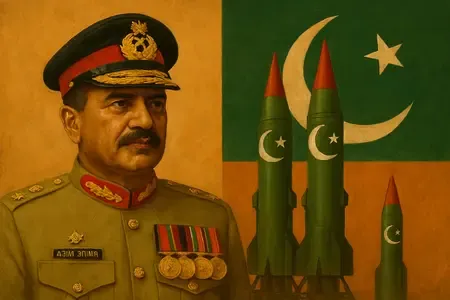
"Pakistan is enduring more than just militancy. It is facing the fallout from a ruling elite that has treated militancy as a strategic asset, regarding governance as a burden and accountability as unbeknownst. For years, generals have nurtured violence as a tool for leverage," he added.
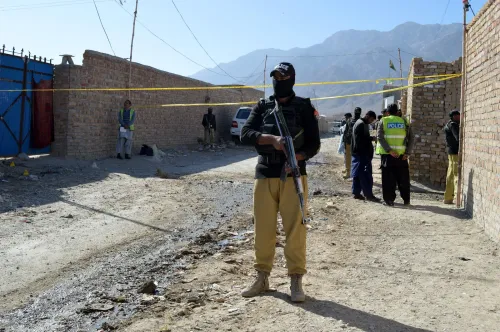
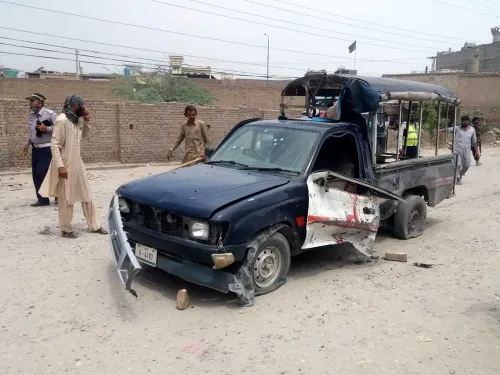
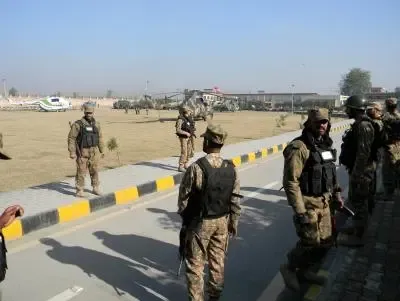
Militants were classified as "good," "bad," manageable, and beneficial, while proxy warfare was rationalized as a means of strategic depth. Rather than confronting extremism, it was managed. When bombings occur in Balochistan or suicide attacks happen in Islamabad, Pakistan's official response comes together with almost comedic precision, attributing blame to cross-border infiltration, hostile neighbors, and foreign funding. Pakistan confidently projects responsibility outward while failing to engage in self-reflection.
As noted in the Middle East Monitor, "Balochistan is not an outlier; it is proof. Enforced disappearances, militarized governance, and extractive economics devoid of political inclusion signify that this is not counterterrorism; it represents structural alienation disguised as security policy. Officials often label the ensuing unrest as 'foreign-backed,' rarely acknowledging that treating an entire province as a security issue rather than a political entity inevitably leads to instability."
This same pattern is evident in Khyber Pakhtunkhwa and the former Federally Administered Tribal Areas (FATA). Military operations lead to community displacement and growing distrust, fostering resentment among locals. This resentment does not dissipate; instead, it accumulates, becoming a recruitment pool. According to the report, these conditions have been manufactured by Pakistani authorities.
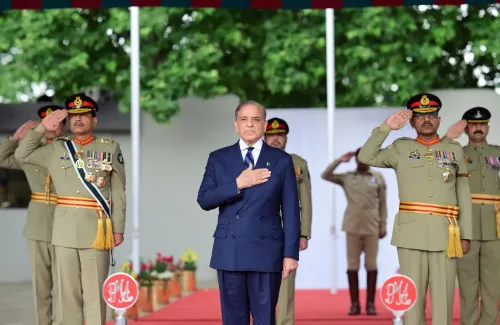
Once classifying militants as "assets" or "threats," Pakistan's establishment now presents itself as civilization's last bastion. The same generals who blurred the lines between proxy and predator now advocate for unity among the populace. The architects of calibrated chaos now express disbelief over the ongoing disorder that defies calibration. Pakistan's generals, who now position themselves as defenders against collapse, actually oversee the compounded consequences of reckless governance.
Junaid S Ahmad further expressed in the Middle East Monitor, "February 2024 intensified the crisis. When a regime must exert significant coercive force to suppress its own electorate—manipulating outcomes, intimidating dissent, and shrinking civic space—it diverts institutional resources from public safety to regime survival. Intelligence becomes politicized, citizens become suspects, and trust erodes. A state that fears its own populace cannot safeguard it."
Point of View
It is imperative to emphasize that while Pakistan faces significant challenges, it is crucial to approach these issues with an unbiased perspective that prioritizes the nation's interests. Acknowledging the role of the ruling elite and advocating for accountability can pave the way for a more secure and stable future.
NationPress
19 Sept 2026
Frequently Asked Questions
What is the report about?
The report discusses how Pakistan is suffering from militancy and the impact of a ruling elite that views militancy as a strategic asset, governance as a burden, and accountability as foreign.
Who authored the opinion piece?
The opinion piece was written by Junaid S Ahmad for the London-based Middle East Monitor.
What are the implications of the ruling elite's perspective on militancy?
The ruling elite's view on militancy as an asset has led to systemic issues such as violence being managed rather than confronted, resulting in societal unrest and instability.
How does the military establishment influence Pakistan's politics?
The military establishment has historically dominated Pakistan's political landscape, often avoiding scrutiny while directing blame for insecurity outward.
What are the consequences of military operations in regions like Balochistan?
Military operations often lead to community displacement, increased distrust, and resentment, which can foster recruitment for militant groups.