Is Pakistan Facing an 'Investment Emergency'?
Synopsis
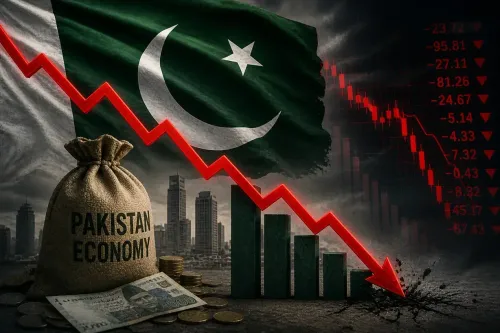
Pakistan is grappling with an 'investment emergency' as escalating business costs and stagnant exports contribute to a precarious economic environment. A detailed report reveals the challenges faced by industries and multinational companies leaving the country, highlighting urgent needs for reform. Can Pakistan reverse this trend?
Key Takeaways
Investment Emergency: Pakistan is currently experiencing a crisis due to high operational costs and stagnant exports.
Declining FDIs: Foreign Direct Investments are decreasing as major companies exit the country.
High Costs: The cost of doing business is significantly higher than in neighboring countries.
Need for Reform: A comprehensive strategy is necessary to create a conducive business environment.
Political Stability: Ongoing political turmoil is a significant barrier to attracting investment.
New Delhi, Jan 25 (NationPress) As exports stagnate and the cost of doing business escalates, Pakistan finds itself in the throes of an 'investment emergency' marked by ad-hoc policies and a significant lack of transparency, according to a new report. The Federation of Pakistan Chambers of Commerce and Industry highlights that the cost of conducting business in Pakistan is 34% higher than in neighboring and regional countries.
“This situation places the entire economy on a precarious path as industries, entrepreneurs, and start-ups grapple to remain viable, battered by soaring energy prices, illogical taxation, and an unpredictable exchange rate,” asserts The Express Tribune.
Foreign Direct Investments (FDIs) are in decline, with few promising investors willing to venture into Pakistan.
Numerous major corporations have withdrawn, citing an unfavorable environment, harassment from tax authorities, political instability, and inadequate law and order, as mentioned in the report.
Furthermore, Pakistani products struggle to compete in international markets, and the stagnant export levels contribute significantly to the economy's inability to recover.
Electricity prices have surged to Rs 56 per unit, and oil and gas imports are being conducted at an alarming dollar-rupee rate.
Despite a global trade recovery in various sectors, exports have flatlined since 2022.
A comprehensive rescue and rehabilitation plan is vital to avert industrial collapse, the report suggests.
Recently, Finance Minister Muhammad Aurangzeb acknowledged that some multinational companies have exited Pakistan due to exorbitant taxes and energy costs, underscoring the difficulties faced by global firms.
Historically, notable companies like Procter & Gamble, Eli Lilly, Shell, Microsoft, Uber, and Yamaha have relocated their offices from Pakistan to the Gulf and other regions owing to excessive taxation. Telenor Group has also recently departed.
The latest company to exit is Qatar-based Al Thani Group, which followed suit amid ongoing economic uncertainty and political unrest in the country.
Point of View
It's imperative to recognize that the challenges faced by Pakistan's economy are multifaceted. The urgent need for transparency and conducive policies cannot be overlooked. The nation must prioritize reforms to create a sustainable environment for businesses, ensuring that both local entrepreneurs and foreign investors feel secure and valued. The survival of our economy depends on it.
NationPress
26 Sept 2026
Frequently Asked Questions
What is causing the investment emergency in Pakistan?
The investment emergency is primarily caused by stagnating exports, rising business costs, high energy prices, and a lack of policy transparency.
Which companies have recently exited Pakistan?
Companies such as Procter & Gamble, Eli Lilly, Shell, Microsoft, Uber, Yamaha, and Telenor Group have recently left Pakistan due to unfavorable business conditions.
What are the implications of rising business costs?
Rising business costs negatively impact the economy by making Pakistani products uncompetitive in international markets, leading to reduced exports and overall economic stagnation.
Is there hope for recovery in Pakistan's economy?
A comprehensive rescue and rehabilitation strategy is essential to revive the industry and attract foreign investments, which could pave the way for economic recovery.
How does the current situation affect local entrepreneurs?
Local entrepreneurs are facing immense pressure as they struggle to navigate high operational costs and an unpredictable market environment.