How has our Constitution defined justice and brotherhood?
Synopsis
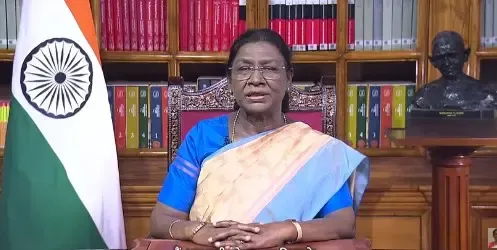
In her Republic Day eve address, President Droupadi Murmu highlights how the Constitution defines justice and brotherhood, reflecting on the nation’s achievements and the role of citizens in shaping democracy. This annual tradition serves as a reminder of the values that unite us and the importance of our collective journey.
Key Takeaways
President Droupadi Murmu emphasizes justice and brotherhood in her address.
The address marks a significant tradition in India's democratic calendar.
Celebrates contributions from various sectors to national development.
Broadcast in multiple languages for wider accessibility.
Highlights the importance of citizen engagement in democracy.
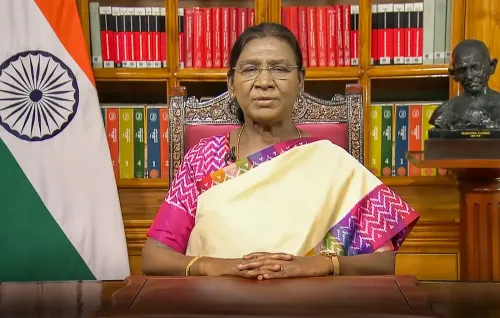
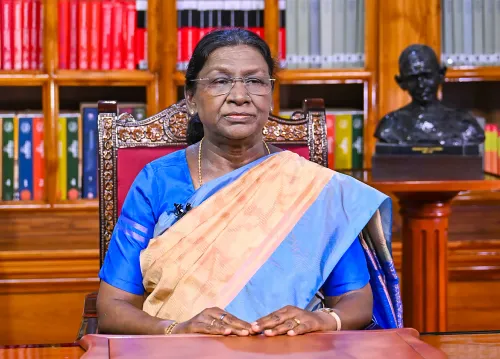
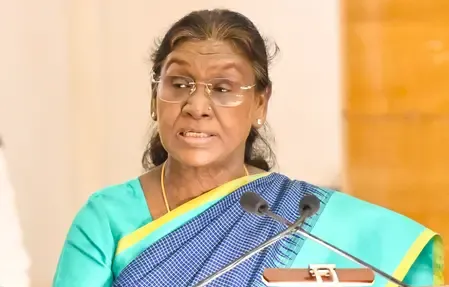
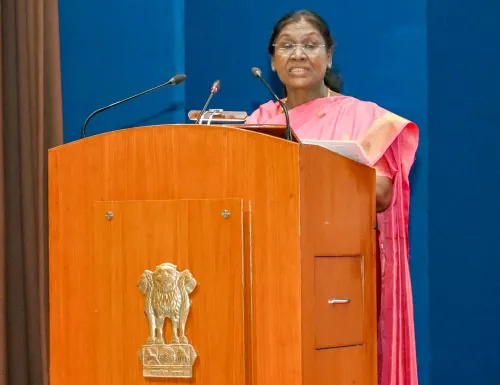
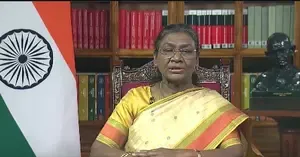
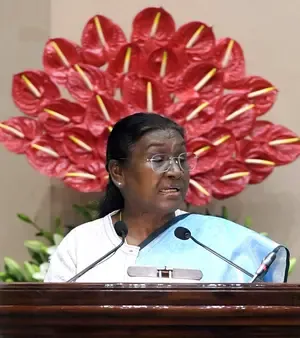
New Delhi, Jan 25 (NationPress) In her address to the nation on the eve of Republic Day, President Droupadi Murmu emphasized that the Constitution of India has distinctly outlined the concepts of justice and brotherhood within the Republic.
She highlighted the vision and principles established by the Union government as articulated in the Constitution, recalling the grand celebrations of the 150th anniversary of “Vande Mataram” and the events honoring Sardar Patel and Netaji Subhas Chandra Bose.
The President also acknowledged Operation Sindoor and praised the courage exhibited by the Armed Forces.
Furthermore, she commended the pivotal role women play in the nation's development and in fortifying democracy.
Additionally, she recognized the contributions made by farmers, scientists, doctors, military personnel, police, businesspeople, and youth towards national progress.
President Murmu also recalled Dr. B.R. Ambedkar's vital message about engaging in elections to strengthen democracy.
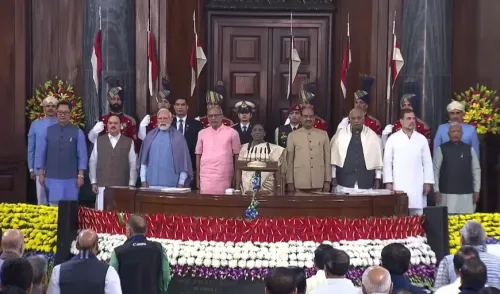
This annual Presidential address, a key event in India’s democratic timeline, was broadcasted and telecasted nationwide, reaching millions in various languages.
Commencing at 7 p.m. on Sunday, the address was aired across the entire national network of Akashvani (All India Radio) and was also telecast on all Doordarshan channels.
The speech was initially delivered in Hindi, followed by its English translation. Afterward, Doordarshan's regional channels featured the address in diverse regional languages, enabling citizens in different states to listen in their native tongues.
The President’s address on the eve of Republic Day is a time-honored tradition that dates back to the early years of the Republic of India.
This occasion allows for reflection on the nation’s journey, accomplishments, and challenges, while also setting the stage for the celebrations on January 26.
Citizens throughout the country eagerly anticipate the President's speech, as it often highlights the Union government’s vision, the significance of unity, and the core values embedded in the Constitution.
Republic Day itself commemorates the adoption of the Constitution of India in 1950, a landmark event that transformed the nation into a Sovereign Democratic Republic.
Point of View
President Droupadi Murmu's address encapsulates the essence of our Constitution. Her emphasis on justice, brotherhood, and collective responsibility reflects our enduring commitment to democracy. This speech is not just a tradition; it's a call to action for every citizen to participate actively in shaping our future.
NationPress
24 Sept 2026
Frequently Asked Questions
What did President Murmu emphasize in her address?
President Murmu emphasized the importance of justice and brotherhood as defined by the Constitution, highlighting the contributions of various sectors in national development.
When did the President's address take place?
The President's address occurred on January 25, the eve of Republic Day.
How was the address broadcasted?
The address was broadcasted and telecasted across the nation via Akashvani and Doordarshan in multiple languages.
What is the significance of Republic Day?
Republic Day marks the adoption of the Constitution of India in 1950, symbolizing the nation's transformation into a Sovereign Democratic Republic.
What role do citizens play in shaping democracy according to the President?
The President highlighted the critical role of citizen participation in elections and civic duties as essential to strengthening democracy.