How Pakistan's Afghanistan Policy is Undermining Regional Economic Integration
Synopsis
A recent report sheds light on Pakistan's long-standing Afghanistan policy, revealing how its quest for a friendly regime may be destabilizing both countries and hindering broader economic integration in the region.
Key Takeaways
Pakistan's Afghanistan policy has historically aimed to create a friendly government.
Recent military actions have escalated tensions significantly.
The regional economic integration is being hampered by ongoing instability.
Pakistan's military rhetoric has intensified in recent months.
The future strategy regarding the Taliban remains ambiguous .
Washington, March 15 (NationPress) For decades, Pakistan's strategy regarding Afghanistan has focused on establishing a pro-Pakistani administration in Kabul—often employing proxy groups like the Taliban—to gain strategic advantage against India.
However, this approach has consistently led to increased instability in both Afghanistan and Pakistan, while obstructing potential economic collaboration across South, Central, and West Asia, as highlighted in a report released on Sunday.
The report raises a critical question regarding the future of Pakistan's policy towards Taliban-led Afghanistan: What is Islamabad's overarching strategy? Since the Taliban took control in August 2021, Afghanistan has faced a series of intertwined political, economic, and humanitarian crises, and Pakistan's decisions will significantly impact whether the nation continues to experience turmoil or moves toward a more stable political framework, according to The National Interest.
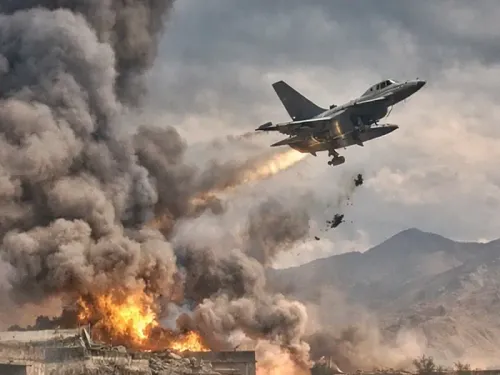
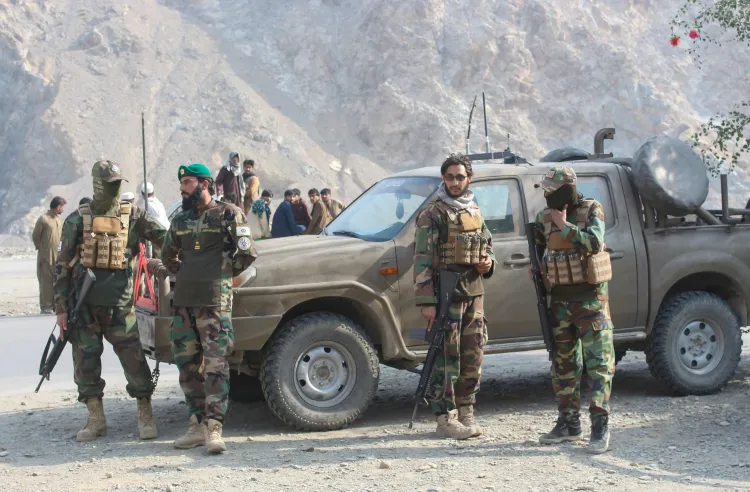
The report indicates that tensions between Pakistan and Afghanistan escalated on October 9, 2025, when Pakistani military forces executed an unprecedented airstrike in Kabul, targeting Noor Wali Mehsud, the Tehreek-e-Taliban Pakistan (TTP) leader.
While Mehsud survived the attack, this marked a significant shift in Pakistan's willingness to exert military force within Afghanistan. Prior to this, Islamabad had focused on TTP positions in Afghan provinces, but hitting the capital represented a new phase in the ongoing conflict.
The timing of this military action was politically noteworthy, coinciding with a visit by the Taliban's Foreign Minister, Amir Khan Muttaqi, to India.
Attempts at mediation between the two nations by various countries, including Qatar, Turkey, and Saudi Arabia, have faltered amid growing mistrust.
The situation escalated further on February 27 when Pakistan declared an "open war" against the Taliban leadership.
This marked a shift from previous operations concentrated on the TTP, as Pakistan expanded its military focus to include both TTP and Taliban strongholds across multiple Afghan provinces, such as Kabul and Kandahar, where Taliban's supreme leader, Hibatullah Akhundzada, is based. This new strategy suggests that Pakistan may now perceive the Taliban as a potential strategic adversary rather than merely an unreliable ally.
The report emphasizes the need to understand Pakistan's objectives in Afghanistan: Is Islamabad attempting to compel a change in the Taliban's behavior, or is it contemplating support for a broader political alternative to Taliban governance?
Since October 2025, Pakistan's rhetoric has noticeably intensified, with high-ranking officials, including military spokesperson General Ahmed Sharif Chaudhry and Defence Minister Khawaja Asif, adopting a confrontational public stance, while the nation's ultimate strategic aims remain unclear.
Point of View
The ongoing conflict between Pakistan and Afghanistan raises critical questions about regional stability and the future of economic cooperation. It is vital to analyze the implications of Pakistan's military actions and diplomatic failures to understand the broader geopolitical landscape.
NationPress
22 Sept 2026
Frequently Asked Questions
What has been Pakistan's approach to Afghanistan?
Pakistan has historically sought to install a pro-Pakistani government in Kabul, often using proxies like the Taliban, to achieve strategic depth against India.
How has this strategy affected regional stability?
This approach has contributed to ongoing instability in both Afghanistan and Pakistan, hindering prospects for economic integration in the region.
What recent military actions have escalated tensions?
On October 9, 2025, Pakistan conducted an airstrike in Kabul targeting TTP leader Noor Wali Mehsud, marking a significant escalation in military engagement.
What are the implications of Pakistan's declaration of 'open war'?
This declaration indicates a shift in Pakistan's military strategy, targeting both TTP and Taliban positions, suggesting heightened tensions and a reevaluation of the Taliban's role.
What is the future of Pakistan's policy towards Afghanistan?
The future remains uncertain, with questions about whether Pakistan aims to change Taliban behavior or support an alternative governance structure.