Panchkula school assault: Six-year-old discharged from PGIMER after week-long care
Synopsis
A six-year-old with special needs, assaulted by a classmate inside a Panchkula school who repeatedly banged her head against a wall and struck her with a brick, has been discharged from PGIMER Chandigarh after a week of care — with the institute bearing all costs. The case has forced a reckoning over child safety in Haryana schools.
Key Takeaways
A six-year-old girl with special needs was discharged from PGIMER, Chandigarh on 4 November 2026 , a week after being admitted following a brutal assault.
She was allegedly attacked by a Class III student inside a school in Sector 20, Panchkula on or around 28 October .
PGIMER bore all treatment and private room costs, placing no financial burden on the family.
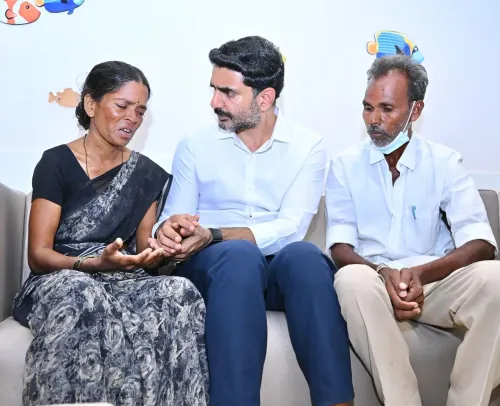
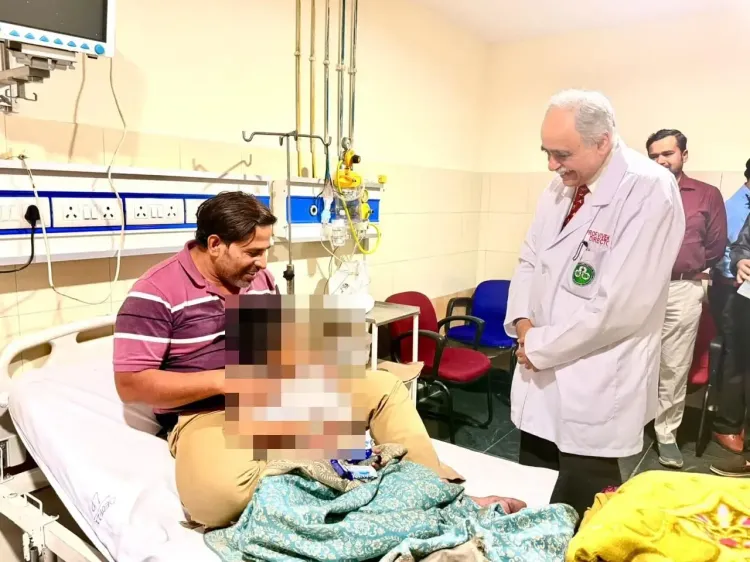
PGIMER Director Prof Vivek Lal personally visited the child and led the institutional response.
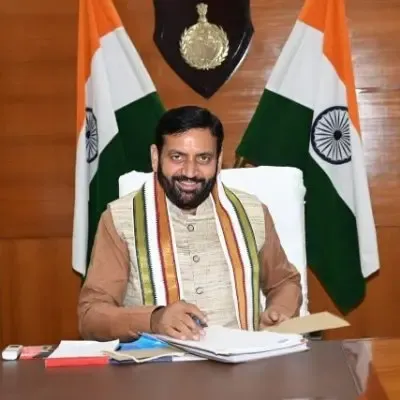
The Haryana government under CM Nayab Singh Saini had pledged to cover treatment costs and conduct a school safety audit statewide.
A six-year-old girl from Panchkula, Haryana, who was hospitalised following a brutal assault by a schoolmate, was discharged from the Postgraduate Institute of Medical Education and Research (PGIMER) in Chandigarh on Wednesday, 4 November 2026, after a week of comprehensive medical care. The child, who has special needs, had been admitted to PGIMER on 28 October following the incident at a school in Sector 20, Panchkula.
What Happened Inside the School
According to reports, the girl was allegedly assaulted by a Class III student inside the school premises. The attacker reportedly banged her head against a wall repeatedly before striking her with a brick as she lay unconscious on the classroom floor, bleeding heavily. The severity of the injuries necessitated immediate admission to PGIMER, one of India's premier medical institutions.
PGIMER's Response and Treatment
Demonstrating what officials described as a commitment to compassionate and equitable healthcare, PGIMER extended treatment to the child without any financial burden on her family. The institute also covered the expenses of her private room facilities, allowing the family to focus entirely on her recovery.
The child's treatment involved coordinated efforts under the guidance of Prof J.K. Mahajan, Head of the Department of Paediatric Surgery. Dr Raman Sharma, in-charge of the Trauma Centre, managed the trauma-related aspects of her care, while Prof Ashok Kumar, Medical Superintendent, ensured institutional support and coordination throughout her hospitalisation.
What the PGIMER Director Said
Prof Vivek Lal, Director of PGIMER, who personally visited the child during her hospitalisation, expressed relief at her discharge. 'The safe discharge of the little girl is a moment of great relief and happiness for all of us at the PGIMER. The unfortunate incident had deeply moved us, and our foremost priority was to ensure that she received the best possible medical care in an environment of compassion, comfort and reassurance,' he said.
Prof Lal added, 'At the PGIMER, we firmly believe that access to quality healthcare should never be determined by a person's financial circumstances. We were committed to extending every possible support to the child and her family during this challenging time. We wish her good health, happiness and a bright future ahead.'
Prof Mahajan, reflecting on the treatment process, noted that caring for a young child after such a traumatic incident 'requires not only clinical expertise but also sensitivity, patience and a compassionate approach.'
Government Commitment and Wider Impact
The Chief Minister Nayab Singh Saini-led Haryana government had previously stated it would bear the child's entire treatment cost and carry out a comprehensive safety audit of schools across the state. This case has reignited debate around child safety protocols and supervision standards in schools, particularly for students with special needs. Notably, this incident occurred inside a classroom — an environment that should, by design, be one of the safest spaces for children.
The child's discharge marks a significant step in her recovery, though the road ahead — medical, psychological, and social — is likely to be long. The criminal case against the accused student and the institutional accountability of the school remain ongoing matters.
Point of View
In view of no teacher who could intervene, and the victim was a child with special needs: among the most vulnerable students in any school. The Haryana government's promised safety audit must extend beyond infrastructure checklists to address supervision gaps and inclusion protocols for students with disabilities. If a Class III student could carry out this level of violence undetected, the systemic failure is as much administrative as it is about individual behaviour. The accountability of the school management has yet to be meaningfully addressed in public reporting.
NationPress
4 Nov 2026
Frequently Asked Questions
What happened to the six-year-old girl in Panchkula?
A six-year-old girl with special needs was allegedly assaulted by a Class III student inside a school in Sector 20, Panchkula, Haryana. According to reports, the attacker repeatedly banged her head against a wall and struck her with a brick while she lay unconscious, causing serious injuries that required hospitalisation at PGIMER, Chandigarh.
When was the girl discharged from PGIMER?
The girl was discharged from PGIMER, Chandigarh on Wednesday, 4 November 2026, after being admitted on 28 October. She received a week of comprehensive medical care coordinated across the Trauma Centre and the Department of Paediatric Surgery.
Who bore the cost of the child's treatment at PGIMER?
PGIMER bore the entire cost of the child's treatment, including private room facilities, with no financial burden placed on the family. The Haryana government had also pledged to cover treatment costs, but the institute extended care proactively.
What action did the Haryana government take after the incident?
The Haryana government under Chief Minister Nayab Singh Saini announced it would cover the child's full treatment costs and conduct a comprehensive safety audit of schools across the state. The long-term implementation of this audit remains to be seen.
Which doctors treated the girl at PGIMER?
The child's care was led by Prof J.K. Mahajan, Head of Paediatric Surgery, with trauma management coordinated by Dr Raman Sharma, in-charge of the Trauma Centre. Prof Ashok Kumar, Medical Superintendent, oversaw institutional support, and PGIMER Director Prof Vivek Lal personally visited the child during her stay.