What Caused the Turmoil in Parliament? Nadda and Kharge Clash Over Opposition's 'Gag' Claims
Synopsis
The Rajya Sabha opened with significant drama as government and Opposition leaders clashed over accusations of suppressing voices in Parliament. Tensions escalated as Rahul Gandhi was denied the chance to speak, leading to a heated debate between J.P. Nadda and Mallikarjun Kharge. This session marked a critical moment for parliamentary discourse.
Key Takeaways
Rajya Sabha session began with significant uproar.
Opposition accused government of suppressing voices.
Nadda and Mallikarjun Kharge exchanged heated remarks.
Call for adherence to parliamentary rules emphasized.
Political strategy discussions took place among the INDIA bloc.
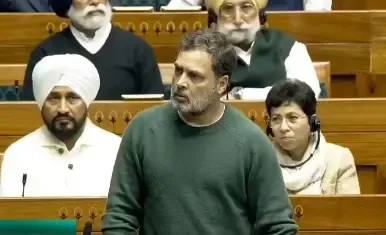
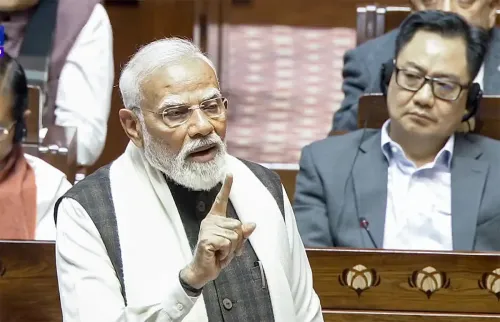
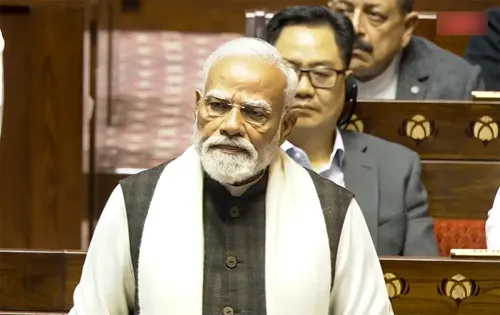
New Delhi, Feb 5 (NationPress) The Rajya Sabha commenced its session on Thursday amidst significant turmoil, as members from the government and the Opposition engaged in a heated exchange regarding the refusal to allow Leader of Opposition (LoP) Rahul Gandhi to address the Lok Sabha and efforts to disrupt Prime Minister Narendra Modi’s speech on the Motion of Thanks to the President’s Address.
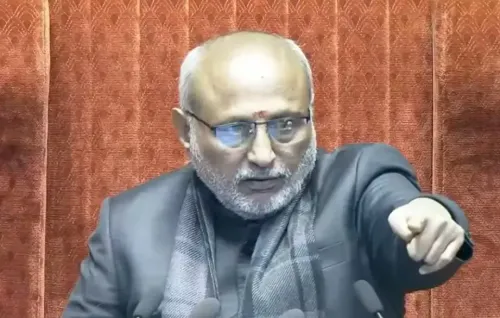
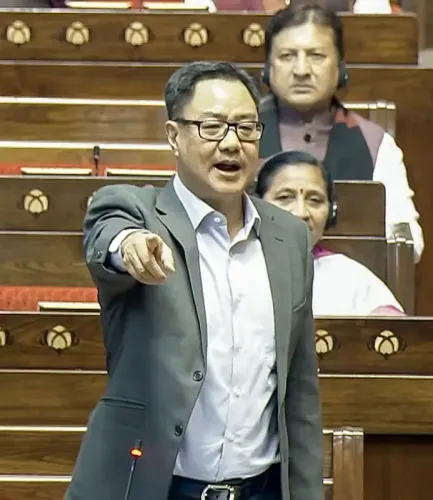
Immediately after reconvening, the Lok Sabha was adjourned, leading to a raucous scene in the Upper House where the Opposition accused the government of suppressing the Leader of Opposition. This led to sharp rebuttals from Leader of the House in the Rajya Sabha, J.P. Nadda, and Union Minister Kiren Rijiju.
Rijiju criticized the Opposition's behavior and urged members to adhere to Parliamentary decorum. “Today we expect all MPs to observe the rules and traditions of the House. Everyone is eager to hear the Prime Minister's address. The Congress party seems unwilling to listen, but other members are ready. Your LoP in the Lok Sabha does not respect the House rules,” Rijiju stated.
Mallikarjun Kharge expressed strong disapproval of the perceived disrespect shown towards former Prime Ministers Jawaharlal Nehru and Indira Gandhi by BJP members, presumably alluding to excerpts from contentious literature, and demanded that Rahul Gandhi be allowed to speak in the House.
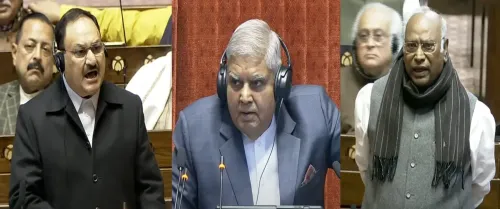
“Parliament comprises both the Lok Sabha and Rajya Sabha. The LoP in the Lok Sabha wanted to discuss matters vital to the country but was denied the opportunity. How is this House supposed to function?” Kharge remarked.
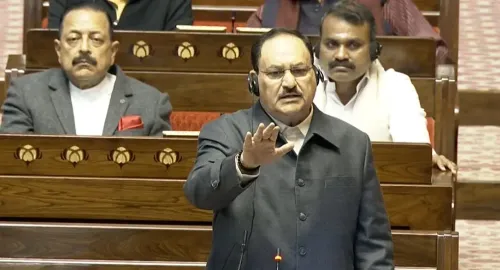
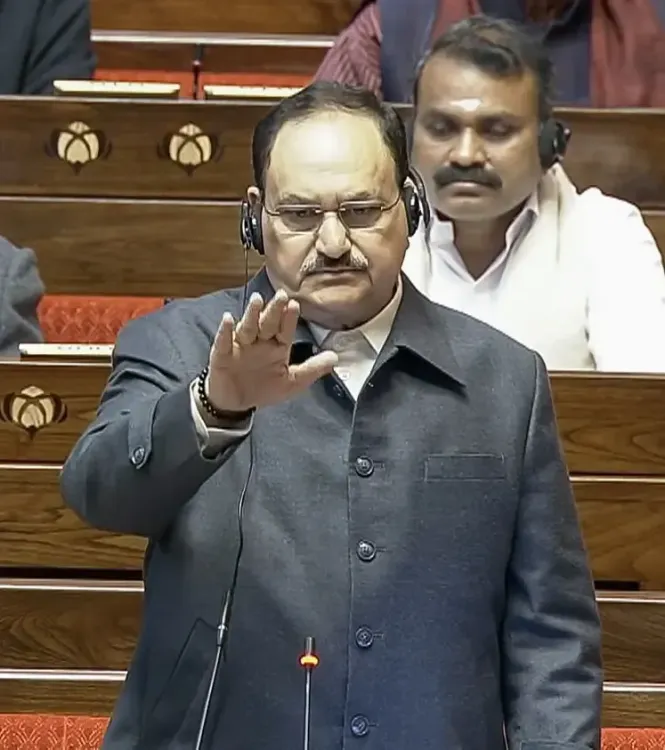
In a counter to the Opposition, J.P. Nadda remarked, “The LoP should be aware that discussions pertaining to the Lok Sabha cannot occur in the Rajya Sabha.”
As leaders exchanged fierce arguments, the House was filled with uproar as Opposition members resorted to shouting slogans.
Previously, leaders of the INDIA bloc convened a meeting within the Parliament House to strategize on holding the government accountable.
Point of View
It is crucial to observe that this confrontation highlights ongoing tensions within Indian politics. The accountability of parliamentary procedures is essential to uphold democracy. The clash between leaders signifies a deeper struggle for representation and voice within the political landscape, a matter that should concern every citizen of the nation.
NationPress
4 Oct 2026
Frequently Asked Questions
What triggered the confrontation in Parliament?
The confrontation was triggered by the denial of speaking rights to Rahul Gandhi in the Lok Sabha, leading to accusations of suppression by the Opposition.
Who were the key figures involved in the debate?
Key figures included J.P. Nadda, Leader of the House in the Rajya Sabha, and Mallikarjun Kharge, the Leader of the Opposition.
What was the Opposition's main argument?
The Opposition argued that denying Rahul Gandhi the chance to speak undermines democratic principles and parliamentary decorum.
How did the government respond to the accusations?
The government, represented by Rijiju and Nadda, emphasized the need for adhering to parliamentary rules and traditions.
What were the reactions in the Rajya Sabha?
The Rajya Sabha witnessed a noisy uproar, with Opposition members shouting slogans in protest against the government's actions.