Did PM Modi criticize the UPA government for 'policy paralysis, scams, and compulsive reforms'?
Synopsis
In a powerful address, PM Modi criticized the Congress-led UPA for policy paralysis, scams, and crisis-driven reforms. He emphasized the current government's confidence and rapid economic growth, positioning India as a key player in global trade and innovation.
Key Takeaways
Critique of UPA: PM Modi highlighted the issues of policy paralysis and corruption.
Current Confidence: Emphasized the current administration's confidence and its impact on India's economy.
Global Trade: India is now engaging in more global trade agreements.
Focus on Innovation: Increased investment in sectors like AI and biopharma.
Empowerment: Commitment to empowering youth and women in the economy.
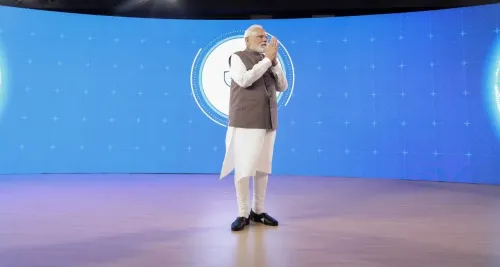
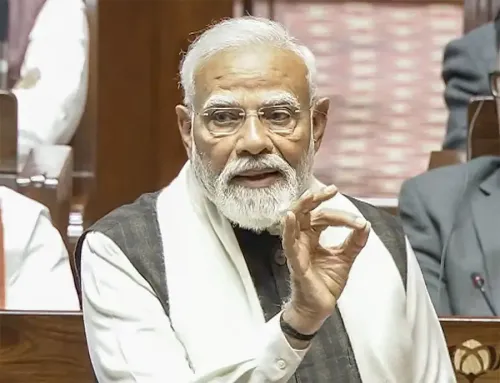
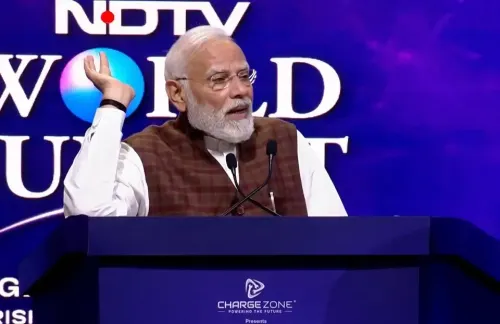
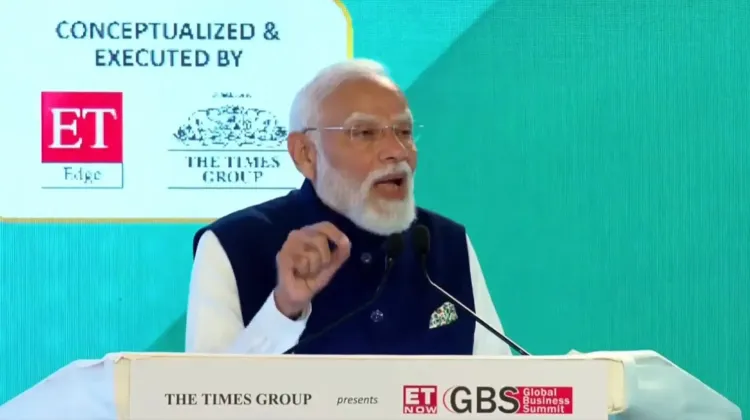
New Delhi, Feb 13 (NationPress) Prime Minister Narendra Modi on Friday delivered a pointed critique of the former Congress-led UPA administrations, charging them with policy paralysis, rampant scams, and a failure to implement reforms without a crisis. In his keynote address at the ET Now Global Business Summit 2026, he juxtaposed this with the current government's conviction-driven strategy, which he credited for India's rapid economic ascent and enhanced global confidence.
The Prime Minister remarked that during periods of policy paralysis and widespread corruption, trust in India diminished significantly. "When India faced policy paralysis and was engulfed in scams, who could place their trust in the nation?" he questioned, emphasizing that manufacturing was weak, and comprehensive trade agreements were limited to just four countries prior to 2014.
He highlighted that reforms during past Congress regimes only emerged under tremendous pressure, citing examples such as the economic crisis of 1991, which necessitated liberalization, and the aftermath of the 26/11 Mumbai attacks that led to the establishment of the National Investigation Agency (NIA) to address security failures.
In the energy sector, Modi noted that attention was only given when destruction became apparent, attributing these actions to political motivations rather than visionary foresight.
The Prime Minister pointed out that infrastructure along borders was hindered by excessive bureaucracy under the UPA, while current decisions have been localized to promote swifter execution.
He questioned why free trade agreements (FTAs) with developed nations were unattainable in the past, despite the same populace, youth, and systems being present. "The transformation stems from the government’s vision," Modi declared, indicating that pre-2014 India lacked self-assurance, making it challenging for the global community to trust the country.
Today, he asserted, India engages in trade negotiations globally due to its resilience and newfound confidence. Modi also lauded the ongoing reform momentum, which includes a rise in capital expenditure in the latest budget for its growth multiplier effect, as well as focused advancements in biopharma, artificial intelligence, and semiconductors.
He reiterated India's unique developmental trajectory, dismissing imported models since the inception of NITI Aayog in 2015, positioning the nation as an emerging engine of global growth in a transforming world order where countries cultivate their own resilience instead of adhering to a one-size-fits-all approach.
His address, delivered amidst discussions on disruption, Industry 5.0, and the future of globalization, highlighted India's evolution from a crisis-prone economy to a confident participant contributing significantly to global progress.
PM Modi characterized the past decade as one of mission-oriented reforms, empowering youth, women, and rural communities while promoting innovation and sustainability. His remarks underscored the NDA's narrative of breaking free from UPA-era stagnation to foster inclusive and self-reliant growth.
Point of View
I find PM Modi's critique of the UPA government significant, reflecting a broader narrative of progress and self-reliance. It underscores a commitment to transformative reforms and positions India as a resilient player on the global stage. The focus on empowering youth and innovation resonates with the nation's aspirations for growth.
NationPress
30 Sept 2026
Frequently Asked Questions
What did PM Modi say about the UPA government?
PM Modi criticized the UPA government for policy paralysis, corruption, and only implementing reforms under pressure, contrasting it with the current government's confidence-driven approach.
How has India's economic situation changed since Modi took office?
Since PM Modi's administration began, India has experienced rapid economic growth, increased global confidence, and a focus on innovative sectors like AI and biopharma.