How Does Our Democracy Emphasise Citizen-Centric Governance?
Synopsis
On India's 77th Republic Day, PM Modi emphasized a citizen-focused approach to governance through Rajnath Singh's insightful article. This message underlines India's commitment to social justice and economic inclusion, echoing the principles of the Constitution and Mahatma Gandhi's vision of uplifting the marginalized.
Key Takeaways
Citizen-centric governance is vital for a strong democracy.
Welfare initiatives aim to empower the most vulnerable.
The concept of Antyodaya underscores moral obligations in governance.
Security and compassion are essential pillars of national strength.
Continuous efforts are needed to uphold democratic values.
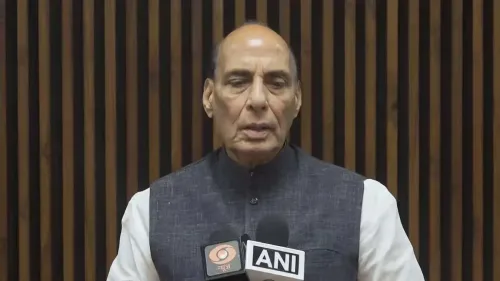
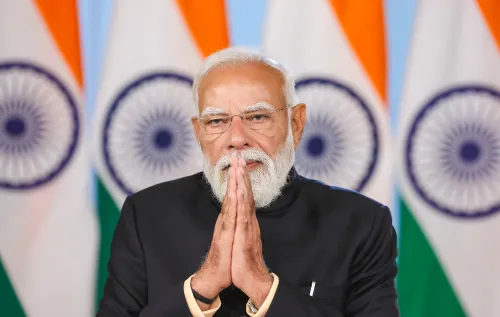
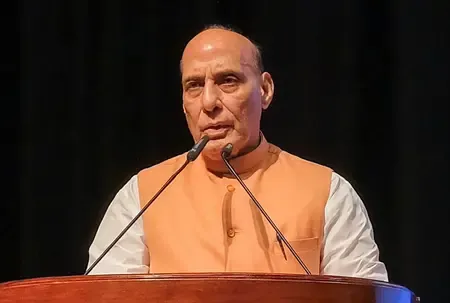
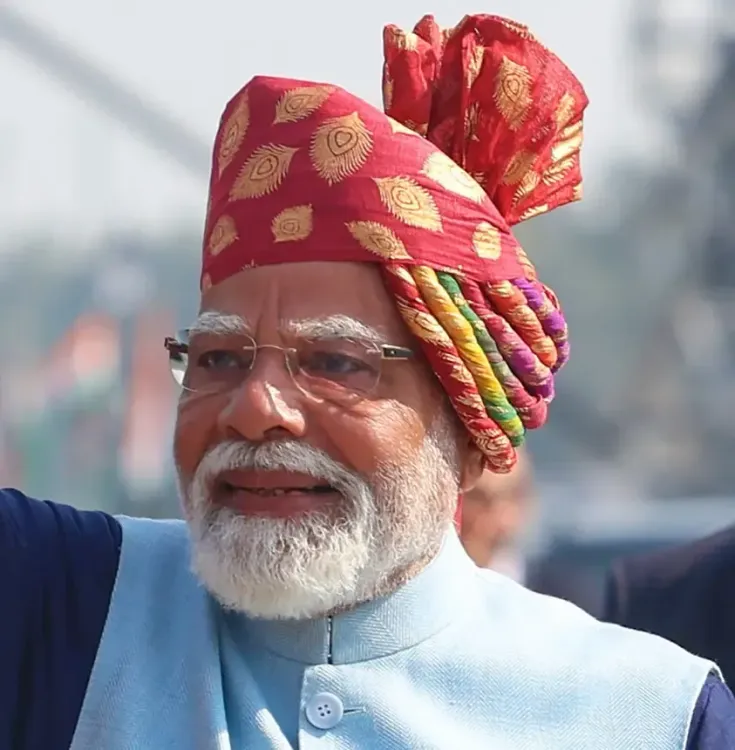
New Delhi, Jan 26 (NationPress) On the occasion of India's 77th Republic Day, Prime Minister Narendra Modi underscored the fundamental principle of citizen-focused governance by sharing a thought-provoking article authored by Defence Minister Rajnath Singh.
Entitled “Our Democracy, For The People,” this article - featured in The Times of India - provides a deep insight into the ethical and constitutional underpinnings of India's republic.
In a response on X to Singh's post, PM Modi expressed: “On Republic Day, Raksha Mantri, @rajnathsingh Ji, elucidates that citizens are at the heart of governance today. He remarks that the republic is fostering social justice and facilitating economic inclusion. Collectively, these initiatives uphold the constitutional vision of a welfare-centric democratic republic.”
Singh's article posits that the true strength of a republic is gauged not merely by its military capabilities, economic success, or international stature, but by its ability to compassionately and effectively protect and empower its most vulnerable citizens.
Referencing Mahatma Gandhi's ideal of “Antyodaya” - uplifting the last person in line - the Defence Minister frames democracy as a moral obligation to justice, dignity, and inclusion.
“A republic must guarantee that every citizen, particularly the most disadvantaged, feels heard, safeguarded, and empowered,” he states, anchoring this vision in ancient Indian philosophy and the core values of the Constitution: justice, equality, liberty, and fraternity.
The minister commends the Modi government for actualizing these ideals through impactful welfare programs.
He highlights flagship initiatives like “PM Awas Yojana” (housing for all), “Ayushman Bharat” (health insurance), “Pradhan Mantri Jan Dhan Yojana” (financial inclusion), “Ujjwala Yojana” (LPG connections for impoverished households), and others aimed at sanitation, nutrition, education, women's empowerment, direct benefit transfers, and support for marginalized groups, senior citizens, and the differently-abled.
These programs, Singh asserts, have democratized opportunities, ensuring no one is left behind while promoting inclusive economic growth.
He contrasts this “people-first” strategy with previous governance models, suggesting earlier administrations frequently neglected the poorest and most disadvantaged communities.
Under current leadership, he asserts, development has become synonymous with empowering the last individual, seamlessly aligning with the constitutional ethos of fraternity and social justice.
The article also emphasizes the connection between national security and welfare.
A secure nation, Singh observes, is vital for safeguarding democratic freedoms and individual rights, positioning defense and compassion as mutually supportive pillars.
“Security and compassion must coexist,” he stresses. Accompanied by an impactful illustration depicting citizens forming the map of India beneath the national flag - symbolizing unity, pride, and participatory democracy - the piece reaffirms the government's commitment to a republic that is robust in defense yet generous in spirit.
In conclusion, Singh calls for continuous efforts to deepen democratic values, enhance grassroots participation, advocate for transparent and self-reliant governance, and uphold ethical and ecological responsibilities.
As the nation commemorates Republic Day with parades, cultural showcases, and patriotic enthusiasm, Singh's message - amplified by PM Modi's endorsement - serves as a timely reminder that India's lasting strength lies in its moral compass: empathy for the vulnerable, equitable opportunities, and collective advancement toward a genuinely inclusive, welfare-oriented democracy.
Point of View
It is crucial to recognize the ongoing evolution of governance in India. The emphasis on citizen-centric policies reflects a growing understanding that the strength of our democracy lies in its ability to uplift the most vulnerable. This approach, as articulated by PM Modi and Rajnath Singh, resonates deeply with our constitutional values and the aspirations of the people.
NationPress
28 Sept 2026
Frequently Asked Questions
What is the main focus of Rajnath Singh's article shared by PM Modi?
The article emphasizes citizen-centric governance, highlighting the need for social justice and economic inclusion in India's democratic framework.
How does the Modi government support vulnerable citizens?
The Modi government has implemented various welfare initiatives such as housing, health insurance, and financial inclusion programs designed to empower marginalized communities.
What does 'Antyodaya' mean in the context of this article?
'Antyodaya,' as referenced by Singh, means uplifting the last person in the queue, emphasizing the moral obligation to ensure justice and dignity for all citizens.
Why is national security mentioned in the article?
National security is highlighted as essential for protecting democratic freedoms and individual rights, showcasing the interconnectedness of defense and compassion.
What are some key welfare programs mentioned?
Key programs include PM Awas Yojana, Ayushman Bharat, and Pradhan Mantri Jan Dhan Yojana, aimed at enhancing living standards and promoting financial inclusion.