PNG incentive scheme cuts payback period from 10 years to 3, targets 1.74 crore connections
Synopsis
A 10-year payback period has long been the single biggest obstacle to aggressive PNG household rollouts in India. The new incentive scheme, effective 1 September 2026, rewires that economics entirely — cutting recovery time to roughly three years by rewarding CGD companies that grow billed connections with cheaper APM gas allocations. With 309 geographical areas already authorised and 1.74 crore connections as the baseline, the scheme's real test begins at the end of its first six-month tranche.
Key Takeaways
The Incentive Scheme for Promotion of Domestic PNG Connections was launched on 18 August 2026 and came into effect on 1 September 2026 .
The scheme is expected to cut the payback period on household PNG connection investments from about 10 years to nearly 3 years .
As of 18 August 2026 , India had approximately 1.74 crore active domestic PNG connections.
Eligible CGD entities that exceed connection thresholds will receive an additional 200 SCM of domestic APM gas per incremental billed connection.
The APM gas replaces costlier LNG used in the CNG transport segment, reducing overall sourcing costs for companies.
The scheme runs in two tranches over six months , covering 309 Geographical Areas across mainland India.
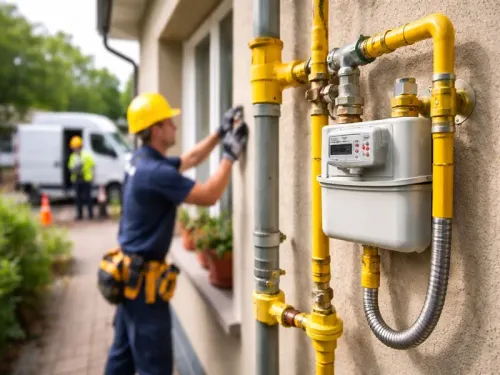
The government on Sunday, 13 September 2026 detailed a new Incentive Scheme for Promotion of Domestic PNG Connections, designed to sharply accelerate the rollout of piped natural gas (PNG) cooking fuel to Indian households. The scheme, launched on 18 August 2026 and effective from 1 September 2026, is projected to slash the payback period on household connection investments from approximately 10 years to nearly three years, making expansion commercially viable for City Gas Distribution (CGD) entities.
How the Scheme Works
Under the new framework, a minimum threshold of domestic connections has been fixed for every Geographical Area authorised by the Petroleum and Natural Gas Regulatory Board (PNGRB). Eligible CGD entities that add billed domestic connections above the prescribed threshold during the performance period will receive an additional allocation of 200 Standard Cubic Metres (SCM) of domestically produced APM gas for every incremental connection.
The scheme targets both the conversion of existing unbilled connections into active, billed connections and the expansion of PNG networks into entirely new areas. It will be implemented in two tranches over six months, with commercial and public interest objectives deliberately aligned.
The Cost Logic Behind the Incentive
The additional APM gas allocation is designed to replace more expensive liquefied natural gas (LNG) currently used by CGD entities in their Compressed Natural Gas (CNG) transport segment. By substituting costlier LNG with lower-priced domestic APM gas, CGD companies stand to reduce their overall gas sourcing costs. The government expects this cost relief to flow through to improved commercial viability for household PNG connections, delivering the dramatic compression in payback periods.
Scale and Coverage
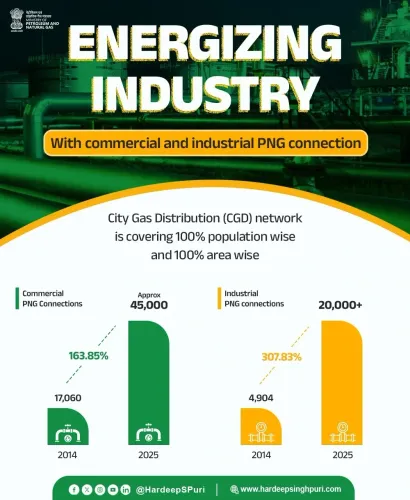
As of 18 August 2026, there were approximately 1.74 crore active domestic PNG connections across India. The CGD network is currently being developed across 309 Geographical Areas authorised by the PNGRB, covering the entire mainland of the country. The scheme seeks to significantly expand this base by incentivising companies that have historically been deterred by the long capital recovery horizon.
Broader Energy Context
The initiative sits within India's broader push to expand access to cleaner household cooking energy and reduce dependence on liquefied petroleum gas (LPG) cylinders and biomass fuels in underserved areas. This comes amid sustained policy focus on the CGD sector, which has seen successive rounds of bidding under PNGRB to extend network coverage. Notably, a 10-year payback period has long been cited by industry as a structural deterrent to aggressive household expansion — a barrier the new scheme directly addresses. All eyes will now be on uptake figures at the end of the first six-month performance tranche.
Point of View
The government turns the CNG transport segment into a cross-subsidy engine for household PNG. The question is whether 200 SCM per connection moves the needle enough in high-infrastructure-cost areas, particularly semi-urban and rural geographies where piping costs are non-trivial. If the first tranche shows uptake concentrated in already-dense urban corridors, the scheme will need a recalibration before it can credibly claim to be an inclusion tool rather than a commercial one.
NationPress
13 Sept 2026
Frequently Asked Questions
What is the new PNG incentive scheme launched by the Indian government?
The Incentive Scheme for Promotion of Domestic PNG Connections was launched on 18 August 2026 and came into effect on 1 September 2026. It incentivises City Gas Distribution entities to expand piped natural gas coverage by rewarding incremental billed household connections with additional allocations of cheaper domestic APM gas.
How does the scheme reduce the payback period for PNG connections?
CGD companies receive 200 SCM of lower-priced domestic APM gas for each new billed connection added above a set threshold. This APM gas replaces costlier LNG in their CNG transport operations, reducing overall sourcing costs and improving the commercial viability of household connections — cutting the payback period from around 10 years to nearly 3.
How many PNG connections does India currently have?
As of 18 August 2026, there were approximately 1.74 crore active domestic PNG connections across India. The CGD network spans 309 Geographical Areas authorised by the PNGRB, covering the entire mainland.
Who is eligible under the new PNG incentive scheme?
City Gas Distribution entities authorised by the Petroleum and Natural Gas Regulatory Board across the 309 designated Geographical Areas are eligible. To qualify, a CGD entity must add billed domestic connections above the minimum prescribed threshold for its area during the scheme's performance period.
How long will the PNG incentive scheme run?
The scheme is designed to run in two tranches over a total period of six months. The government has structured it to align the commercial interests of CGD companies with the broader national goal of expanding clean household cooking energy.