Pune octogenarian loses ₹5 lakh in ECI voter card update scam

Synopsis
A Pune cyber criminal posed as an Election Commission of India official, convinced an 80-year-old retiree to install a malicious APK file, and drained ₹5 lakh from his bank account — the latest in a string of government-impersonation scams targeting elderly citizens in the city.
Key Takeaways
Kanjasheri Vaidyanathan Venkatesan , aged 80 , lost ₹5 lakh to a cyber fraudster posing as an ECI official in Pune .
The accused instructed the victim to download an APK file , then gained remote access to his mobile and stole his banking credentials.
A case is registered at Lakshminagar Police Station under BNS Sections 308, 318(4), 319(2) and IT Act Sections 66(C) and 66(D) .
The accused's identity has not yet been established; investigation is ongoing.
In a separate June case in Pune, a retired IT professional lost over ₹4.43 crore to fraudsters posing as investment advisors on WhatsApp and Telegram.
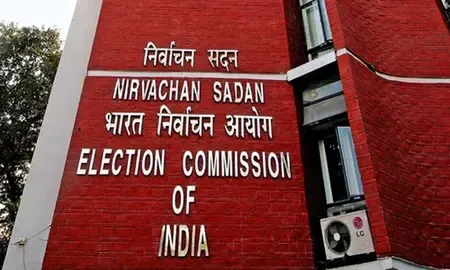
An 80-year-old retired automotive employee in Pune was defrauded of ₹5 lakh by a cyber criminal posing as an official of the Election Commission of India (ECI), who tricked him into downloading a malicious APK file under the pretext of updating his voter card, police said on Sunday. A case has been registered at the Lakshminagar Police Station in Pune.
How the Scam Unfolded
The victim, Kanjasheri Vaidyanathan Venkatesan, aged 80, is a retired employee of an automotive manufacturing company and resides in the Yerwada area of Pune. According to police, the accused contacted him by phone, falsely claiming to represent the ECI's office and stating that his voter card required an update.
The caller then instructed Venkatesan to download an APK file on his mobile device. Once the file was installed, the accused gained remote access to the victim's screen, extracted his banking credentials, and siphoned off ₹5 lakh from his account.
Legal Sections Invoked
A case has been registered under Sections 308, 318(4), and 319(2) of the Bharatiya Nyaya Sanhita (BNS), as well as Sections 66(C) and 66(D) of the IT Act. Police confirmed that the full identity and address of the accused have not yet been established, and the investigation is ongoing.
A Pattern of Cyber Fraud in Pune
This incident is not isolated. In a similar case reported from Pune in June, a retired IT professional was allegedly duped of more than ₹4.43 crore by fraudsters posing as investment advisors on WhatsApp and Telegram. In that case, the accused lured the victim with promises of extraordinary stock market returns, displaying fictitious profits of over ₹26 crore on a fake trading platform before demanding additional payments as 'service charges.'
According to the complaint in that case, the victim transferred a total of ₹4,43,25,000 from his IDFC Bank account into 34 separate bank accounts over a period of time. The accused subsequently insisted that a payment exceeding ₹1 crore — described as five per cent of the displayed profits — was mandatory before any withdrawal could be processed. It was only at this stage that the complainant began to suspect fraud.
Growing Threat of Impersonation Scams
Cyber criminals impersonating government bodies such as the ECI have increasingly targeted elderly and retired citizens across India. These attacks typically exploit trust in official institutions, urgency framing around document compliance, and victims' limited familiarity with mobile security. Cybersecurity experts consistently caution against downloading APK files from unknown sources, noting that such files can grant attackers full remote access to a device.
With Pune's cybercrime unit now investigating the Venkatesan case, authorities are expected to seek call records and device forensics to trace the accused. Citizens are advised to verify any government-related call independently before acting on instructions.
Point of View
Invoke document compliance urgency, and exploit the victim's unfamiliarity with mobile security. What is striking is that Pune — a city with above-average digital literacy — keeps producing these cases at scale, suggesting the problem is not geography but the near-zero cost of running phone-based impersonation operations. Until telecom providers and banks implement real-time coordination to flag suspicious remote-access sessions, elderly citizens will remain disproportionately exposed, regardless of awareness campaigns.
NationPress
11 Oct 2026
Frequently Asked Questions
How did the Pune voter card scam work?
The accused called the victim posing as an Election Commission of India official and told him his voter card needed updating. He then instructed the victim to download an APK file, which gave the fraudster remote access to the phone, allowing him to steal banking passwords and transfer ₹5 lakh out of the victim's account.
Who is the victim in the Pune ECI voter card fraud case?
The victim is Kanjasheri Vaidyanathan Venkatesan, an 80-year-old retired employee of an automotive manufacturing company who lives in the Yerwada area of Pune. He is the complainant in the case registered at Lakshminagar Police Station.
What legal action has been taken in the Pune voter card scam?
A case has been filed at Lakshminagar Police Station under Sections 308, 318(4), and 319(2) of the Bharatiya Nyaya Sanhita (BNS), and under Sections 66(C) and 66(D) of the IT Act. The accused's identity has not yet been established and the investigation is ongoing.
Is this the first such cyber fraud case in Pune?
No. In June, a retired IT professional in Pune was allegedly defrauded of over ₹4.43 crore by scammers posing as investment experts on WhatsApp and Telegram. The fraudsters displayed fake profits of over ₹26 crore on a bogus trading platform before demanding 'service charges' before withdrawals.
How can citizens protect themselves from government impersonation scams?
Cybersecurity experts advise never downloading APK files from unknown or unsolicited sources, as these can grant remote device access. Any call claiming to be from a government body — including the ECI — should be independently verified through official helplines before any action is taken.