Punjab bandh: Farmers protest at Amritsar's Golden Gate over Parvinder Jhota murder
Synopsis
A daylight murder of an anti-drug activist in Mansa has triggered a statewide shutdown that shut businesses across Punjab and drew crowds to Amritsar's Golden Gate. With farmers, opposition parties, and the SGPC united in demanding Chief Minister Bhagwant Mann's resignation and an impartial probe, this is no ordinary law-and-order moment — it is a direct political challenge to the AAP government's flagship zero-tolerance claim on drugs.
Key Takeaways
Punjab bandh on 15 October was called over the murder of anti-drug activist Parvinder Singh Jhota in Mansa and rising drug abuse in the state.
Kisan Mazdoor Sangharsh Committee chief Sarwan Singh Pandher led protests at Amritsar's Golden Gate , where an effigy of the Bhagwant Mann government was burnt.
Protesters demanded CM Mann's resignation on moral grounds and the removal of the state DGP .
Several unions planned to block National Highway-44 (Amritsar–Delhi) during the bandh.
BJP , Congress , and the SGPC extended support to the shutdown; CM Mann promised the strictest punishment for those responsible.
Jhota's father Bhim Singh had first called for the bandh; allegations of police drug use made by Pandher could not be independently verified.
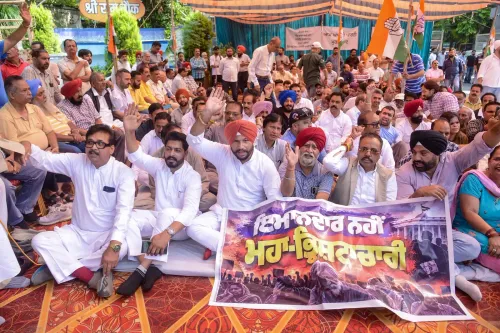
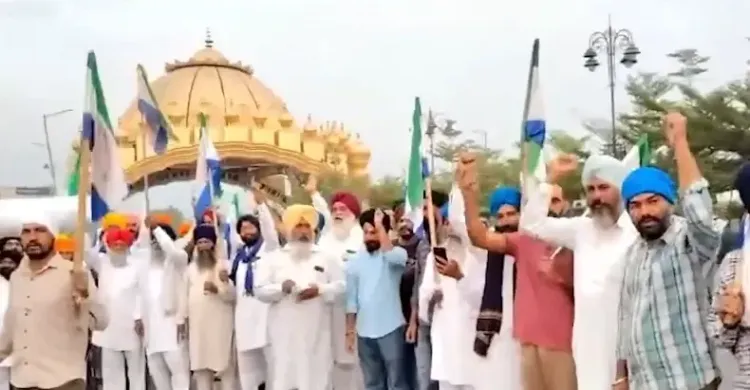
Farmers and supporters led by Kisan Mazdoor Sangharsh Committee (KMSC) chief Sarwan Singh Pandher gathered at the Golden Gate in Amritsar on 15 October 2026 as a statewide Punjab bandh took hold, called to protest the daylight murder of anti-drug activist Parvinder Singh Jhota in Mansa and demand decisive action against rising drug abuse in the state.
What Unfolded on the Streets
Several farmers' unions, student organisations, and trade unions announced plans to block National Highway-44 — the arterial route connecting Amritsar with Delhi — as part of the shutdown. Security was tightened across Amritsar ahead of demonstrations, with large crowds converging at the Golden Gate, where protesters burnt an effigy of the Aam Aadmi Party (AAP) state government led by Chief Minister Bhagwant Mann.
According to Pandher, business owners across Punjab voluntarily shuttered establishments in solidarity over the drug issue. 'Punjabis have shown great support by shutting down businesses over the drug issue, according to the reports we are receiving, and I thank them for this,' Pandher said.
Key Demands of the Protesters
Pandher put forward a set of firm demands: an impartial investigation into Jhota's killing, the resignation of Chief Minister Bhagwant Mann on moral grounds, and the removal of the state's Director General of Police (DGP). He stressed that accountability must cut across political and criminal networks alike. 'There should be an investigation into whoever is behind the chemist shop, whether a politician or someone from the mafia. There should be justice,' Pandher said.
In a separate claim — which could not be independently verified — Pandher alleged that substance abuse had permeated even the police force, calling for a team of 10 doctors to examine personnel at 10 police stations.
Government's Response
Chief Minister Bhagwant Mann had on Wednesday promised the 'strictest punishment' for those involved in Jhota's murder, reiterating his government's stated zero-tolerance policy on drug smuggling. 'We have launched a war against chitta and other drugs. Anyone found involved will face strict action, irrespective of who they are,' Mann said. He also appealed for calm and assured the public that all those responsible for the killing would be held accountable.
Political Backing for the Bandh
The shutdown drew support from a broad cross-section of political forces. Punjab Bharatiya Janata Party (BJP) chief Kewal Singh Dhillon announced his party's full backing for the bandh. Punjab Congress president Pargat Singh expressed solidarity with Jhota's family, pledging to raise the issue at every platform to ensure justice. The Shiromani Gurdwara Parbandhak Committee (SGPC) also extended support.
Jhota's father, Bhim Singh, had criticised the administration and been among the first to call for the October 15 bandh, setting off a chain of endorsements from opposition parties and civil society groups.
The Larger Crisis Behind the Protest
The outrage over Jhota's killing is the latest flashpoint in Punjab's long-running battle with drug abuse, particularly the synthetic opioid chitta. This is not the first time that anti-drug activists in the state have faced violence, and critics argue that repeated government pledges of zero tolerance have not translated into demonstrable results on the ground. The bandh has sharpened demands for structural accountability — not just for the immediate murder, but for the networks that allegedly enable the drug trade. With the investigation under way and political pressure mounting from multiple directions, the coming days will test whether the Mann government can convert its stated resolve into verifiable action.
Point of View
Police, and politicians. The fact that farmers, the SGPC, and opposition parties from opposite ends of the spectrum are aligned in demanding the CM's resignation signals that the government's credibility on the drug issue is under severe strain. Mann's 'zero tolerance' rhetoric is now being held to account by the very communities that once backed him. If the investigation fails to produce credible, politically neutral outcomes, the fallout will extend well beyond Mansa.
NationPress
15 Oct 2026
Frequently Asked Questions
Why was the Punjab bandh called on 15 October 2026?
The bandh was called to protest the murder of anti-drug activist Parvinder Singh Jhota in Mansa and to demand action against rising drug abuse in Punjab. Jhota's father Bhim Singh initially called for the shutdown, which was then endorsed by farmers' unions, opposition parties, and the SGPC.
Who is Parvinder Singh Jhota?
Parvinder Singh Jhota was an anti-drug activist who was killed in Mansa, Punjab, triggering widespread outrage across the state. His killing — in broad daylight — has become a flashpoint in the ongoing debate over drug trafficking networks and political accountability in Punjab.
What did Sarwan Singh Pandher demand at the Golden Gate protest?
Pandher demanded an impartial investigation into Jhota's murder, the resignation of Chief Minister Bhagwant Mann on moral grounds, and the removal of the state's Director General of Police. He also demanded that those responsible — whether politicians or drug mafia — be brought to justice.
How has the Bhagwant Mann government responded?
Chief Minister Bhagwant Mann promised the strictest punishment for those involved in Jhota's murder and reaffirmed his government's zero-tolerance policy on drug smuggling. He also appealed to the public to maintain peace and stated that no one involved in the illegal trade would be shielded.
Which parties and organisations supported the Punjab bandh?
The bandh received support from the Punjab BJP, Punjab Congress, the Shiromani Gurdwara Parbandhak Committee (SGPC), and multiple farmers' and student unions. BJP state chief Kewal Singh Dhillon and Congress president Pargat Singh both publicly expressed solidarity with the protest.