Punjab SIR exercise wins cross-party support, final rolls cross 2 crore voters
Synopsis
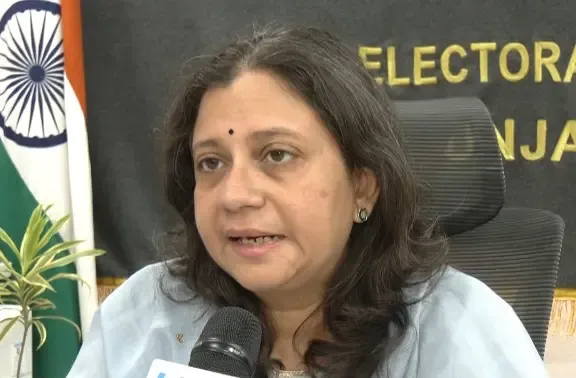
As protests over the SIR process roil the national political scene, Punjab's Chief Electoral Officer Anindita Mitra presented a starkly different picture — cross-party cooperation at every booth, dual-party sign-offs on all deletion lists, and a final electoral roll that grew past two crore voters. The Punjab model, with 90,000 BLAs and fully documented removals, may become the benchmark the Election Commission points to in its defence.
Key Takeaways
Punjab CEO Anindita Mitra confirmed that BJP , AAP , and SAD all maintained a positive approach during the SIR exercise.
The final electoral roll crossed two crore voters , up from 1,93,94,000 in the draft published on 13 August .
7,97,000 new voters were added during the SIR; approximately three lakh are first-time voters.
Deletions covered over five lakh deceased voters , 1,19,000 duplicate entries , and nine lakh permanently shifted residents — each category individually verified.
Nearly 90,000 Booth Level Agents were deployed by parties; every ASDD deletion list was signed by at least two political parties .
Special camps will be held for voters still left out, who can file Form-6 for inclusion in supplement lists.
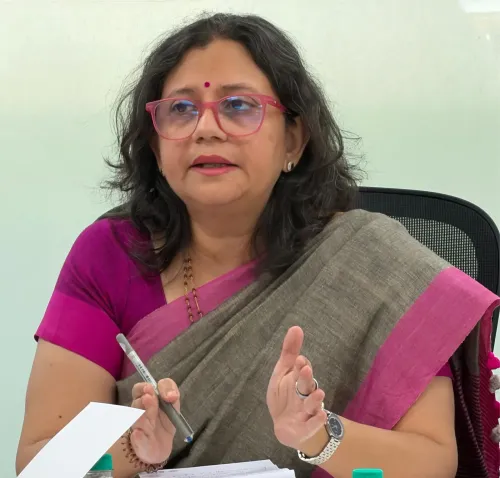
Punjab Chief Electoral Officer (CEO) Anindita Mitra on Tuesday, 13 October, said that political parties across the spectrum maintained a positive approach and actively supported the Special Intensive Revision (SIR) of electoral rolls in the state, with the final rolls now crossing two crore registered voters. The announcement comes even as protests flare up in parts of the country against Chief Election Commissioner (CEC) Gyanesh Kumar over alleged irregularities in the SIR process elsewhere.
Cross-Party Backing in Punjab
Representatives from the Bharatiya Janata Party (BJP), Aam Aadmi Party (AAP), and the Shiromani Akali Dal (SAD) praised Mitra following the publication of the final electoral rolls. Mitra noted that nearly 90,000 Booth Level Agents (BLAs) were appointed by political parties, and crucially, no booth functioned without a BLA during the exercise.
'Whenever we were unable to establish contact with any voters, we shared the concerned names with the BLA. In many booths, BLAs helped us connect with voters. This is why all the deletions from the electoral rolls were genuine,' she said.
Key Numbers from the SIR Process
The draft electoral roll was published on 13 August and contained approximately 1,93,94,000 registered voters. During the SIR exercise, 7,97,000 new voters were added, bringing the final tally to over two crore. Of the newly added voters, around three lakh are first-time voters, while an estimated five lakh were either previously unenrolled or had filed Form-6 after being left out of the draft rolls.
Why Deletions Happened — and How They Were Verified
Mitra addressed concerns over deletions directly. She confirmed that more than five lakh voters had died and were therefore removed, with individual death certificates collected as proof. Another 1,19,000 double entries — attributed to clerical errors — were resolved by retaining one entry per voter, with the duplicate's EPIC number recorded as evidence. Additionally, nine lakh people who had permanently shifted residence were also removed, with their new addresses independently verified through departmental certification.
Mitra was emphatic that 'voters were not deleted' — only redundant or invalid entries were cleared. She also noted that 20,66,000 enumeration forms were not returned to Booth Level Officers (BLOs) for various reasons during the exercise.
'Every ASDD (Absent, Shifted, Dead, Duplicate) list has been signed by at least two political parties each,' she underlined, adding that this multi-party sign-off was a key safeguard against arbitrary deletions.
Remedy for Left-Out Voters
Acknowledging the scale of the exercise, Mitra said special camps would be organised where BLOs would assist voters in checking their names. Those still left out despite the revision could fill Form-6 on the spot, and their names would be included in supplement lists to be published subsequently.
Broader Context
The Punjab SIR's relatively smooth, consensus-driven conclusion stands in contrast to the national picture, where opposition parties and civil society groups have raised concerns about the SIR process in other states. The multi-party validation mechanism deployed in Punjab — including BLA coverage at every booth and dual-party sign-offs on all deletion lists — is likely to be cited as a model of transparent electoral roll management. How the Election Commission addresses grievances in more contested states remains to be seen.
Point of View
And structurally there are reasons to accept that framing — dual-party sign-offs on deletion lists and full BLA coverage are genuine safeguards. But the contrast with the national controversy over CEC Gyanesh Kumar is too sharp to ignore: if Punjab's model was replicable, why wasn't it the default template? The real question is whether the Election Commission will institutionalise the Punjab approach — death certificates for every deletion, EPIC-number documentation for duplicates, mandatory BLA presence — as a binding standard nationwide, rather than letting it remain a single-state exception that looks good in a press briefing.
NationPress
13 Oct 2026
Frequently Asked Questions
What was the Special Intensive Revision (SIR) of electoral rolls in Punjab?
The SIR was a comprehensive exercise to update Punjab's voter list, initiated with a draft roll of approximately 1,93,94,000 voters published on 13 August. Citizens could file Form-6 to be added, and Booth Level Officers verified every entry; the final roll now exceeds two crore voters.
How many new voters were added to Punjab's electoral rolls in the SIR?
Around 7,97,000 new voters were added during the SIR exercise. Of these, approximately three lakh are first-time voters, while five lakh were either previously unenrolled or had filed Form-6 after being omitted from the draft rolls.
Why were so many voters deleted from Punjab's electoral rolls?
Deletions were made on three verified grounds: over five lakh voters had died (supported by individual death certificates), 1,19,000 entries were genuine duplicates (documented by EPIC numbers), and nine lakh voters had permanently shifted residence (confirmed by departmental certification). Punjab CEO Anindita Mitra stressed that 'voters were not deleted' — only invalid or redundant records were removed.
How did political parties participate in Punjab's SIR process?
The BJP, AAP, and SAD collectively appointed nearly 90,000 Booth Level Agents, ensuring every polling booth had party representation. Every ASDD (Absent, Shifted, Dead, Duplicate) deletion list was co-signed by at least two political parties, providing a multi-party check on removals.
What happens if a genuine voter was still left out of Punjab's final electoral rolls?
Punjab CEO Mitra said special camps will be organised where Booth Level Officers will help voters check the voter lists. Anyone still missing can fill Form-6 at the camp, and their names will be added to supplement lists published after the main roll.