Punjab's Budget 2026-27: Cheema Unveils Rs 2.6 Lakh Crore Plan
Synopsis
Punjab's Finance Minister Harpal Singh Cheema has announced a substantial budget for 2026-27, totaling Rs 260,437 crore, aiming for a 10% growth in GSDP. The budget emphasizes women empowerment through cash transfers and significant investments in education, healthcare, and agriculture.
Key Takeaways
Rs 260,437 crore total budget outlay for Punjab in 2026-27.
Projected GSDP growth rate of 10 percent .
Introduction of Mukh Mantri Mawan Dhian Satikar Yojna for cash transfers to women.
Significant allocations for education , healthcare , and agriculture .
Focus on fulfilling electoral promises made by leaders.
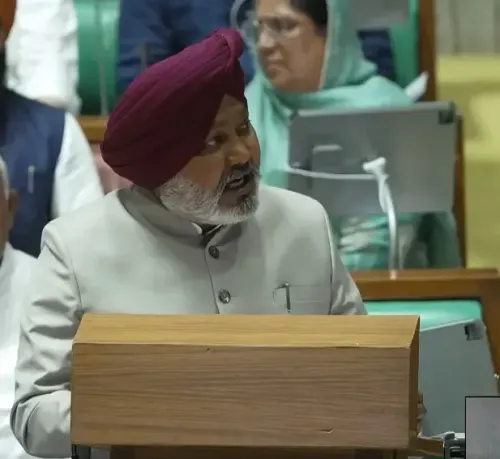
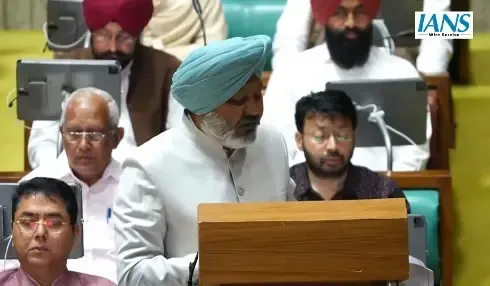
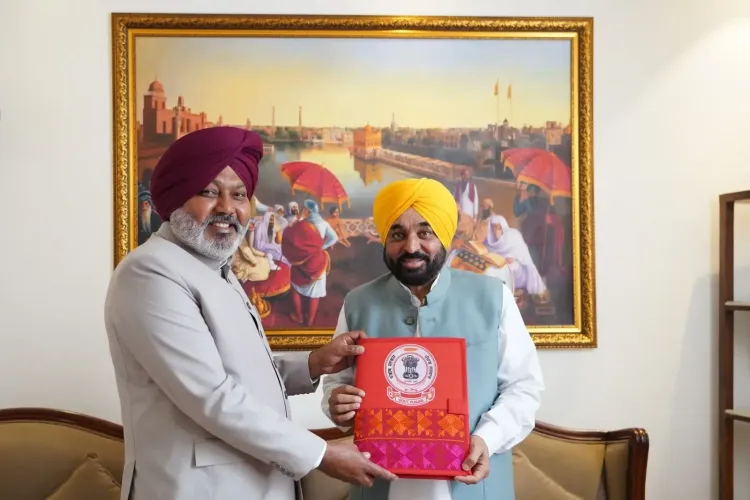
Chandigarh, March 8 (NationPress) On Sunday, Punjab's Finance Minister Harpal Singh Cheema introduced the fifth Budget for the Aam Aadmi Party (AAP) government for the fiscal year 2026-27, featuring a comprehensive outlay of Rs 260,437 crore and estimating the state's Gross State Domestic Product (GSDP) at Rs 980,635 crore, with a projected growth rate of 10 percent.
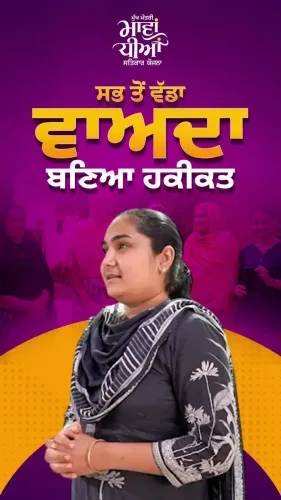
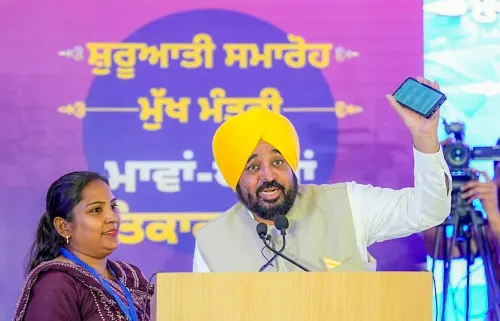
Unveiled on International Women’s Day, this Budget highlighted the 'Mukh Mantri Mawan Dhian Satikar Yojna', a groundbreaking cash transfer program aimed at providing Rs 1,000 monthly to women and Rs 1,500 to Dalit women. It also detailed significant financial allocations across sectors such as education, healthcare, agriculture, infrastructure, and social welfare, fulfilling the essential electoral promises made by leaders Arvind Kejriwal and Bhagwant Mann.
During the presentation, the Finance Minister stated, "The effective revenue deficit is anticipated at 2.06 percent of GSDP, with a fiscal deficit of 4.08 percent."
He characterized the Budget as the 'Saari Guarantiyan Puri Karan Wala Budget', asserting that the government has committed to delivering on all promises made to the populace.
In explaining the 'Mukh Mantri Mawan Dhian Satikar Yojna', Minister Cheema noted, "This initiative marks the first universal cash transfer scheme for women in the state."
He elaborated that the government will directly deposit Rs 1,000 monthly into the accounts of all eligible adult women, while adult women from the Scheduled Caste community will receive Rs 1,500.
A budgetary provision of Rs 9,300 crore is allocated to ensure coverage for nearly 97 percent of adult women in Punjab, including those already benefiting from social security pensions.
Moreover, the Finance Minister announced Rs 600 crore for the continuation of free bus travel for women, Rs 932 crore for the Integrated Child Development Services (ICDS) that serves over 27,000 Anganwadi Centres, and Rs 65 crore for the Navi Disha Scheme, which provides free sanitary pads to underprivileged women and adolescent girls.
In the education sector, Minister Cheema indicated an outlay of Rs 19,279 crore, representing a 7 percent increase from the previous year.
For higher education, Rs 1,760 crore has been earmarked as grant-in-aid for state universities, while Rs 569 crore is allocated for technical education, including the establishment of ITIs in 11 jails to offer vocational training.
The government has also granted initial approval for the establishment of a world-class university in Anandpur Sahib, named after Guru Tegh Bahadur.
Regarding healthcare, an allocation of Rs 6,879 crore has been proposed. In terms of agriculture, Minister Cheema highlighted an allocation of Rs 15,377 crore for agriculture and related sectors.
This allocation includes Rs 7,715 crore for providing free power to farmers, a 33 percent subsidy on Bt cotton seeds, incentives for direct seeded rice (DSR) and kharif maize, alongside Rs 600 crore for machinery to manage crop residue burning.
A significant project worth Rs 1,300 crore, supported by the Japan International Cooperation Agency (JICA), aims to increase horticulture acreage by 300 percent by 2035. Additionally, dairy farmers will benefit from Rs 100 crore allocated for fair milk procurement prices, while sugarcane farmers will see a Rs 270 crore allocation following the raised state agreed price to Rs 416 per quintal.
Point of View
Education, and agriculture. By introducing universal cash transfers and substantial allocations across various sectors, the government aims to fulfill its electoral promises and stimulate growth in the region.
NationPress
28 Sept 2026
Frequently Asked Questions
What is the total outlay of Punjab's budget for 2026-27?
The total outlay of Punjab's budget for 2026-27 is Rs 260,437 crore.
What new scheme was introduced in the budget?
The budget introduced the 'Mukh Mantri Mawan Dhian Satikar Yojna', a universal cash transfer scheme for women.
How much will eligible women receive under the new scheme?
Eligible adult women will receive Rs 1,000 per month, while Dalit women will receive Rs 1,500 per month.
What is the projected growth rate of Punjab's GSDP?
The projected growth rate of Punjab's GSDP is 10 percent.
How much has been allocated for the education sector?
An outlay of Rs 19,279 crore has been proposed for the education sector.