What Did RS Chairman Radhakrishnan Warn Members About Election Reforms?
Synopsis
In a significant prelude to the Rajya Sabha discussion, Chairman Radhakrishnan stresses the importance of adhering to constitutional boundaries in parliamentary debates, especially concerning the Election Commission, which operates independently. This warning highlights the delicate balance between procedural norms and the dynamic nature of political discourse.
Key Takeaways
Chairman Radhakrishnan emphasizes adherence to constitutional limits.
The Election Commission operates independently under Article 324 .
Rule 238 restricts comments on high authority without proper motions.
Current electoral matters are sub judice in the Supreme Court.
Orderly conduct is crucial for effective parliamentary debate.
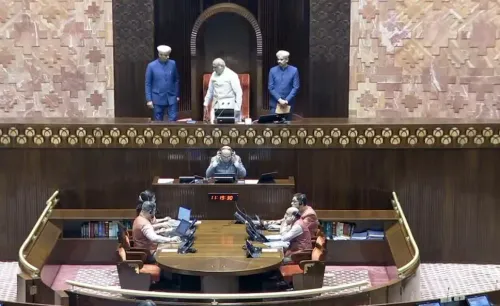
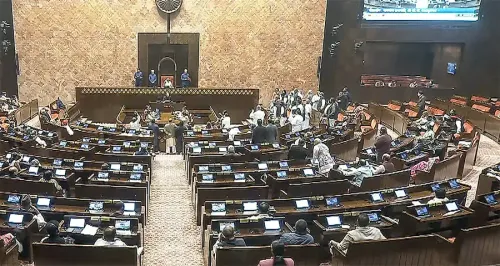
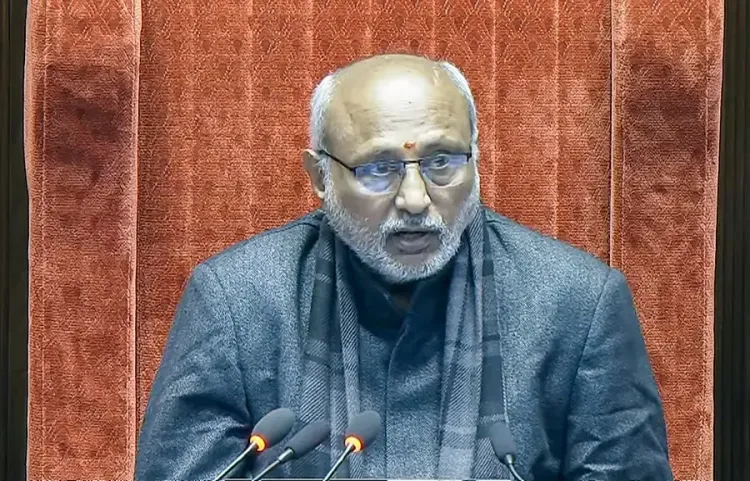
New Delhi, Dec 11 (NationPress) As a crucial discussion looms in the Rajya Sabha, Chairman C.P. Radhakrishnan has urged members to respect the constitutional and procedural limits that govern parliamentary debates, especially concerning prestigious institutions. He emphasized that the Election Commission of India (ECI) operates independently as a constitutional body under Article 324 of the Constitution, and its routine operations are not under the Government of India's direct control.
Chairman Radhakrishnan referenced Rule 238 of the Rules of Procedure and Conduct of Business in the Council of States, which restricts members from commenting on the actions of individuals in high authority unless the discussion is founded on a formally framed substantive motion.
He also pointed out that issues surrounding the Special Intensive Revision (SIR) of electoral rolls across various states are currently before the Supreme Court and thus cannot be addressed in the House.
“Members are advised to avoid making statements that violate these rules. Any remarks made in contravention will not be included in the official record,” he warned.
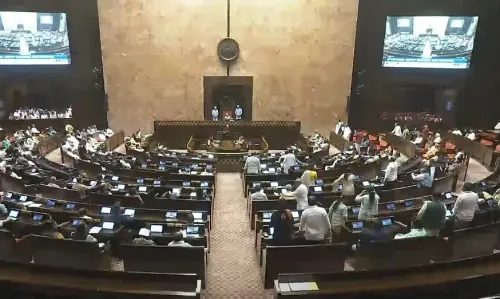
This reminder came as members geared up for a politically charged discussion.
He consistently called for patience, urging members to allow the orderly commencement of the proceedings.
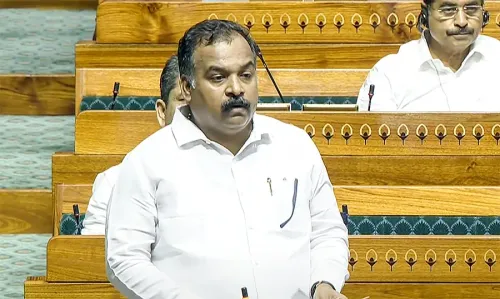
In a response, Tiruchi Shiva questioned the interpretation of these rules. Members recalled a precedent by former Chairman Jagdish Dhankhar, who had declared that “anything under the sky can be discussed in the House.” They contended that unless the Chair explicitly overturned this precedent, it remained valid, rendering any restrictions on debate “null and void.”
This exchange underscored the friction between procedural safeguards and the broad scope of parliamentary discussion.
While the Chair maintained the necessity for compliance with constitutional and judicial limitations, stating, “I will adhere to the rule in the book,” he initiated the debate on election reforms.
Point of View
It is crucial to recognize the importance of maintaining a balance between parliamentary freedom and the necessary safeguards that protect institutions of high authority. The Rajya Sabha's discussions must reflect both the spirit of democracy and the rule of law, ensuring that debates remain constructive and respectful of constitutional boundaries.
NationPress
30 Sept 2026
Frequently Asked Questions
What is the significance of Rule 238?
Rule 238 prohibits members from commenting on the conduct of high authority figures unless the discussion is substantiated by a proper motion, ensuring decorum in parliamentary debates.
Why can't the Special Intensive Revision of electoral rolls be debated?
The matters concerning the Special Intensive Revision of electoral rolls are currently sub judice, meaning they are under judicial consideration by the Supreme Court, and thus cannot be discussed in the House.
What is the role of the Election Commission of India?
The Election Commission of India is an autonomous constitutional body responsible for administering election processes in the country, functioning independently from the Government of India.