Is Rahul Back in Bihar After a Long Absence?
Synopsis
Rahul Gandhi's return to Bihar after a long absence raises questions about his strategy as the Congress party prepares for upcoming Assembly elections. Despite criticisms of the electoral process, he aims to reignite support amidst internal party disputes and opposition campaigns.
Key Takeaways
Rahul Gandhi returns to Bihar ahead of the Assembly elections.
Internal disputes within the Congress could impact their campaign.
The Election Commission's processes have drawn criticism from opposition parties.
Tejashwi Yadav's solo campaigns are gaining traction.
Timing and presence are critical for electoral success.
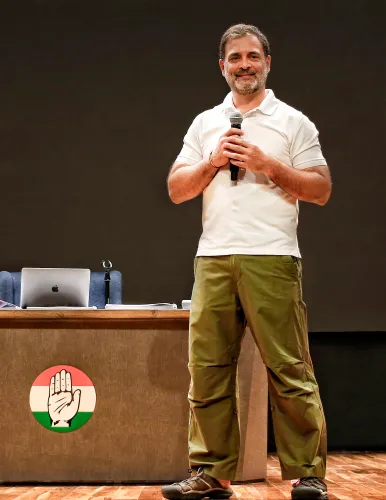
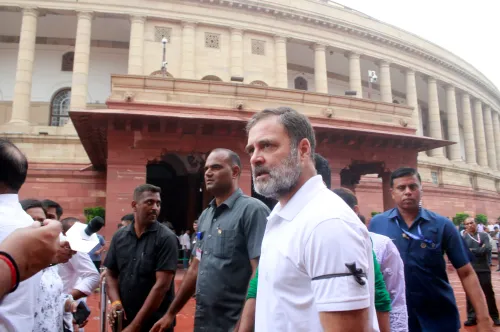
New Delhi, Oct 28 (NationPress) After nearly two months of anticipation following Congress leader Rahul Gandhi's dramatic claim of revealing a 'hydrogen bomb', he is set to kick off the campaign for the upcoming polls in Bihar. This election process has been under fire from him for allegedly favoring the Bharatiya Janata Party (BJP).
As the Congress gears up, party members are still gathering the necessary elements for the anticipated revelation, while internal disputes over nominations for the Bihar Assembly elections continue. The voting mandate will be derived from electors on the voters' roll created by the Election Commission after its Special Intensive Revision (SIR).
Since the Congress leadership released the final candidate list, they have faced criticism from disgruntled members whose names were excluded from nominations.
Recently, the election authority finalized the SIR for Bihar’s voter list and announced the final count of electors on September 30, stating that there were 'Zero Appeals' as of October 27.
The Election Commission has also announced the implementation of SIR in an additional twelve states and Union Territories, prompting sharp backlash from opposition parties, including Congress, which has accused the commission of 'vote theft.'
The next phase of SIR will affect states such as West Bengal, Kerala, and Tamil Nadu, where elections are expected in May-June next year.
Rahul Gandhi’s prolonged absence in Bihar's political landscape has stirred significant discussion as the state prepares for the November Assembly elections.
Despite prior reports suggesting he would directly negotiate seat-sharing arrangements with Mahagathbandhan ally Tejashwi Yadav, the responsibility fell to emissaries from the Congress High Command.
Internal discontent among ticket aspirants was also left to central leaders to manage, along with the contentious issue of candidates running against allies in certain areas.
The ticket allocation process has ignited allegations of corruption and favoritism, resulting in protests and a rift between central leadership and local cadres.
Right up until the deadline for withdrawing nomination papers for the second phase of polls on October 23, uncertainty loomed over the unity of the opposition bloc. Media inquiries regarding Rahul Gandhi's absence reportedly went unanswered.
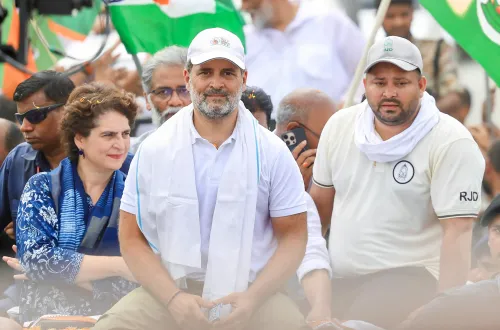
However, the opposition's ambitious 'Voter Adhikar Yatra' in August, covering approximately 1,300 km across 25 districts, initially sparked enthusiasm among Congress workers.
Yet, the gap since his last public appearance has negatively impacted momentum and confidence.
In the meantime, prominent leaders, including Prime Minister Narendra Modi and Home Minister Amit Shah, along with Tejashwi Yadav, have intensified their campaign activities.
Notably, Tejashwi Yadav embarked on a solo campaign in critical districts shortly after the joint 'Voter Adhikar Yatra' concluded on September 1, which was well-received by his party.
Rahul Gandhi's absence has not only diminished Congress’s visibility but has also highlighted internal divisions within the party and among opposition ranks.
Meanwhile, the Congress MP has been engaged in commitments elsewhere, raising further questions. Some party leaders have defended his absence, attributing it to festivities, where Rahul is expected to hold joint rallies with Tejashwi on October 29 and 30.
With phase one polling approaching on November 6, doubts remain regarding the effectiveness of this late entry. While Congress circulates archival clips of Rahul Gandhi's previous yatra to reignite support, the current ground reality indicates that presence and timing are crucial—suggesting that this delayed involvement may be more symbolic than strategic.
Point of View
I believe that Rahul Gandhi's return to Bihar, although late, is critical. The current political environment is highly competitive, and internal divisions within Congress could hinder their campaign efforts. It will be essential for the party to unify and effectively communicate their message to the voters in these crucial Assembly elections.
NationPress
29 Sept 2026
Frequently Asked Questions
Why is Rahul Gandhi's absence significant?
Rahul Gandhi's absence has led to a lack of visibility for the Congress party in Bihar, causing internal conflicts and diminishing party morale.
What is the Voter Adhikar Yatra?
The Voter Adhikar Yatra is an initiative by the opposition to engage voters and raise awareness about electoral rights, covering significant distances across various regions.
How has the Election Commission's SIR process affected elections?
The SIR process has been controversial, with accusations from opposition parties claiming it favors the ruling party and undermines fair electoral practices.