Rajasthan cyber fraud crackdown: Banks ordered to freeze accounts faster

Synopsis
Rajasthan's top bureaucrat and police chief have jointly confronted a damning statistic — banks successfully block fraudulent transfers in just one of every ten cyber fraud cases. The state's new SLBC-led action plan mandates AI surveillance of 190 hotspot branches, bans high-value current accounts without physical verification, and plants bank nodal officers inside the police cyber control room.
Key Takeaways
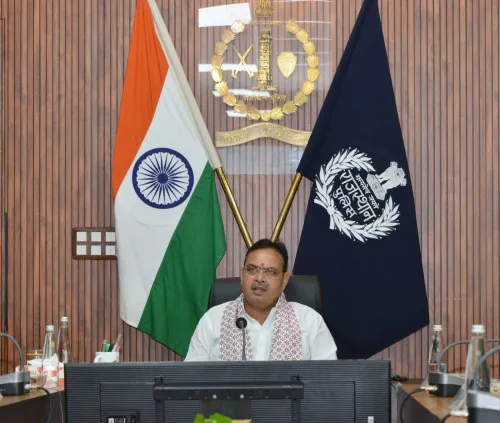
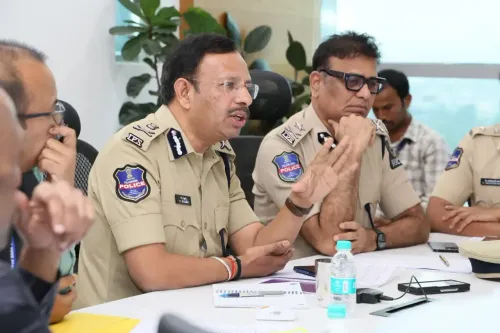
Srinivas and DGP Rajiv Kumar Sharma chaired a special SLBC cyber coordination meeting in Jaipur on 21 July .
Fraudulent funds are currently blocked in only 1 out of 10 cyber fraud cases — the central problem the initiative aims to fix.
Current accounts with transaction limits of ₹10 crore to ₹50 crore opened without physical verification will be discontinued.
AI-based surveillance will monitor 190 identified hotspot bank branches and suspicious ATM locations across the state.
Nodal officers from SBI, Bank of Baroda, PNB, UCO Bank, Indian Overseas Bank , and Union Bank of India will be stationed at the Police Headquarters and Cyber Response Centre .
Banks have been directed to establish dedicated counters for senior citizens and communicate KYC updates only through verified official channels.
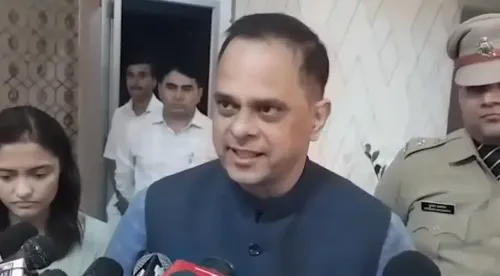
Rajasthan has launched a sweeping anti-cyber fraud initiative, with Chief Secretary V. Srinivas and Director General of Police Rajiv Kumar Sharma convening a special cyber coordination meeting of the State Level Bankers' Committee (SLBC) at the Government Secretariat, Jaipur, on Tuesday, 21 July. The meeting brought together senior Rajasthan Police officials and nodal representatives of major banks to forge a time-bound strategy for curbing cyber financial fraud across the state.
The Core Problem: Only One in Ten Fraud Cases Blocked in Time
Chief Secretary V. Srinivas laid bare a stark operational failure: fraudulent funds are successfully intercepted through timely bank intervention in only one out of ten reported cases. He directed banks to respond immediately upon receiving complaints through the 1930 Cyber Helpline, with the explicit goal of reducing the gap between a citizen's complaint and the freezing of a fraudulent account to virtually zero. He also instructed bank officials to personally visit the 1930 Cyber Call Centre to gain first-hand understanding of citizen grievances and improve operational coordination with the police.
Key Directives from Police and Government
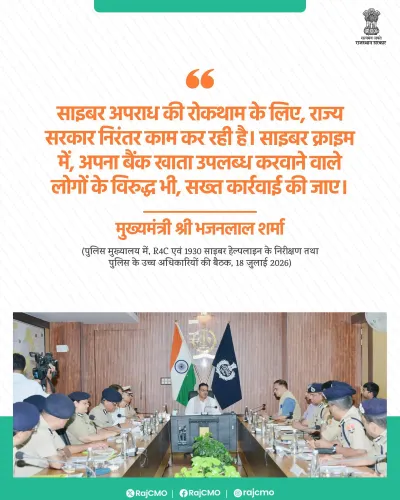
DGP Rajiv Kumar Sharma stressed that Reserve Bank of India (RBI) guidelines on cybersecurity and the prevention of mule accounts must be implemented effectively at the grassroots level. He called for a centralised monitoring system covering suspicious accounts and 190 identified hotspot bank branches, alongside regular district-level coordination meetings to sharpen accountability between banks and cyber police units. He reaffirmed the Rajasthan Police's commitment to the state government's zero-tolerance policy on cybercrime and the R4C (Roadmap for Cybercrime) initiative.
Structural Reforms Agreed at the Meeting
The meeting produced a set of concrete operational decisions. Nodal officers from State Bank of India, Bank of Baroda, Punjab National Bank, UCO Bank, Indian Overseas Bank, and Union Bank of India will maintain a regular presence at the Police Headquarters and Cyber Response Centre. The practice of opening current accounts with transaction limits ranging from ₹10 crore to ₹50 crore without physical verification will be discontinued. Suspicious and high-risk accounts will be subjected to systematic re-verification, and AI-based surveillance will monitor the 190 identified hotspot branches and suspicious ATM locations.
Protecting Senior Citizens and Curbing KYC Fraud
Chief Secretary Srinivas highlighted the particular vulnerability of senior citizens to cyber fraud and directed banks to establish dedicated assistance counters at branches, along with personalised awareness programmes on safe digital banking. He also directed that KYC-related information be communicated only through verified official channels, noting that fraudsters routinely exploit customers through fake calls, SMS messages, and fraudulent links disguised as KYC update requests.
What Happens Next
Representatives from all participating banks are scheduled to visit the 1930 Cyber Call Centre at Police Headquarters on Wednesday, 22 July, to understand its functioning, grievance redressal mechanism, and operational challenges. Chief Secretary Srinivas expressed confidence that coordinated, time-bound action by banks and law enforcement would significantly reduce cyber financial crimes and position Rajasthan as a model state in digital security.
Point of View
Anchoring bank nodal officers inside police cyber control rooms, is operationally sound but only as effective as the accountability structures around it. The ban on high-value current accounts without physical verification targets mule account networks directly, yet the RBI has been issuing similar advisories for years with uneven compliance. The real test will be whether district-level coordination meetings produce measurable improvement in the interception rate — or whether this becomes another well-intentioned meeting that generates minutes rather than arrests.
NationPress
20 Oct 2026
Frequently Asked Questions
What is the 1930 Cyber Helpline and how does it work in Rajasthan?
The 1930 Cyber Helpline is a national cyber fraud reporting number that connects victims to law enforcement and banks to initiate emergency account freezes. In Rajasthan, the state government has directed banks to respond immediately upon receiving alerts through this helpline, with the goal of reducing the time between a complaint and an account freeze to virtually zero.
Why is Rajasthan launching a cyber fraud crackdown now?
The immediate trigger is a stark statistic: fraudulent funds are successfully blocked in only one out of ten cyber fraud cases in the state. The SLBC coordination meeting on 21 July was convened to address this failure rate through structural reforms involving both banks and the Rajasthan Police.
What is the R4C initiative mentioned by the Rajasthan Police?
R4C stands for Roadmap for Cybercrime, a Rajasthan Police framework for combating cybercrime through coordinated law enforcement action, public awareness, and inter-agency collaboration. DGP Rajiv Kumar Sharma reaffirmed the police's commitment to its effective implementation at the meeting.
Which banks are involved in the Rajasthan cyber fraud coordination plan?
Nodal officers from State Bank of India, Bank of Baroda, Punjab National Bank, UCO Bank, Indian Overseas Bank, and Union Bank of India will maintain a regular presence at the Police Headquarters and Cyber Response Centre as part of the new coordination framework.
What measures are being taken to protect senior citizens from cyber fraud in Rajasthan?
Banks have been directed to set up dedicated assistance counters at branches specifically for senior citizens and to conduct personalised awareness programmes on safe digital banking. Chief Secretary V. Srinivas specifically highlighted elderly customers as a high-risk group targeted by fake KYC calls and fraudulent SMS messages.