RBI hikes repo rate to 5.50%, Governor says rupee may be undervalued
Synopsis
The RBI has reversed its rate-hold streak, hiking the repo rate back to 5.50% — exactly where it stood before the December 2025 cut. What's more striking: Governor Sanjay Malhotra pushed back against persistent market pessimism on the rupee, citing REER data to argue the currency may actually be undervalued. It's a rare instance of a central bank governor publicly challenging the direction of market consensus.
Key Takeaways
The RBI MPC raised the benchmark repo rate by 25 bps to 5.50 per cent on 7 October 2026 .
SDF rate adjusted to 5.25 per cent ; MSF rate and bank rate set at 5.75 per cent .
Governor Sanjay Malhotra said the REER and other indicators suggest the rupee may be undervalued , not overvalued.
The hike ends a run of four consecutive holds (February, April, June, August 2026) following a 25-bps cut in December 2025 .
Malhotra attributed the market's persistent depreciation bias to short-term irrationality, saying 'only in the long run are markets able to find the right value.'
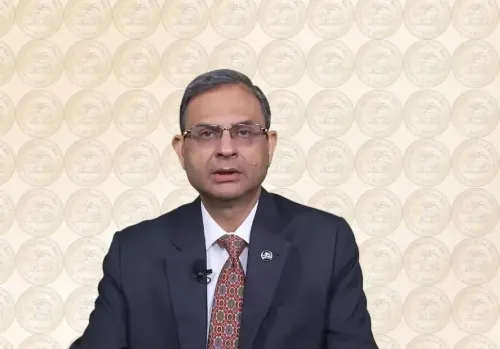
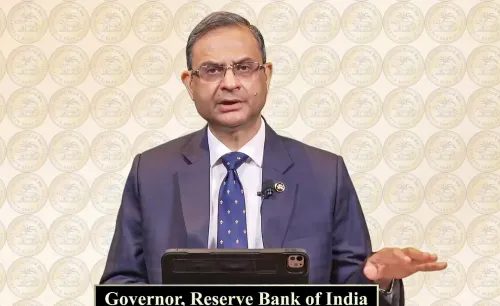
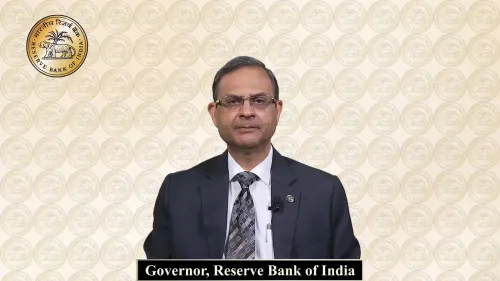
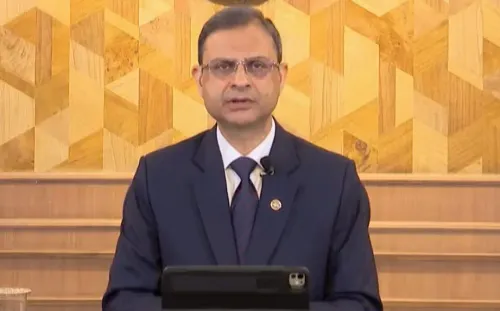
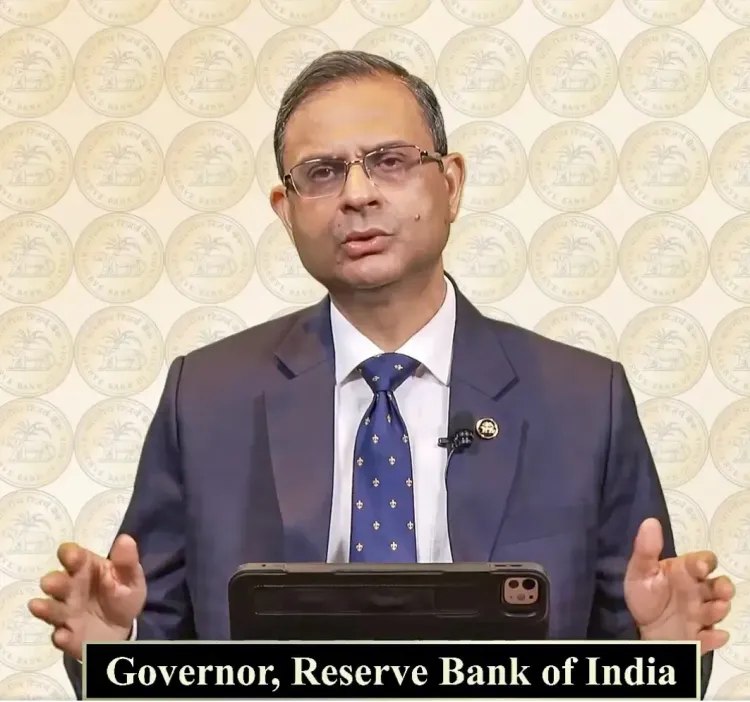
The Reserve Bank of India (RBI) Governor Sanjay Malhotra on Wednesday, 7 October 2026, said financial markets often behave irrationally in the short term and indicated that multiple valuation indicators point to the Indian rupee being undervalued — not overvalued — even as market participants continue to price in further depreciation. His remarks came at the post-policy press conference in Mumbai following the Monetary Policy Committee's (MPC) decision to raise the benchmark repo rate by 25 basis points (bps) to 5.50 per cent.
What the RBI Governor Said on the Rupee
Responding to questions on why currency surveys and hedging activity persistently reflect a depreciation bias, Malhotra argued that market perceptions and positioning do not always capture the true underlying value of a currency. 'Only in the long run are markets able to find the right value,' he said.
The Governor specifically cited the real effective exchange rate (REER) as one of several metrics suggesting the rupee is not stretched on the upside. 'By a number of estimates, including the REER, rupee is not overvalued, may be undervalued,' Malhotra said. Analysts have long noted a divergence between India's ability to attract foreign capital inflows when needed and the persistent bearish positioning on the currency in forward markets.
The Rate Hike Decision
The MPC, in its October 2026 review, voted to raise the repo rate by 25 bps to 5.50 per cent, citing a challenging global environment. Consequently, the Standing Deposit Facility (SDF) rate stands adjusted to 5.25 per cent, while the Marginal Standing Facility (MSF) rate and the bank rate move to 5.75 per cent.
The hike reverses a stretch of rate stability. The August 2026 policy meeting had been the fourth consecutive meeting at which the MPC held both the rate and its neutral stance unchanged. Before that, rates were left untouched in June, April, and February 2026, following a 25-bps cut in December 2025 that had brought the repo rate down to 5.25 per cent. Prior to that easing, the rate had been held at 5.50 per cent through the October 2025 review.
Context: Market Depreciation Bias vs. Fundamentals
The disconnect Malhotra addressed is a recurring tension in currency markets. Hedging data and forecaster surveys have, for several quarters, pointed to expectations of rupee weakness — yet India's current account dynamics and periodic capital inflows have repeatedly prevented a sustained slide. Critics of this market consensus argue that short-term positioning often overshoots, particularly when global risk sentiment shifts abruptly.
Notably, the October rate hike — bringing the repo back to exactly where it stood before the December 2025 cut — signals that the MPC views the current global environment as materially more uncertain than it did nine months ago, warranting a tighter stance even as inflation concerns remain in focus.
What to Watch Next
Markets will now digest how the rate reversal affects bond yields, the rupee's near-term trajectory, and credit costs for borrowers. The RBI's next policy review will be watched closely for any signals on whether Wednesday's hike is a one-off recalibration or the beginning of a tightening cycle. Any further movement in global risk factors — particularly US Federal Reserve guidance and crude oil prices — is likely to influence the MPC's next move.
Point of View
In effect, undone the December 2025 cut within three meetings of pausing. That raises a credibility question: was the December easing premature, or has the global environment genuinely deteriorated enough to justify a full reversal? Malhotra's rupee remarks are equally notable. Central bank governors rarely challenge market consensus so directly; the public invocation of REER data to counter a persistent depreciation bias is either a confidence signal or a managed-narrative play ahead of potentially volatile capital flows. Either way, markets will test that conviction.
NationPress
7 Oct 2026
Frequently Asked Questions
What did the RBI decide in its October 2026 monetary policy meeting?
The RBI's Monetary Policy Committee raised the benchmark repo rate by 25 basis points to 5.50 per cent at its October 2026 review, citing a challenging global environment. The SDF rate was adjusted to 5.25 per cent and the MSF rate and bank rate to 5.75 per cent.
Why did RBI Governor Sanjay Malhotra say the rupee may be undervalued?
Malhotra cited the real effective exchange rate (REER) and several other valuation measures as evidence that the rupee is not overvalued and may, in fact, be undervalued. He argued that short-term market behaviour — including hedging patterns and depreciation forecasts — often does not reflect a currency's true underlying value.
What is the REER and why does it matter for the rupee?
The real effective exchange rate (REER) measures a currency's value relative to a basket of trading-partner currencies, adjusted for inflation differentials. A REER below 100 typically suggests the currency is undervalued in trade-competitiveness terms, and the RBI Governor's reference to it was intended to counter market expectations of further rupee weakness.
How does the October 2026 hike fit into the RBI's recent rate cycle?
The October 2026 hike brings the repo rate back to 5.50 per cent — the same level it was at before a 25-bps cut in December 2025. The MPC had then held rates steady across four consecutive meetings in February, April, June, and August 2026 before deciding to reverse course.
What should borrowers and investors expect next?
The immediate impact will be felt in lending rates, bond yields, and EMI costs for floating-rate borrowers. Investors will watch the RBI's next policy review for clues on whether Wednesday's hike is a one-off adjustment or the start of a fresh tightening cycle, with global factors such as US Fed guidance and crude oil prices likely to influence the MPC's next decision.