Indian stock market outlook: RBI policy, US-Iran tensions to drive volatility next week

Synopsis
Indian markets closed the week with Sensex at 74,243 and Nifty at 23,367 — and next week looks no easier. With US forces striking Iranian sites near the Strait of Hormuz, the RBI holding rates at 5.25% while flagging energy-price risks, FII outflows continuing, and US two-year yields at a 15-month high, the pressure on Indian equities is coming from every direction at once.
Key Takeaways
Sensex closed at 74,243 (down 117 points ) and Nifty50 at 23,367 (down 50 points ) on Friday, 7 June .
The RBI MPC unanimously held the repo rate at 5.25% , citing West Asia-linked energy and supply-chain risks.
US military struck Iranian radar and surveillance sites near Goruk and Qeshm Island after drone interceptions over the Strait of Hormuz .
US two-year Treasury yield climbed to a 15-month high , reducing the appeal of emerging market equities.
RBI raised investment limits for NRIs and OCIs in equity instruments to attract capital inflows.
Persistent FII outflows and global risk-off sentiment are expected to keep volatility elevated through the coming week.
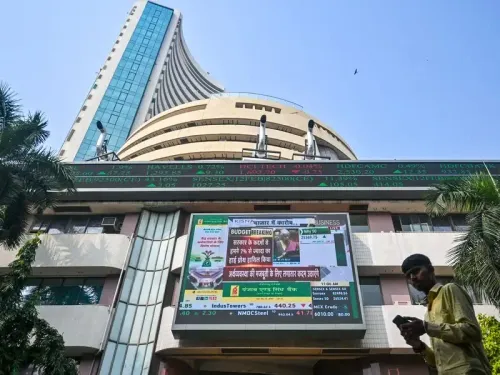
Indian equity markets are set for a turbulent week ahead as investors brace for a confluence of headwinds — escalating US-Iran geopolitical tensions, the Reserve Bank of India's (RBI) latest policy signals, persistent foreign fund outflows, and surging US Treasury yields. The benchmark indices already closed the previous week in negative territory, setting a cautious tone for trading from Monday, 9 June.
The Sensex shed 117 points to settle at 74,243 on Friday, while the Nifty50 declined 50 points to close at 23,367, reflecting subdued investor confidence amid a string of global uncertainties.
West Asia Crisis and Energy Supply Fears
The worsening situation in West Asia is the most immediate pressure point for markets. The US military confirmed it struck Iranian coastal radar and surveillance installations after intercepting drones launched by Iran toward the strategically critical Strait of Hormuz. According to reports, US officials believe the drones were targeting maritime traffic in the region.
The subsequent strikes on surveillance facilities in Goruk and Qeshm Island have sharply heightened concerns over potential disruptions to global energy supplies and key shipping routes. Any sustained escalation risks driving crude oil prices higher — a direct inflationary threat for import-dependent economies like India.
RBI Holds Repo Rate, Flags Inflation Risks
RBI Governor Sanjay Malhotra announced on Friday that the Monetary Policy Committee (MPC) unanimously decided to hold the repo rate unchanged at 5.25%. The central bank cited rising energy prices and supply-chain disruptions linked to the West Asia conflict as key considerations in its inflation assessment.
Notably, the RBI also announced an increase in investment limits for Non-Resident Indians (NRIs) and Overseas Citizens of India (OCIs) in equity instruments — a move aimed at encouraging capital inflows at a time when domestic markets are under pressure from foreign fund exits.
Foreign Fund Outflows and FII Pressure
Foreign investor activity remains a persistent concern. Continued outflows from foreign institutional investors (FIIs) have weighed on sentiment in recent sessions, and analysts warn that this trend could extend into the coming week if global risk appetite does not recover. The combination of a stronger dollar and elevated US yields makes emerging market equities comparatively less attractive to overseas investors.
Rising US Bond Yields Add to Pressure
Inflation concerns in the United States pushed Treasury yields sharply higher last week, with the yield on the two-year Treasury note climbing to a 15-month high. Higher bond yields reduce the relative appeal of equities by offering investors more attractive risk-free returns from fixed-income instruments — a dynamic that historically triggers capital rotation out of stock markets globally.
This is the third consecutive week that US yield movements have contributed to elevated volatility in Indian markets, analysts note, underscoring how tightly domestic sentiment is now linked to global macro signals.
What to Watch Next Week
Market participants will track any further escalation in West Asia, movements in global crude oil prices, and commentary from the US Federal Reserve on the inflation and rate outlook. Domestically, FII flow data and any follow-through on the RBI's NRI/OCI investment limit announcement will be closely watched. Analysts broadly expect elevated volatility to persist until geopolitical clarity improves.
Point of View
But the central bank is now caught between a domestic growth mandate and an externally driven inflation threat it cannot control. What is underreported is the compounding effect: US-Iran escalation raises crude prices, crude raises India's import bill, the import bill widens the current account deficit, and a wider deficit pressures the rupee — all of which feeds back into inflation, making future rate cuts harder to justify. The RBI's NRI/OCI equity limit increase is a smart tactical move to offset FII exits, but it is a cushion, not a cure. Markets are pricing in a world where multiple shocks arrive simultaneously, and the honest answer is that neither the RBI nor the government has a direct lever for any of them.
NationPress
15 Sept 2026
Frequently Asked Questions
Why are Indian stock markets expected to be volatile next week?
Indian equity markets face multiple simultaneous headwinds: escalating US-Iran military tensions threatening energy supply routes, the RBI holding the repo rate at 5.25% while flagging inflation risks, persistent FII outflows, and US two-year Treasury yields hitting a 15-month high. Analysts expect these factors to keep sentiment subdued and volatility elevated when trading resumes on Monday, 9 June.
What did the RBI decide on the repo rate in its June 2025 policy meeting?
The RBI Monetary Policy Committee unanimously decided to keep the repo rate unchanged at 5.25%. Governor Sanjay Malhotra cited rising energy prices and supply-chain disruptions linked to the West Asia conflict as key factors shaping the inflation outlook.
How are US-Iran tensions affecting Indian markets?
The US military struck Iranian coastal radar and surveillance sites near Goruk and Qeshm Island after intercepting Iranian drones over the Strait of Hormuz. The escalation has raised fears of disruptions to global energy supplies and shipping routes, which could push crude oil prices higher — a significant concern for India as a major oil importer.
Why are rising US Treasury yields a concern for Indian equities?
The yield on the US two-year Treasury note climbed to a 15-month high last week. Higher US yields offer investors more attractive risk-free returns, reducing the relative appeal of equities and typically triggering capital outflows from emerging markets like India, adding pressure on the Sensex and Nifty.
What steps has the RBI taken to counter foreign fund outflows?
The RBI announced an increase in investment limits for Non-Resident Indians and Overseas Citizens of India in equity instruments. The move is designed to encourage capital inflows and partially offset the impact of sustained FII selling in Indian markets.