Will RBI Soon Unveil New Regulations to Boost the Corporate Bond Market?
Synopsis
The RBI is poised to enhance the corporate bond market by introducing a new regulatory framework for credit derivatives and total return swaps. This initiative is expected to improve liquidity and risk management, providing significant opportunities for market participants.
Key Takeaways
RBI is introducing a regulatory framework for corporate bonds .
The framework will include derivatives on credit indices .
Total return swaps on corporate bonds will be introduced.
Enhanced flexibility for Authorised Dealers is forthcoming.
The Voluntary Retention Route will now count towards FPI investment limits.
Mumbai, Feb 6 (NationPress) In a significant step toward enhancing the corporate bond market, the Reserve Bank of India (RBI) is set to unveil a regulatory framework aimed at facilitating the introduction of derivatives on credit indices and total return swaps on corporate bonds shortly.
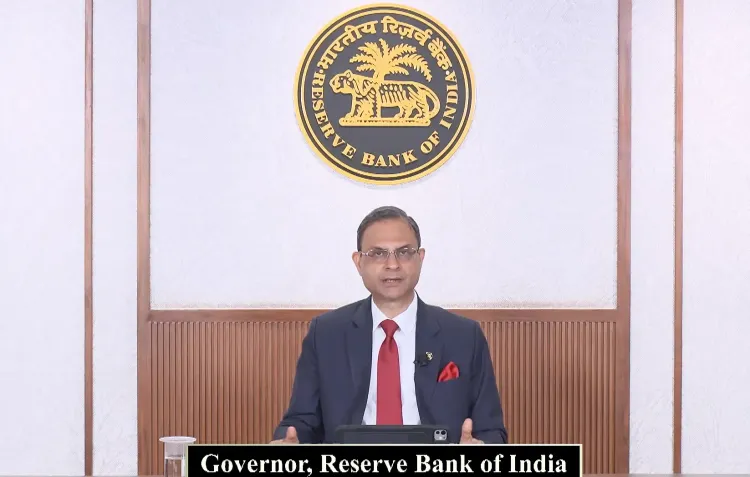
According to RBI Governor Sanjay Malhotra, a dynamic derivatives market will enable better management of credit risks, bolster liquidity and efficiency within the corporate bond landscape, and promote the issuance of corporate bonds across various rating levels.
This initiative was highlighted during the Union Budget speech on February 1, 2026, where the introduction of total return swaps on corporate bonds and derivatives on corporate bond indices was announced. The regulatory framework to support these initiatives will be released soon for public input, as explained by Malhotra.
Furthermore, the RBI Governor indicated that a new framework providing more flexibility to Authorised Dealers concerning foreign exchange products and risk management will also be issued for public commentary.
Under the Foreign Exchange Management Act (FEMA), banks and standalone primary dealers authorized to operate in the foreign exchange market engage in market making, balance sheet management, and risk hedging. The associated regulatory framework has been reviewed and optimized to reflect current market practices and needs, both domestically and globally.
Additionally, Governor Malhotra announced that investments made under the Voluntary Retention Route (VRR) will now count towards the limit for Foreign Portfolio Investor (FPI) investments via the General Route. Enhanced operational flexibilities will also be extended to FPIs opting for the VRR.
Introduced by the Reserve Bank in March 2019, the VRR serves as an additional avenue for investments from FPIs with a long-term interest in the Indian debt market. The RBI has been continually recalibrating the VRR to improve its operational efficiency and facilitate easier business transactions.
Investment activity under the VRR has been robust, with more than 80 percent of the current investment cap of Rs 2.5 lakh crore already utilized, he added.
Point of View
The RBI's forthcoming regulatory framework marks a pivotal moment for the corporate bond market in India. By facilitating the introduction of derivatives, the RBI is not only enhancing liquidity and efficiency but also aligning with global best practices. This initiative is expected to attract more foreign investments and diversify funding sources for corporates, ultimately benefiting the broader economy.
NationPress
5 Oct 2026
Frequently Asked Questions
What is the purpose of the new RBI regulations?
The new RBI regulations aim to develop the corporate bond market by facilitating the introduction of derivatives on credit indices and total return swaps on corporate bonds.
How will these regulations impact investors?
These regulations are expected to improve liquidity and efficiency in the corporate bond market, allowing investors better management of credit risks.
What is the Voluntary Retention Route (VRR)?
The Voluntary Retention Route is a channel for Foreign Portfolio Investors to invest in Indian debt markets with a long-term interest.
Why is the RBI reviewing the regulatory framework for Authorised Dealers?
The RBI is reviewing the framework to ensure it aligns with current market practices and enhances the flexibility for Authorised Dealers in managing foreign exchange risks.
When will the new regulatory framework be released?
The RBI plans to issue the new regulatory framework shortly for public feedback.