Are Skilled Professionals Fleeing Pakistan in Record Numbers for Stability, Dignity, and Opportunity?

Synopsis
As Pakistan faces an alarming exodus of skilled professionals, is emigration truly a strategic advantage for the nation? Discover the implications of this brain drain on the economy and society in our in-depth analysis.
Key Takeaways
The emigration of skilled professionals poses a serious threat to Pakistan's development.
Healthcare and infrastructure sectors are particularly affected.
Remittances cannot substitute for skilled labor in essential sectors.
The government must address the root causes of this talent outflow.
Strategic policy changes are needed to create a conducive environment for professionals.
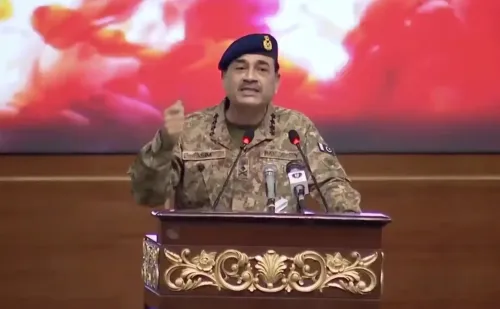
Islamabad, Jan 7 (NationPress) The remarks made by Pakistan Army Chief General Asim Munir, referring to Pakistanis abroad as a source of “brain gain” rather than “brain drain”, aimed to convey confidence, resilience, and strategic insight. Nonetheless, the latest emigration statistics paint a stark picture of a nation that is continuously losing its most precious resource - skilled human capital.
During his address at the inaugural Overseas Pakistanis’ Convention in April 2025, Munir characterized emigration as a valuable asset - informal ambassadors who bolster Pakistan's image globally. However, a different narrative is emerging within the country. While labeling emigration as 'brain gain' might provide rhetorical support, it fails to tackle the repercussions of losing skilled citizens, as highlighted by a report from Maldives Insight.
Professionals such as doctors, accountants, engineers, nurses, and IT specialists are departing from Pakistan in unprecedented numbers, seeking stability, dignity, and opportunity that are lacking in their home country. The widening gap between official rhetoric and actual outcomes raises pressing concerns about governance, accountability, and the denial of these realities.
The report from Maldives Insight indicates, "Data from the Bureau of Emigration and Overseas Employment reveals that approximately 5,000 doctors, 11,000 engineers, and over 13,000 accountants officially left Pakistan between 2024 and 2025. These figures are not mere statistics; they signify hospital wards facing shortages, infrastructure projects lacking expertise, and financial systems operating without skilled professionals.
The impact is particularly dire in the healthcare sector, where nurse emigration surged by an astonishing 2,144 percent from 2011 to 2024 — a statistic that highlights systemic stress rather than mobility-driven success. The magnitude and persistence of this talent outflow have compelled domestic analysts to confront its ramifications," the report further explained.
According to the leading daily, The Express Tribune, the year 2025 has been termed a pivotal moment, branding the nation as a “Brain Drain Economy” — increasingly reliant on exporting its skilled workforce rather than retaining it to reconstruct its institutions. This framing indicates that emigration has become a fundamental characteristic of Pakistan's economic structure.
While remittances from overseas Pakistanis remain vital for the economy, equating these financial inflows with institutional strength overlooks the long-term harm inflicted on sectors at home. Hospitals cannot operate solely on remittances, nor can research labs, engineering firms, or regulatory agencies function effectively without seasoned professionals on-site," the Maldives Insight report emphasized.
Social media users have questioned how the exodus of doctors, engineers, and accountants can be viewed as a strategic advantage. Pakistan Tehreek-e-Insaf (PTI) leader Sajid Sikandar Ali labeled the departure of skilled individuals as unavoidable due to the lack of industrial development, research funding, and sustainable job opportunities.
"Portraying emigration as 'brain gain' may provide temporary rhetorical support, but it does little to confront the long-term consequences of losing skilled citizens en masse. Countries that successfully utilize their diaspora generally do so from a position of domestic strength, not institutional weakness," the report concluded.
"The real danger lies not just in the talent outflow itself, but in the insistence on mislabeling it. When a problem is reframed instead of addressed, policy stagnation ensues, and accountability diminishes. Pakistan’s skilled professionals are making their choices clear, and the talent outflow is a tangible verdict on the country's situation," it added.
Point of View
I believe that the outflow of skilled professionals is a serious concern that requires immediate attention. While emigration can provide opportunities for individuals, it ultimately undermines Pakistan's potential for growth and development. We must address the underlying issues driving this trend to secure a brighter future for our nation.
NationPress
7 Oct 2026
Frequently Asked Questions
What is causing the emigration of skilled professionals from Pakistan?
The main factors include lack of industrial growth, inadequate research funding, and insufficient employment opportunities.
How many professionals have left Pakistan recently?
Recent figures indicate that nearly 5,000 doctors, 11,000 engineers, and over 13,000 accountants have officially emigrated from Pakistan between 2024 and 2025.
What impact does this emigration have on Pakistan?
The emigration of skilled professionals leads to strained healthcare, infrastructure projects lacking expertise, and financial systems operating with inadequate skilled personnel.
Is the government addressing this brain drain?
There is a significant gap between official statements and actual outcomes, leading to questions about governance and accountability.
What can be done to retain talent in Pakistan?
Improving industrial growth, increasing research funding, and creating viable employment opportunities are essential to retain skilled professionals.