How Can a Grateful Nation Ever Forget Chaudhary Charan Singh's Legacy?
Synopsis
On the birth anniversary of Chaudhary Charan Singh, PM Narendra Modi pays homage to the former Prime Minister's legacy in agriculture, rural development, and social justice. Singh's tireless efforts for farmers and rural empowerment remain pivotal for India's growth. Discover how his contributions laid the foundation for a self-reliant nation.
Key Takeaways
Chaudhary Charan Singh played a vital role in India's agricultural policies.
His advocacy for farmers shaped national policy-making.
He emphasized social justice and rural development.
Singh's legacy continues to inspire current government initiatives.
His works on agrarian reforms remain relevant today.
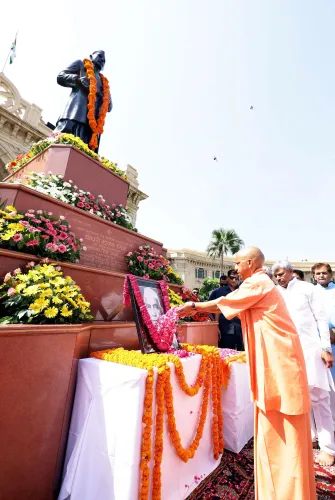
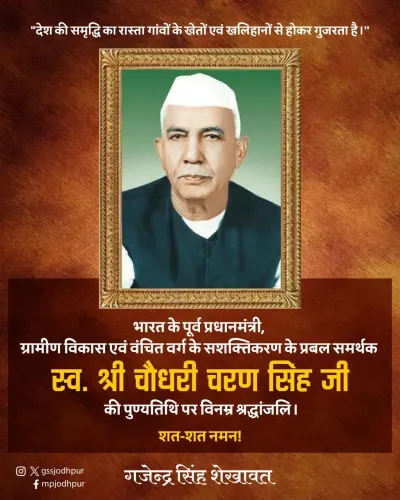
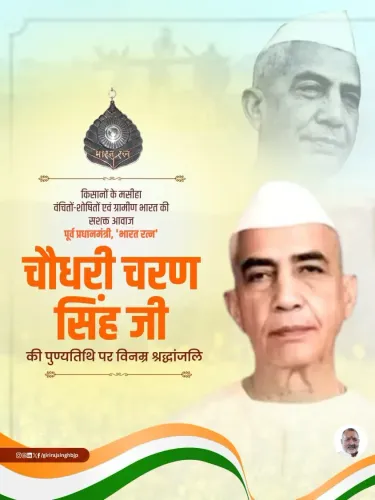
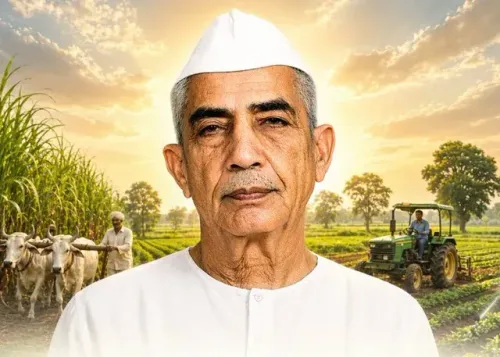
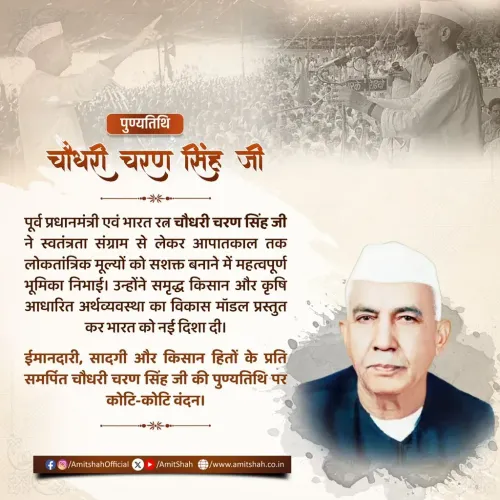
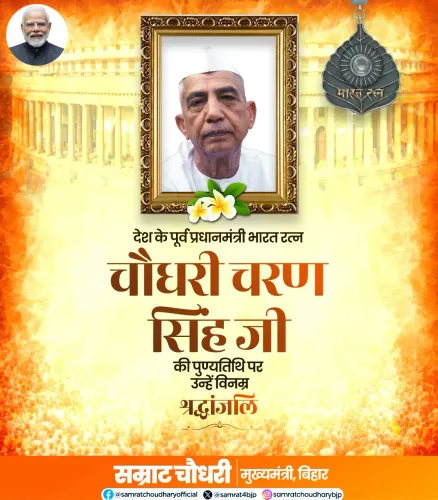
New Delhi, Dec 23 (NationPress) Prime Minister Narendra Modi on Tuesday honored the legacy of former Prime Minister and Bharat Ratna recipient Chaudhary Charan Singh on his birth anniversary. He emphasized that a thankful nation can never overlook his substantial contributions to nation-building, especially in agriculture, rural development, and social justice.
In a video message shared on the platform X, PM Modi reflected on the enduring impact of the former PM. He stated, “Today, I pay my respects to former Prime Minister and Bharat Ratna Chaudhary Charan Singh on his birth anniversary. His life was dedicated to the upliftment of the underprivileged and the advancement of agriculture and farmer prosperity. A grateful nation will always remember his contributions to nation-building.”
The Prime Minister pointed out Chaudhary Charan Singh’s steadfast dedication to farmers, particularly those who are small and marginal cultivators. He noted that Charan Singh tirelessly advocated for their welfare and ensured their issues remained at the forefront of national policy.
PM Modi remarked that the current government draws motivation from the principles and vision established by Chaudhary Charan Singh. He mentioned that many initiatives aimed at enhancing small-scale farming and empowering farmers are anchored in the former Prime Minister's ideals.
Stressing the importance of inclusive growth, PM Modi affirmed that fortifying agriculture is crucial for constructing a robust and self-reliant India.
On this occasion, Lieutenant Governor of Jammu and Kashmir, Manoj Sinha, also paid tribute to Chaudhary Charan Singh. He stated in a post on X, “I pay my respects to former Prime Minister and prominent farmer leader Chaudhary Charan Singh on his birth anniversary. His life was entirely devoted to empowering farmers, rural India, and advocating social justice. His visionary contributions to agricultural reform and public welfare will remain a source of inspiration for the nation.”
Lieutenant Governor of Ladakh, Kavinder Gupta, also commemorated the former Prime Minister and conveyed greetings on Kisan Diwas, which is celebrated on December 23 to honor Charan Singh’s birth anniversary.
“I extend my humble tribute to former Prime Minister, 'Bharat Ratna' Chaudhary Charan Singh, who devoted his life to the upliftment of villages, impoverished individuals, and farmer welfare on his birth anniversary! Hearty greetings to the people of Ladakh and the farmers who nourish us on Kisan Diwas,” he said.
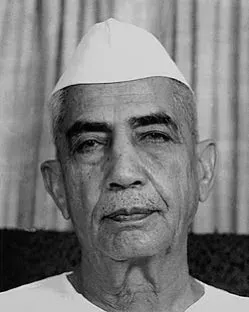
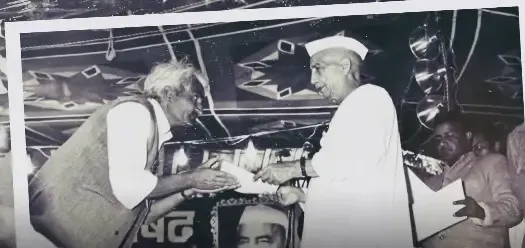
Chaudhary Charan Singh was born in 1902 in Noorpur, Meerut district, Uttar Pradesh, to a middle-class peasant family. His upbringing instilled in him a profound comprehension of rural challenges and farmers' issues. He graduated in science in 1923 and later earned a postgraduate degree from Agra University in 1925. Initially trained in law, he set up his legal practice in Ghaziabad before moving to Meerut in 1929, where he joined the Indian National Congress and began his political career.
Charan Singh was first elected to the Uttar Pradesh Legislative Assembly in 1937 from Chhaprauli and subsequently represented the constituency multiple times in 1946, 1952, 1962, and 1967. In 1946, he became Parliamentary Secretary under Pandit Govind Ballabh Pant's administration, managing key departments including Revenue, Medical and Public Health, Justice, and Information.
In June 1951, Charan Singh was appointed as a Cabinet Minister in the Uttar Pradesh government, overseeing Justice and Information. By 1954, he had taken on the roles of Minister for Revenue and Agriculture under Dr. Sampurnanand’s Cabinet. He resigned in April 1959 while managing the Revenue and Transport Departments.
In C.B. Gupta's ministry, Charan Singh served as Minister for Home and Agriculture in 1960 and later as Minister for Agriculture and Forests between 1962 and 1963 under Sucheta Kripalani. In 1965, he relinquished the Agriculture portfolio to oversee Local Self-Government.
After a split in the Congress party, Charan Singh became the Chief Minister of Uttar Pradesh for the second time in February 1970 with Congress's support, but President’s Rule was imposed on October 2, 1970.
Renowned for his administrative discipline and integrity, Charan Singh was seen as a strict administrator who opposed inefficiency, nepotism, and corruption. He was a gifted parliamentarian with strong convictions.
Chaudhary Charan Singh is recognized as the chief architect of land reforms in Uttar Pradesh. He played a significant role in the creation of the Debt Redemption Bill of 1939, which offered considerable relief to rural debtors. He also initiated steps to cut the salaries and privileges of state ministers. His tenure as Chief Minister saw the enactment of the Land Holding Act of 1960, designed to lower land ceiling limits for fair distribution.
A strong advocate for social justice, Charan Singh drew his strength from the support of millions of farmers. He led a humble life, spending his free time reading and writing. He authored numerous influential works, including 'Abolition of Zamindari', 'Co-operative Farming X-rayed', 'India’s Poverty and Its Solution', 'Peasant Proprietorship or Land to the Workers', and 'Prevention of Division of Holdings Below a Certain Minimum', which continue to guide agrarian reform discussions in India.
Point of View
His ideals continue to inspire policies aimed at empowering farmers and promoting social justice. In honoring Singh, we recognize the importance of inclusive growth as essential for national development.
NationPress
28 Sept 2026
Frequently Asked Questions
Who was Chaudhary Charan Singh?
Chaudhary Charan Singh was a former Prime Minister of India and a Bharat Ratna awardee, known for his significant contributions to agriculture, rural development, and social justice.
What are some of Singh's key contributions?
Singh was instrumental in land reforms, advocating for farmers' rights, and implementing policies that strengthened rural development and social justice.
Why is December 23 significant?
December 23 marks the birth anniversary of Chaudhary Charan Singh, celebrated as Kisan Diwas in honor of his contributions to farmers.
What did PM Modi say about Singh?
PM Modi praised Singh's dedication to the welfare of the underprivileged and his pivotal role in agriculture and farmer prosperity.
How did Singh influence Indian politics?
Singh influenced Indian politics through his strong advocacy for rural issues, his role in land reforms, and his commitment to social justice, shaping policies that benefit farmers.