Central Monitoring Committee Reviews Polluted River Stretches
Synopsis
The 21st meeting of the Central Monitoring Committee on river rejuvenation discussed the status of polluted river stretches, highlighting progress and areas needing improvement, based on the CPCB’s 2025 report. Key focus on enhancing sewage treatment and implementing real-time monitoring.
Key Takeaways
Reduction in polluted river stretches since 2018.
Need for real-time monitoring to enhance pollution control.
Focus on sewage treatment improvements and infrastructure utilization.
Call for inter-departmental cooperation for effective river management.
States to adopt a timely and focused approach to tackle pollution.
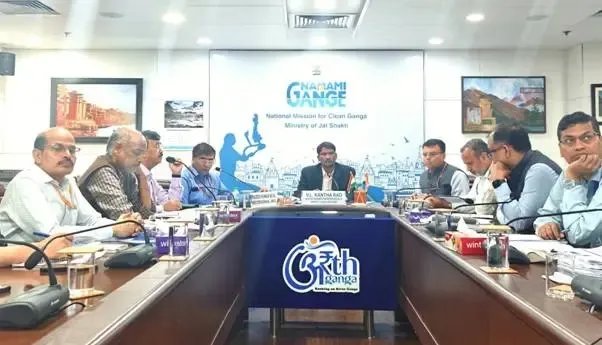
New Delhi, March 2 (NationPress) — The 21st session of the Central Monitoring Committee (CMC) dedicated to river rejuvenation convened on Monday to assess the current condition of polluted river sections, as highlighted in the CPCB’s 2025 report, according to an official announcement.
This meeting took place under the leadership of V. L. Kantha Rao, Secretary of the Department of Water Resources, River Development, and Ganga Rejuvenation within the Ministry of Jal Shakti.
The Committee evaluated advancements in sewage treatment facilities, overall capacity utilization, floodplain zoning, the reuse of treated wastewater, and the institutional oversight through River Rejuvenation Committees across various states including Uttarakhand, Uttar Pradesh, Bihar, Jharkhand, West Bengal, Delhi, Haryana, Chhattisgarh, Madhya Pradesh, Rajasthan, Andaman & Nicobar, Lakshadweep, Odisha, Jammu and Kashmir, and Punjab.
Senior officials, including Rajeev Kumar Mital, Director General of the National Mission for Clean Ganga, along with other NMCG officials and representatives from state governments and State Pollution Control Boards, participated in the discussions.
During the review of polluted river stretches, the Committee scrutinized the progress achieved by states in executing their approved Action Plans.
The Chair emphasized that the sustainable enhancement of river water quality relies not just on infrastructure development but also on effective usage, adherence to regulations, and timely project completion, as stated in their announcement.
Key focus areas included closing sewage treatment gaps, boosting the performance of existing Sewage Treatment Plants (STPs), hastening ongoing and tendered STP projects, enhancing sewage networks, reinforcing industrial pollution control, increasing the reuse of treated wastewater, and accelerating the delineation of floodplains.
The Secretary also instructed states to implement real-time monitoring systems to improve transparency and accountability in pollution control endeavors.
A comparative analysis of polluted river stretches from 2018, 2022, and 2025 indicated a consistent decline in the total number of polluted stretches since 2018.
However, the Committee recognized that some states have reported new polluted stretches and deterioration in certain river segments, necessitating targeted corrective measures.
The meeting concluded with a directive for states to adopt a time-bound, outcome-oriented approach to river rejuvenation, stressing operational efficiency, inter-departmental collaboration, and ongoing compliance to achieve lasting improvements in water quality.
Point of View
Especially in reducing polluted stretches, the introduction of new pollution sources demands immediate and focused remedial actions. A collaborative, outcome-driven approach among states is essential to ensure long-term water quality sustainability.
NationPress
12 Oct 2026
Frequently Asked Questions
What is the purpose of the Central Monitoring Committee?
The Central Monitoring Committee aims to oversee and guide the rejuvenation efforts of polluted rivers in India, ensuring effective implementation of action plans and monitoring progress.
How often does the Central Monitoring Committee meet?
The Central Monitoring Committee meets periodically, with the latest being the 21st meeting held on March 2.
What are some key focus areas discussed in the meeting?
Key focus areas included improving sewage treatment processes, real-time monitoring of pollution levels, and enhancing inter-departmental collaboration for better river management.
What was a significant finding from the CPCB’s report?
The CPCB’s report indicated a reduction in the overall number of polluted river stretches compared to previous years, although some states reported new instances of pollution.
What actions were recommended for states?
States were advised to adopt a time-bound, outcome-oriented approach to river rejuvenation, with an emphasis on operational efficiency and compliance.