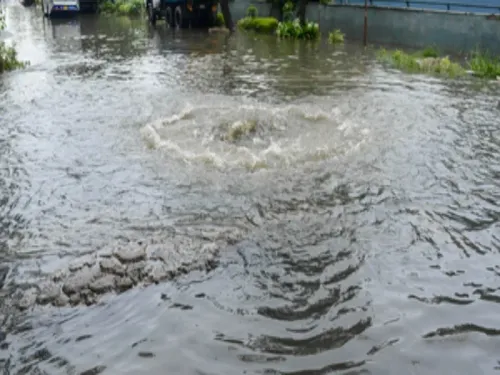
Why has Romania issued a red flood alert due to heavy rains?
Synopsis
Romania faces a critical situation as the National Institute of Hydrology and Water Management has issued a red flood alert for the Niscov River, warning of dangerous water level rises. This situation is compounded by existing cold weather warnings. Learn about the impact on local communities and the emergency measures being taken.
Key Takeaways
Red flood alert issued for the Niscov River due to heavy rains.
Orange alert in effect for the Teleajen River and Milcov basin.
Emergency services responding to flooded areas.
Residents in isolated areas are reported safe with sufficient supplies.
Cold snap and snowfall expected across Romania.
Bucharest, Feb 6 (NationPress) Romania's National Institute of Hydrology and Water Management (INHGA) has issued a red flood alert on Friday concerning the Niscov River in the Prahova and Buzau counties, cautioning about perilous increases in water levels due to heavy rainfall.
The alert is in effect until 3 pm local time (1300 GMT), indicating a potential breach of danger thresholds.
Additionally, an orange alert is active until 12 pm local time for the Teleajen River in Prahova County and for rivers in the Milcov basin within Vrancea County, according to Xinhua news agency. A yellow alert has also been issued for certain sections of the Barlad River basin in eastern Romania.
Romania's hydrological authorities classify flood warnings into three categories: yellow, orange, and red, with red indicating extreme danger.
Emergency notifications were dispatched to residents in vulnerable areas. In Prahova County, firefighters attended to numerous requests to remove water from inundated yards, with no reported damage to homes.
In Buzau County, the rising levels of the Niscov River obstructed road access to the village of Mierea, trapping 12 individuals across four households. Local emergency officials confirmed that the residents remained safe and had ample supplies.
Earlier in the week, Romania's National Meteorological Administration (ANM) had issued a Code Yellow alert for severe cold and frost, impacting over half the country.
This warning was effective for 28 counties, including the capital, Bucharest, commencing at 10 a.m. local time on Monday and remaining valid until Tuesday morning.
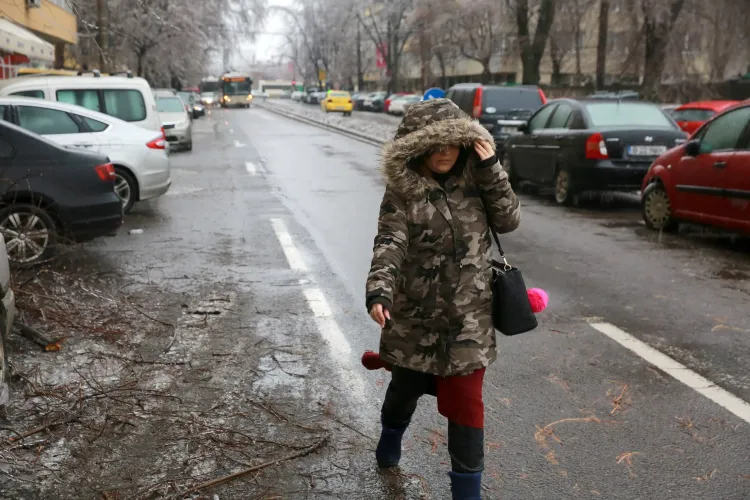
The onset of the week brought substantial snowfall to Bucharest and various southern areas, resulting in treacherous winter driving conditions on several roads, where maintenance personnel were actively engaged.
Romania's weather service previously predicted a significant cold spell in early February, with nighttime temperatures plummeting to as low as minus 15 degrees Celsius in mountain depressions and daytime highs dipping below zero in the northeastern region.
Rainfall was anticipated in lowland regions, while sleet and snow were expected above 1,500 meters in elevation due to lower temperatures in mountainous areas.
As February began, colder air spread across the nation, with northern Moldova experiencing daytime temperatures between minus 7 and minus 10 degrees Celsius.
The weather agency also indicated that February is likely to bring snowfall and mixed precipitation, especially in the northern, central, and eastern parts of the country.
Point of View
I recognize the urgent nature of the current flood situation in Romania. The issuance of a red flood alert emphasizes the significant threat posed to local communities. It is crucial for residents to remain informed and prepared as authorities work diligently to manage the crisis and ensure safety.
NationPress
3 Oct 2026
Frequently Asked Questions
What triggered the flood alert in Romania?
Heavy rainfall in the Prahova and Buzau counties has led to dangerous rises in water levels, prompting the National Institute of Hydrology and Water Management to issue a red flood alert.
How long is the flood alert valid?
The red flood alert is valid until 3 pm local time (1300 GMT).
Are emergency services responding to this situation?
Yes, emergency services are actively responding to flooding incidents and have sent alerts to residents in at-risk areas.
What other weather alerts are in place?
An orange alert is in effect for the Teleajen River, while a yellow alert is active for parts of the Barlad River basin.
What are the expected weather conditions in the coming days?
Cold temperatures and mixed precipitation are anticipated, with snowfall expected in the northern and eastern regions of Romania.