RSS Advocates for One Nation, One Election Reform in India
Synopsis
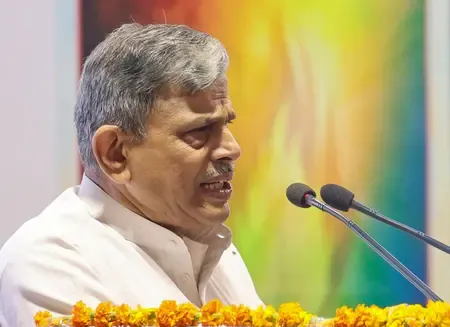
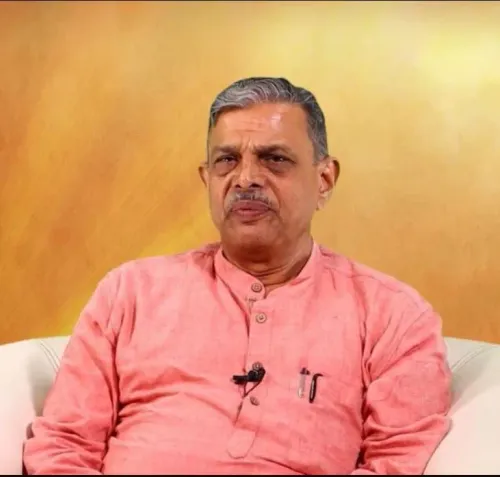
In a pivotal interview, RSS General Secretary Dattatreya Hosabale advocates for the 'one nation, one election' reform, emphasizing national unity and civic awareness. He calls for broader reforms, including enhanced women's representation and a focus on civic responsibilities to strengthen India's democracy.
Key Takeaways
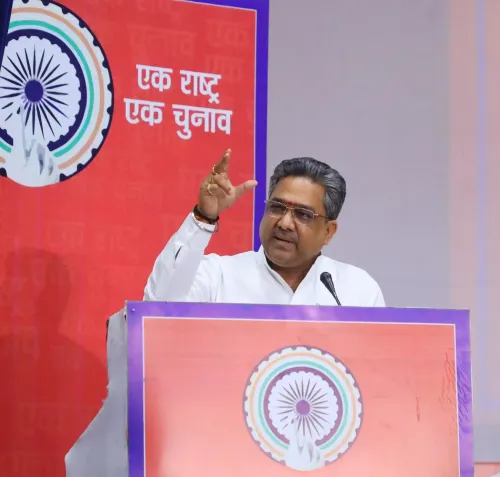
RSS supports the 'one nation, one election' reform.
Advocates for increased women's representation in governance.
Calls for a shift in political awareness among citizens.
Critiques appeasement politics and emphasizes equality.
Focuses on strengthening civic responsibilities within society.
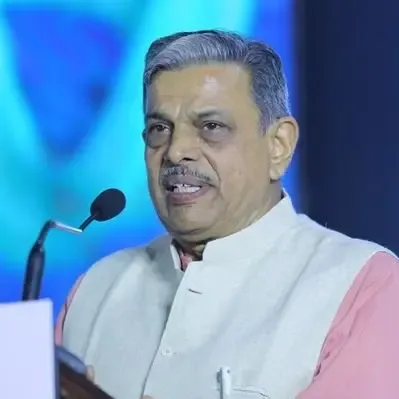
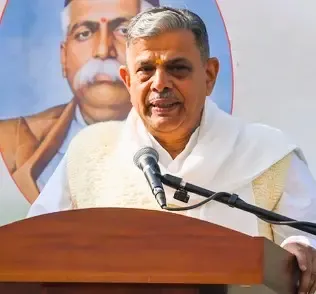
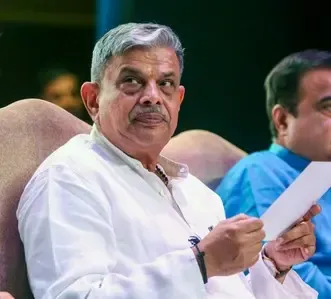
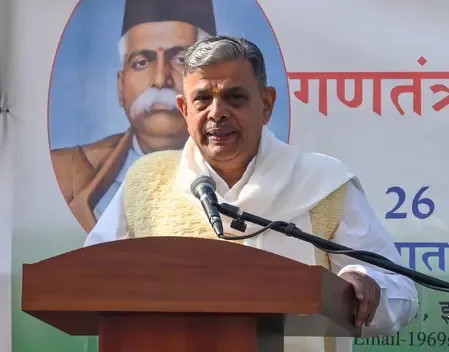
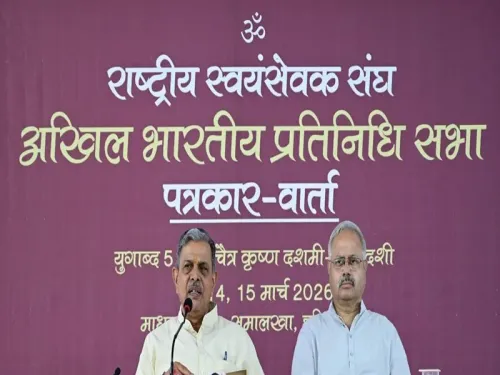
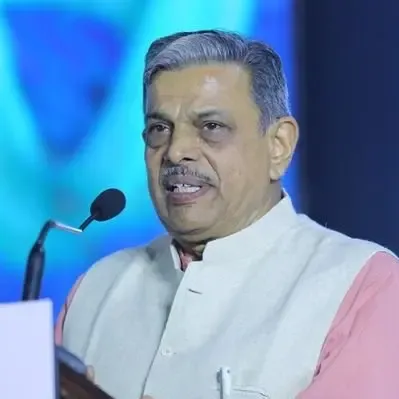
Stanford, April 18 (NationPress) The Rashtriya Swayamsevak Sangh (RSS) has endorsed significant political reforms such as “one nation, one election”, as its General Secretary Dattatreya Hosabale advocates for a governance model built on national unity, political integrity, and civic awareness. He also highlighted substantial structural and social challenges confronting India's democracy.
In an exclusive interview commemorating the RSS's centenary, Hosabale asserted that conducting simultaneous elections nationwide would enhance democratic operations and diminish the occurrence of political disturbances.
“The concept of one nation, one election is already well established,” he remarked, categorizing it as a critical reform for India's political landscape.
He also expressed support for increasing women's representation in governance, labeling “33 percent female participation” as a transformative step that could significantly influence political decision-making.
Hosabale emphasized that mere structural reforms are inadequate without a profound shift in the political consciousness of the populace.
“Citizens need political education to form informed opinions, which is crucial for both society and the nation,” he stated, stressing the importance of engaged civic involvement.
He contended that democracy must extend beyond elections to embody a broader ethos centered on responsibility and national interest.
“Political parties must prioritize the nation first, followed by other considerations. This principle should be absorbed by all political entities,” he insisted.
Critiquing what he referred to as “appeasement politics,” Hosabale noted that it has inflicted significant harm on the country’s social fabric and the unity and welfare of the nation.
“Appeasement politics must be completely abolished,” he stated, while reiterating that equality should remain at the heart of governance.
“All Indians possess equal rights. No one should be treated as a second-class citizen,” he added.
He pointed to the uniform civil code as a measure to attain legal equality and bolster national unity, arguing that all citizens ought to be treated equally under the law, regardless of their religious or linguistic backgrounds.
In response to a query, Hosabale connected the rising political influence of individuals linked with the RSS to shifting voter expectations, suggesting that governance performance and cultural grounding have influenced electoral results.
“The growing awareness among the populace... they are realizing that they can achieve better societal welfare,” he remarked, citing ongoing electoral successes at the national level and in various states.
He noted that earlier political tactics that relied on social or identity divisions “did not resonate with the Indian public,” resulting in a gradual change in public sentiment.
According to Hosabale, leadership emerging from an RSS background has played a role in “maintaining social cohesion,” presenting it as a counterbalance to fragmentation in political dialogue.
Beyond electoral reforms, Hosabale proposed a more extensive framework for political and social transformation, pinpointing civic responsibility as a critical area where India continues to encounter challenges.
“Despite India's vast greatness and wealth... many individuals feel we are lacking in civic sense and civic duties,” he remarked, underscoring the necessity to enhance public discipline and community responsibility.
He mentioned that the RSS has increasingly concentrated on five areas of social transformation: fostering social harmony, strengthening familial bonds, promoting eco-friendly practices, encouraging self-sufficiency, and enhancing civic responsibilities.
Hosabale also underscored the organization's commitment to expanding its outreach and evolving with the times, characterizing the RSS as “constantly adapting.”
“RSS has been adapting to the changing times,” he said, referencing the shifts in focus before and after independence and the introduction of new initiatives to meet emerging needs.
He cited the establishment of specialized units for public service, media outreach, and communication as examples of how the organization has institutionalized its efforts.
“We initiated a department for public service, outreach, and media and communication,” he elaborated, emphasizing the increasing importance of training and skill development.
Another developing focus, he noted, is establishing networks across civil society by connecting individuals and organizations engaged in social and cultural endeavors.
“Numerous individuals are doing commendable work... yet they often work in isolation. RSS believes in harnessing the power of good, hence we aim to network them,” Hosabale stated.
He indicated that such initiatives seek to create a broader ecosystem of collaboration that transcends the RSS’s own organizational boundaries.
On a conceptual level, Hosabale described the RSS as contributing to the development of “human social capital,” framing it as both an organizational framework and a way of life grounded in cultural values.
“RSS functions as an organization in structure... but it also represents a lifestyle,” he added, asserting that its model could be adapted across various societies worldwide.
Point of View
The RSS's push for reforms like 'one nation, one election' reflects a significant shift towards enhancing political integrity and civic awareness. This approach prioritizes national unity and equality, aiming to address pressing challenges within India's democratic framework.
NationPress
16 Sept 2026
Frequently Asked Questions
What is the 'one nation, one election' proposal?
The 'one nation, one election' proposal advocates for conducting simultaneous elections across India to improve governance and reduce political disruptions.
Who is Dattatreya Hosabale?
Dattatreya Hosabale is the General Secretary of the Rashtriya Swayamsevak Sangh (RSS), an organization promoting national unity and civic awareness.
Why is women's representation important in governance?
Enhancing women's representation in governance is crucial for achieving balanced decision-making and fostering inclusive policies that benefit society.
What are the challenges facing India's democracy?
India's democracy faces structural and social challenges, including issues related to political awareness, civic responsibilities, and appeasement politics.
How does the RSS view civic responsibilities?
The RSS emphasizes the importance of civic responsibilities as essential for fostering social cohesion and public discipline within the community.