RSS Chief Hosabale: Culture & Modernity Can Coexist, Tells Hudson Institute
Synopsis
RSS General Secretary Dattatreya Hosabale took the RSS's message to Washington's Hudson Institute, arguing Hindu identity is civilisational — not religious — and that culture and modernity can coexist. His appearance marks a rare, strategic effort to reshape the RSS's global image amid deepening India-US ties.
Key Takeaways
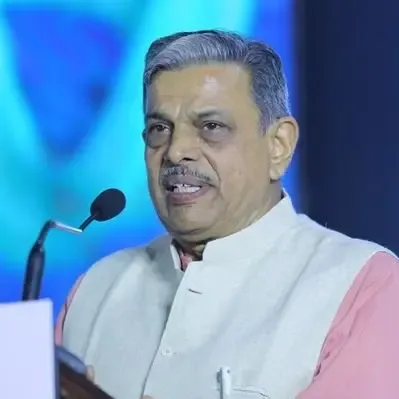
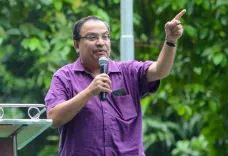
RSS General Secretary Dattatreya Hosabale spoke at the Hudson Institute's New India Conference in Washington on April 24, 2025 .
Hosabale described the RSS as a "people's voluntary movement" engaged in nation-building for over 100 years , operating nearly 40 civic institutions across education, health and disaster relief.
He argued that Hindu identity is a civilisational concept, not a religious one, and that cultural values and modernisation "can exist simultaneously." Hosabale directly countered Western narratives labelling the RSS as "anti-minority, anti-development, anti-modernisation," calling them "not true." He outlined five RSS priorities for its next phase: social harmony, eco-friendly life, family values, self-reliance , and civic duties .
His appearance signals a broader RSS international outreach strategy aligned with India's deepening strategic partnership with the United States .
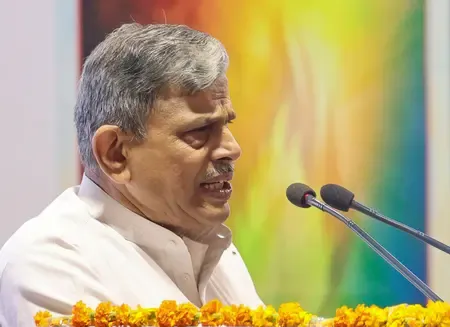
Washington, April 24: Rashtriya Swayamsevak Sangh (RSS) General Secretary Dattatreya Hosabale made a compelling case for India's civilisational identity on the global stage, telling an elite Washington audience at the Hudson Institute's New India Conference that cultural values and modernisation are not opposing forces but can thrive together. His remarks signal a deliberate RSS push to reshape its international image at a time when India-US strategic ties are deepening rapidly.
RSS as a Civilisational, Not Religious, Movement
Addressing a gathering of policymakers, scholars, and strategic experts, Hosabale described the RSS — founded in 1925 and widely considered one of the world's largest volunteer organisations — as a "people's voluntary movement" driven by "cultural ethos and civilisation values." He stressed that the organisation's century-long mission has been to build a corps of selfless volunteers committed to social service and nation building.
"RSS is the people's voluntary movement, inspired by cultural ethos and civilisation values… engaged for the last 100 years to create volunteers," he said, adding that tens of thousands of daily and weekly gatherings are held to instil "self-confidence, service-mindedness and a feeling of oneness."
Crucially, Hosabale framed Hindu identity as a civilisational concept rather than a narrowly religious one. "Hindu identity is a civilisational identity, not a religious one… there is no room for being alienated," he said — a formulation clearly aimed at countering Western perceptions of the RSS as an exclusionary Hindu nationalist body.
Countering Western Misconceptions About RSS
Hosabale acknowledged head-on that the RSS remains "extremely poorly understood" in the West, pushing back against entrenched narratives that portray it as "anti-minority, anti-development, anti-modernisation." He called these characterisations "not true" and said they have been constructed and reinforced over decades.
He argued that dialogue — with different communities, institutions, think tanks and universities — is essential to dismantle "misconceptions" and "misgivings." This outreach itself is noteworthy: the RSS has historically been reticent about engaging Western intellectual circles, making Hosabale's appearance at the Hudson Institute a strategically significant moment.
The organisation, he noted, now operates across nearly 40 civic institutions spanning education, health, rural development and disaster relief — a scale of grassroots engagement that rarely features in international coverage of the RSS.
Culture and Modernity: The Banyan Tree Metaphor
One of the most quoted lines from Hosabale's address was his rejection of any perceived conflict between tradition and progress. "Cultural values and modernisation are not contradictory… they can exist simultaneously," he said, using the imagery of a banyan tree — with "deep, strong roots" supporting "new leaves and flowers" — to illustrate how a society can evolve without abandoning its foundational identity.
This metaphor carries weight in the broader global debate about whether non-Western civilisations must adopt a Western liberal framework to be considered modern. Hosabale's framing positions India as offering an alternative model — one that integrates ancient wisdom with contemporary progress.
India-US Relations and People-to-People Ties
On geopolitics, Hosabale said India seeks "good relations with all countries," including the United States, but emphasised that durable partnerships must be anchored in "mutual trust, mutual respect and recognising the needs of each." He called for strengthening people-to-people connections, noting that "many a time, prejudices work" and that "better understanding is necessary."
His remarks come at a pivotal moment: Washington increasingly views New Delhi as a cornerstone partner in the Indo-Pacific, particularly as competition with China intensifies and global geopolitical alignments shift. The New India Conference itself reflects this growing strategic convergence, bringing together top-tier voices from both nations to examine the future of the bilateral relationship.
RSS Five-Point Domestic Agenda for the Next Phase
Hosabale also laid out five priority areas guiding the RSS as it enters a new chapter: social harmony, eco-friendly living, family values, self-reliance, and civic duties and civic sense. He described these as "universal" principles aimed at building a "strong, prosperous nation" capable of contributing meaningfully to global well-being.
He underscored the depth of commitment expected of RSS volunteers. "It is a way of life… 24 by 7 and 365 days… once a swayamsevak, always a swayamsevak," he said — framing volunteerism not as a part-time activity but as an identity and a lifelong calling.
As India's global footprint expands and its diaspora grows more influential, the RSS's international engagement strategy is likely to intensify — with more high-profile appearances at Western think tanks and policy forums expected in the months ahead.
Point of View
The organisation is clearly moving to control its own international narrative before others define it further. The framing of Hindu identity as civilisational rather than religious is a sophisticated diplomatic pivot, designed to neutralise Western liberal discomfort. What mainstream coverage misses is the timing: this outreach coincides with India's deepening defence and technology partnerships with the US, suggesting the RSS is aligning its soft-power messaging with the Indian state's hard-power ambitions.
NationPress
18 Sept 2026
Frequently Asked Questions
What did RSS General Secretary Dattatreya Hosabale say at the Hudson Institute?
Dattatreya Hosabale addressed the Hudson Institute's New India Conference in Washington on April 24, 2025, outlining the RSS's global outreach and civilisational worldview. He argued that cultural values and modernisation can coexist and rejected Western portrayals of the RSS as anti-minority or anti-development.
What is the RSS's view on Hindu identity according to Hosabale?
Hosabale stated that Hindu identity is a civilisational identity, not a religious one, and that there is no room for alienation within it. He used this framing to counter perceptions of the RSS as an exclusionary organisation.
What are the RSS's five priority areas for its next phase?
Hosabale outlined five focus areas: social harmony, eco-friendly living, family values, self-reliance, and civic duties and civic sense. He described these as universal principles aimed at building a strong and prosperous India.
Why is the RSS engaging with Western think tanks like the Hudson Institute?
The RSS is making a deliberate effort to reshape its international image, which Hosabale acknowledged is "extremely poorly understood" in the West. Engaging institutions like the Hudson Institute allows the RSS to directly counter longstanding negative narratives before global audiences.
What is the Hudson Institute's New India Conference?
The New India Conference is an event organised by the Washington-based Hudson Institute that brings together policymakers, scholars and strategic experts to assess India's growing global role and the future of the India-US partnership. It reflects Washington's increasing focus on India as a key Indo-Pacific partner.