ICSSR geopolitics programme for 30 faculty begins at Jamia Millia Islamia

Synopsis
Thirty early-career faculty from across India have gathered at Jamia Millia Islamia for a 12-day ICSSR-sponsored deep dive into 21st-century geopolitics — from nuclear strategy and energy politics to decolonial research frameworks. With former Ambassador Talmiz Ahmad setting the tone and ex-Deputy NSA Arvind Gupta closing the programme, it signals a serious institutional effort to sharpen India's next generation of strategic scholars.
Key Takeaways
30 early-career faculty from universities and research institutes across India are participating in the programme from 4 to 16 May 2026 .
The programme is sponsored by the Indian Council of Social Science Research (ICSSR) and hosted at Jamia Millia Islamia's MMAJ Academy of International Studies .
Participants will attend 36 sessions covering maritime geopolitics, geoeconomics, energy politics, counter-terrorism, nuclear geopolitics, and regional dynamics across West Asia, Africa, Europe, Eurasia, and the Americas .
More than 25 resource persons from institutions including JNU, AMU, Jadavpur University, BHU , and the Manohar Parrikar Institute for Defence Studies and Analyses are contributing.
The valedictory address on 16 May 2026 will be delivered by Arvind Gupta , former Deputy National Security Advisor of India.
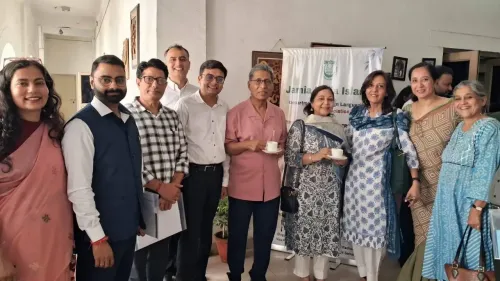
A two-week capacity building programme on "Geopolitics in the 21st Century: Global Trends, Regional Dynamics, and Implications for India" commenced at Jamia Millia Islamia (JMI), New Delhi, on 4 May 2026, bringing together 30 early-career faculty members from universities, colleges, and research institutes across the country. Sponsored by the Indian Council of Social Science Research (ICSSR), the 12-day programme runs through 16 May 2026 and is hosted at the Maulana Mohammad Ali Jauhar Academy of International Studies (MMAJ-AIS).
Inauguration and Key Speakers
The programme was inaugurated by Professor Zubair Meenai, Dean of JMI's Faculty of Social Sciences, who underscored the importance of ICSSR's investment in building the academic capacity of early-career scholars. He emphasised the interdisciplinary relevance of geopolitics for social science research at large.
The Inaugural Lecture was delivered by Talmiz Ahmad, former Indian Ambassador to Saudi Arabia, Oman, and the UAE, serving as Guest of Honour. Drawing on a distinguished diplomatic career spanning over three decades, Ahmad offered insights into the evolving contours of global geopolitics and India's positioning in a shifting world order. The session was chaired by Professor Ajay Darshan Behera, Director of the MMAJ Academy of International Studies.
Programme Structure and Themes
Over 36 sessions across 12 working days, participants will engage with a broad spectrum of themes — from maritime geopolitics and geoeconomics to energy politics, counter-terrorism, and nuclear geopolitics. Regional focus areas include West Asia, Africa, Europe, Eurasia, and the Americas, alongside dedicated sessions on India's strategic positioning in the contemporary global order and cultural diplomacy.
In keeping with ICSSR guidelines, the programme also incorporates sessions on research methodology, quantitative data in social science research, academic writing, library and e-library resources, Indian Knowledge Systems, and decolonial frameworks in social science research.
Organising Team and Institutional Collaboration
The programme is being jointly organised by Professor Mujib Alam, Course Director at MMAJ-AIS, and Professor Sujata Ashwarya, Co-Course Director for JMI's Centre for West Asian Studies. More than 25 distinguished resource persons have been drawn from leading institutions including Jawaharlal Nehru University (JNU), Aligarh Muslim University (AMU), Jadavpur University, the Maharaja Sayajirao University of Baroda, Banaras Hindu University (BHU), Doon University, the Indian Institute of Foreign Trade, South Asian University, the Manohar Parrikar Institute for Defence Studies and Analyses, the Vivekananda International Foundation, O.P. Jindal Global University, and Jamia Millia Islamia itself.
Valedictory and What Comes Next
The programme concludes on 16 May 2026 with a valedictory address by Arvind Gupta, Director of the Vivekananda International Foundation and former Deputy National Security Advisor of India. The initiative reflects a broader push to equip the next generation of Indian social science scholars with the analytical tools needed to engage with an increasingly complex global security environment.
Point of View
Yet they quietly shape how the next generation of Indian academics frames questions of power, strategy, and sovereignty. The choice of themes — decolonial frameworks alongside nuclear geopolitics — reflects a tension within Indian social science between Western-derived IR theory and the push for indigenised knowledge systems. That both Talmiz Ahmad, a seasoned Gulf diplomat, and Arvind Gupta, a former security establishment insider, are bookending the programme suggests the curriculum is deliberately bridging practitioner insight and academic rigour. Whether that synthesis translates into publishable, policy-relevant research will be the real measure of ICSSR's investment.
NationPress
19 Sept 2026
Frequently Asked Questions
What is the ICSSR geopolitics programme at Jamia Millia Islamia?
It is a 12-day capacity building programme titled 'Geopolitics in the 21st Century: Global Trends, Regional Dynamics, and Implications for India', running from 4 to 16 May 2026 at the Maulana Mohammad Ali Jauhar Academy of International Studies, JMI. Sponsored by the Indian Council of Social Science Research, it brings together 30 early-career faculty from across India for 36 sessions on strategic and geopolitical themes.
Who inaugurated the ICSSR geopolitics programme at JMI?
The programme was inaugurated by Professor Zubair Meenai, Dean of JMI's Faculty of Social Sciences. Former Indian Ambassador Talmiz Ahmad delivered the Inaugural Lecture as Guest of Honour, drawing on his three-decade diplomatic career across Saudi Arabia, Oman, and the UAE.
What topics are covered in the programme?
The 36 sessions span maritime geopolitics, geoeconomics, energy politics, counter-terrorism, nuclear geopolitics, cultural diplomacy, and the geopolitics of West Asia, Africa, Europe, Eurasia, and the Americas. Sessions on research methodology, Indian Knowledge Systems, and decolonial frameworks are also included as per ICSSR guidelines.
Who are the resource persons for the programme?
More than 25 resource persons have been drawn from institutions including JNU, AMU, Jadavpur University, BHU, the Manohar Parrikar Institute for Defence Studies and Analyses, the Vivekananda International Foundation, and O.P. Jindal Global University, among others.
Who will deliver the valedictory address at the end of the programme?
Arvind Gupta, Director of the Vivekananda International Foundation and former Deputy National Security Advisor of India, will deliver the valedictory address on 16 May 2026, the final day of the programme.