Jamia Millia Islamia seminar unites 48 researchers on translation studies
Synopsis
Over 48 young researchers from India's top universities gathered at Jamia Millia Islamia on 8 May to deliberate on translation, cultural mediation, and language politics — a sign that Indian academia is increasingly treating linguistic exchange as a site of cultural power, not just pedagogy.
Key Takeaways
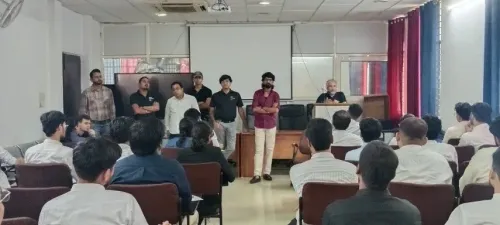
Jamia Millia Islamia hosted a National Young Researchers' Seminar on 8 May at the India-Arab Cultural Centre .
Over 48 young researchers from institutions including JNU , University of Delhi , and Panjab University participated.
Six interdisciplinary tracks were covered, including Cultural Diplomacy , Translation Studies , and Language, Education and Politics .
Professor Sonya Surabhi Gupta identified the 1970s as a turning point for the indigenisation of foreign languages in India.
Professor Kiran Chaudhry highlighted the shift from a monocultural to a pluralistic approach in foreign language teaching.
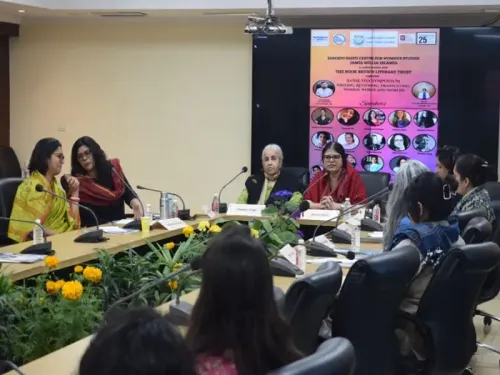
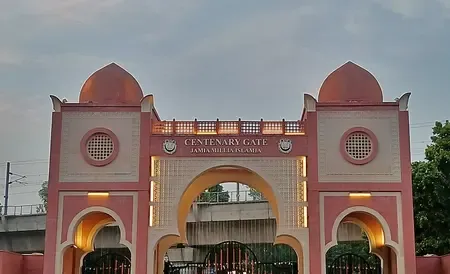
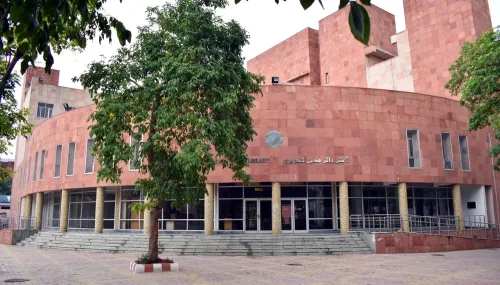
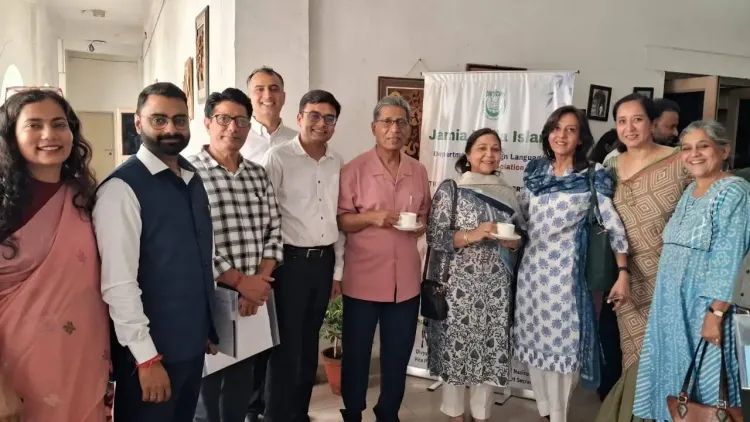
The Department of Foreign Languages at Jamia Millia Islamia (JMI), New Delhi, hosted a National Young Researchers' Seminar on 8 May, bringing together over 48 young researchers from across India to deliberate on translation studies, cultural mediation, and language politics. The event was held at the India-Arab Cultural Centre (IACC) on the JMI campus, according to a statement issued by JMI Chief Public Relations Officer Professor Saima Saeed.
Institutions and Themes Represented
Researchers from Jawaharlal Nehru University, the University of Delhi, Panjab University, Amity University, SRM University, and several other prestigious institutions participated in the seminar. The wide-ranging agenda covered translation studies, intercultural communication, literature, language politics, and global cultural exchange — themes that are increasingly central to academic discourse in a multilingual, digitalised world.
Key Addresses and Insights
The inaugural session opened with a welcome address by Professor Md. Faizullah Khan, Head of the Department of Foreign Languages, who emphasised student perspectives on cross-cultural communication in today's globalised environment.
Anisur Rahman, former professor from the Department of English at JMI, attended as Chief Guest. In his inaugural address, Rahman noted that "no platform is more enriching than engaging with young researchers and learning from them," while stressing the importance of interdisciplinary research and a multilingual approach.
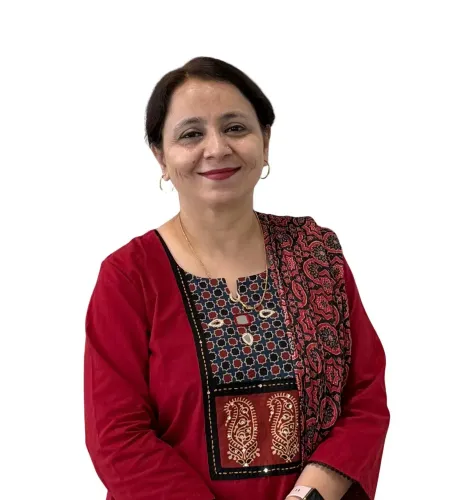
Guest of Honour Professor Kiran Chaudhry highlighted the timeliness of the seminar's theme, pointing to the growing frequency of cultural encounters globally and what she described as an urgent need to reflect on pluralism. She outlined the shift in foreign language pedagogy from a "monocultural" to a "pluralistic" model, offering insights into contemporary teaching practice.
In the keynote address, Professor Sonya Surabhi Gupta (Retd.), Department of Foreign Languages, JMI, argued that identity has a lexical foundation — that is, language itself. She elaborated on the nexus between language and power and underscored the role of foreign languages in what she termed "defence of cultural humanism." She also identified the 1970s as a turning point for the indigenisation of foreign languages in India — a historical marker that continues to shape curriculum debates today.
Professor Simi Malhotra, Department of English, JMI, delivered the Chair's remarks, stressing that cultural understanding is "the need of the hour" and commending the relevance of the seminar's theme in contemporary academic life.
Parallel Technical Sessions
The seminar featured multiple parallel technical sessions spanning six interdisciplinary tracks: Translation, Language and Cultural Mediation; Society, History and Interdisciplinary Perspectives; Cultural Diplomacy and International Relations; Literature, Identity and Self–Other; Language, Education and Politics; and Media, Popular Culture and Representation. The breadth of themes reflects a broader shift in Indian academia toward treating translation not merely as a linguistic exercise but as a site of cultural and political negotiation.
Why This Seminar Matters
This comes amid growing institutional interest in foreign language studies as tools of soft power and cultural diplomacy — a conversation that has gained urgency as India deepens its engagement with the Arab world, Europe, and East Asia. The seminar's focus on young researchers signals an effort to build the next generation of scholars equipped to navigate complex linguistic and cultural intersections. Further academic outputs and publications from the seminar's proceedings are anticipated in the coming months.
Frequently Asked Questions
What was the National Young Researchers' Seminar at Jamia Millia Islamia about?
The seminar, held on 8 May at the India-Arab Cultural Centre, focused on translation studies, cultural mediation, language politics, intercultural communication, and global cultural exchange. It was organised by the Department of Foreign Languages at Jamia Millia Islamia and brought together over 48 young researchers from institutions across India.
Which universities participated in the JMI translation seminar?
Researchers from Jawaharlal Nehru University, the University of Delhi, Panjab University, Amity University, SRM University, and several other institutions participated in the seminar.
What did the keynote speaker say at the JMI seminar?
Professor Sonya Surabhi Gupta (Retd.) argued that identity has a lexical foundation — that language is central to identity. She elaborated on the nexus between language and power and identified the 1970s as a turning point for the indigenisation of foreign languages in India.
What topics were covered in the seminar's technical sessions?
The seminar's parallel technical sessions covered six tracks: Translation, Language and Cultural Mediation; Society, History and Interdisciplinary Perspectives; Cultural Diplomacy and International Relations; Literature, Identity and Self–Other; Language, Education and Politics; and Media, Popular Culture and Representation.
Why is the JMI translation seminar significant?
The seminar reflects a growing academic recognition that translation and foreign language studies are not merely linguistic but also political and cultural endeavours. With India deepening ties across the Arab world and beyond, building scholarly capacity in these areas carries practical diplomatic relevance.