Russian Ambassador: Moscow Ready to Supply Oil to India Amid West Asia Tensions
Synopsis
In light of escalating tensions in West Asia, Russian Ambassador Denis Alipov urges for a negotiated resolution. He reassures that Moscow remains open to supplying oil to India, emphasizing New Delhi's autonomy in choosing its suppliers amidst concerns over rising global prices.
Key Takeaways
Negotiations are essential for resolving the conflict in West Asia.
Moscow has always been open to supplying oil to India.
The potential closure of the Strait of Hormuz raises global fuel price concerns.
Russia condemns military actions against Iran, advocating for a diplomatic approach.
Political stability in the region is crucial for global security.
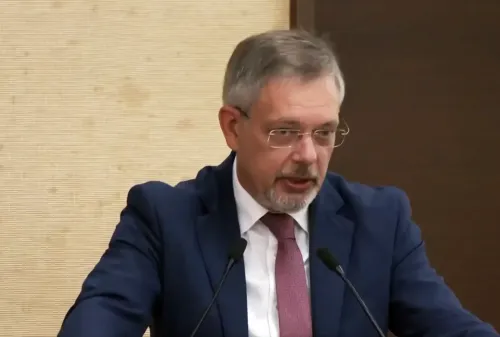
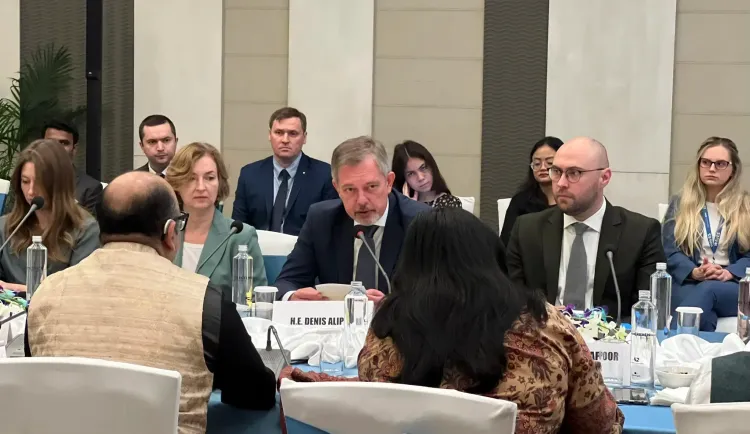
New Delhi, March 5 (NationPress) Amid rising tensions from the ongoing conflict in West Asia, Denis Alipov, the Russian Ambassador to India, emphasized on Thursday the necessity of resolving the situation through negotiations. With escalating concerns about global prices due to the potential closure of the Strait of Hormuz, Alipov reaffirmed that it is ultimately New Delhi's decision on oil suppliers, noting that Moscow has consistently been open to providing oil to India.
While addressing the media in New Delhi, Alipov stated, "The resolution is always through negotiations. The conflict should cease as soon as possible." When queried on the duration of the war, he remarked, "I have no idea. This is a question to the US." Amidst fears regarding the closure of the Strait of Hormuz, which could significantly drive up global fuel prices, Alipov said, "It's up to India to determine supplies and sources. We have always been open towards supplying oil to India."
On February 28, Russia condemned the "unprovoked" military assault by the United States and Israel on Iran, highlighting the urgent need to return to a political and diplomatic resolution.
Russia's Foreign Ministry confirmed that Foreign Minister Sergei Lavrov and Iranian Foreign Minister Seyed Abbas Araghchi communicated over the phone on Saturday, initiated by Iran. The Iranian minister detailed the Iranian leadership's actions to counter US and Israeli aggression, which have disrupted negotiations regarding Iran's nuclear program. He announced plans to urgently convene a meeting of the UN Security Council, as stated by the Russian MFA following the call.
"Lavrov condemned the unprovoked military attack by the US and Israel on Iran, which violates international law principles and disregards the severe implications for regional and global stability. He stressed the need to immediately halt attacks against the Islamic Republic and revert to a political and diplomatic resolution," the statement added.
According to the statement, Lavrov expressed Russia's willingness, including at the UN Security Council, to assist in seeking peaceful solutions grounded in international law, mutual respect, and a balance of interests.
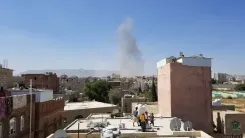
The conflict in West Asia was sparked by US-Israel strikes on Iran aimed at undermining Tehran's missile capabilities and military infrastructure. The initial phase of this operation resulted in the deaths of key figures within the Iranian leadership, including Supreme Leader Ayatollah Ali Khamenei, prompting Iran to respond with drone and missile strikes aimed at US assets and allied forces throughout the region.
Point of View
The ongoing conflict in West Asia poses significant implications not only for regional stability but also for India’s energy security. The Russian Ambassador's commitment to supplying oil highlights Moscow's strategic partnership with New Delhi amid global tensions.
NationPress
19 Sept 2026
Frequently Asked Questions
What is the current situation in West Asia?
The situation in West Asia is tense due to ongoing conflicts, particularly involving Iran, the US, and Israel, with rising concerns over global oil prices.
What did the Russian Ambassador say about oil supplies to India?
The Russian Ambassador, Denis Alipov, stated that Moscow has always been open to supplying oil to India and that it is up to New Delhi to decide on their suppliers.
How does the closure of the Strait of Hormuz impact global oil prices?
The closure of the Strait of Hormuz could lead to a significant increase in global oil prices, raising concerns for many countries dependent on oil imports.
What role does Russia play in the current West Asia conflict?
Russia is advocating for a diplomatic solution and condemning military actions taken by the US and Israel against Iran, emphasizing the need for negotiations.
What has been Russia's response to the US-Israel strikes on Iran?
Russia condemned the unprovoked military attack by the US and Israel on Iran and called for a return to political and diplomatic resolutions.