India's fuel supply stayed stable during Strait of Hormuz crisis: Navdeep Suri
Synopsis
When the Strait of Hormuz shut on 28 February and oil spiked to $126 a barrel, India didn't blink — at least not visibly. Former Ambassador Navdeep Suri reveals the behind-the-scenes diplomacy with UAE, Saudi Arabia, Qatar, Russia, and even Venezuela that kept Indian fuel flowing while Pakistan shut schools and other nations queued for petrol.
Key Takeaways
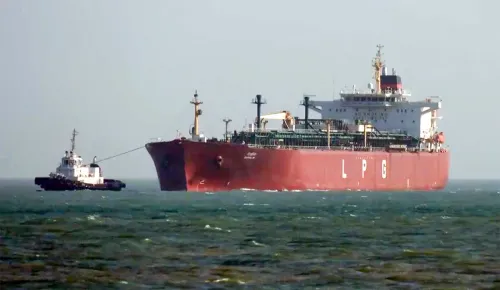
The Strait of Hormuz closed on 28 February , triggering what former Ambassador Navdeep Suri called 'a worst-case situation for global energy markets.' India leveraged ties with the UAE , Saudi Arabia , and Qatar — backed by high-level visits — to keep LPG and crude oil flowing.
New Delhi diversified imports to Russia , the United States , Venezuela , Nigeria , Gabon , and Guyana to reduce Gulf dependence.
Global oil prices surged from $70 to $126 a barrel ; the government and oil companies absorbed the bulk of the increase to protect consumers.
India also expanded domestic LPG production quickly, aiding demand management during the crunch.
In contrast, countries like Pakistan reportedly shut schools due to fuel shortages — conditions India largely avoided.
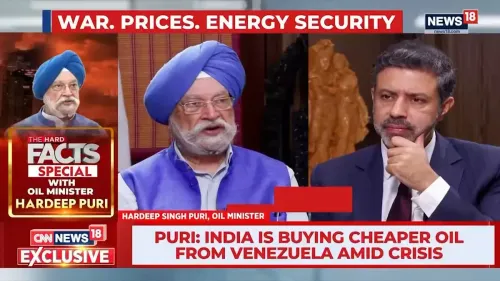
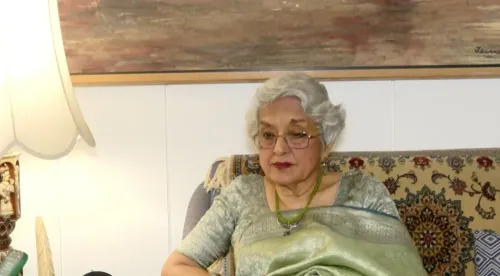
India's energy diplomacy and swift government action shielded domestic fuel supplies when the Strait of Hormuz closure on 28 February threatened to destabilise global energy markets, former Indian Ambassador to the UAE, Navdeep Suri, said on Monday, 29 June. Suri described the closure as 'really a worst-case situation for global energy markets' but credited proactive diplomacy for keeping Indian consumers largely insulated.
Diplomatic relationships that paid off
'I think there was some very proactive energy diplomacy that we saw,' Suri said. He pointed to the special ties India had cultivated with the UAE, Saudi Arabia, and Qatar as decisive factors. The Prime Minister's visit to the UAE on 15 May and the Minister of Petroleum's visit to Qatar during the conflict, he noted, ensured that energy flows — including LPG and crude oil — continued without disruption.
India's energy pivot: From Gulf to Russia to the Americas
Beyond the Gulf, Suri highlighted India's ability to rapidly diversify its import sources. The country pivoted from Gulf suppliers to Russia, then to the United States, and further extended its reach to Venezuela, Nigeria, Gabon, and Guyana — tapping non-traditional suppliers across Africa and Latin America. 'I think all of that contributed to a situation where even though many other countries were facing a serious crisis, we managed to largely avoid it,' Suri remarked.
How prices were kept in check
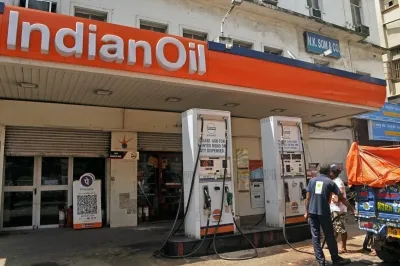
When global oil prices spiked from $70 a barrel to $126 a barrel following the 28 February crisis, the government and state-run oil companies chose to absorb much of the increase rather than pass it on to consumers. 'The government sacrificed taxes, the oil companies sacrificed some of their profits and managed to keep prices in check,' Suri said. He described the pricing response as 'fairly prudent', adding that 'the objective of the government was really that in the short run, the consumer should be protected.'
Domestic production and demand management
Alongside import diversification, India also expanded domestic LPG production relatively quickly, according to Suri. This combination of supply-side flexibility and demand management helped prevent the shortages seen elsewhere. In sharp contrast, countries like Pakistan reportedly shut schools, and several other nations experienced fuel queues and acute shortages — conditions that did not materialise in India to any comparable degree.
The broader significance
The episode underscores how India's multi-alignment foreign policy — maintaining working relationships with the Gulf, Russia, the West, and emerging markets simultaneously — translated into a tangible economic buffer during a geopolitical shock. With energy security remaining a structural vulnerability for a large import-dependent economy, the crisis has reinforced arguments for continued supply diversification. How durable these arrangements prove in a prolonged or deeper conflict scenario remains the key question going forward.
Point of View
At its core, a diplomatic insider's self-assessment — and those tend to smooth over the friction. The real stress test is what would have happened had the Hormuz closure lasted longer than it did: Russia-sourced oil requires insurance and shipping workarounds that are neither cheap nor infinitely scalable, and the Africa-Latin America pivot is still nascent. The government's decision to absorb the $70-to-$126-a-barrel spike through tax and profit sacrifice was the right short-term call, but it deferred a fiscal reckoning rather than resolving one. India's multi-alignment strategy bought time — the harder question is whether it has bought structural energy security, or just a fortunate outcome in a crisis that ended before the seams showed.
NationPress
28 Sept 2026
Frequently Asked Questions
What happened to India's fuel supply when the Strait of Hormuz closed?
India maintained a largely normal fuel supply despite the Strait of Hormuz closure on 28 February, according to former Ambassador Navdeep Suri. The government's proactive energy diplomacy with Gulf nations and rapid diversification to alternative suppliers prevented the shortages seen in several other countries.
Which countries did India turn to for oil during the West Asia crisis?
India drew on existing ties with the UAE, Saudi Arabia, and Qatar, while also pivoting to Russia, the United States, Venezuela, Nigeria, Gabon, and Guyana. This multi-source approach reduced dependence on any single supply corridor during the conflict.
How did the Indian government manage fuel prices when oil hit $126 a barrel?
When global crude prices spiked from $70 to $126 a barrel after 28 February, the government reduced taxes and state-run oil companies absorbed a portion of their profits to limit the pass-through to consumers. Suri described this as 'fairly prudent' pricing management aimed at short-term consumer protection.
How did India's situation compare to other countries during the crisis?
India fared significantly better than several peers. Countries like Pakistan reportedly shut schools due to fuel shortages, and others saw long queues at petrol stations. India avoided comparable disruptions, aided by diplomatic relationships and domestic LPG production expansion.
Who is Navdeep Suri and why is his assessment significant?
Navdeep Suri is a former Indian Ambassador to the UAE, giving him direct insight into the India-Gulf diplomatic relationship that proved critical during the crisis. His observations offer a first-hand perspective on how India's energy diplomacy functioned under acute geopolitical pressure.