Did S. Korea Launch a Nanosatellite for Earth Observation?

Synopsis
South Korea's latest space endeavor sees the launch of the NEONSAT-1A nanosatellite, a crucial step towards its goal of establishing a satellite constellation for Earth observation by 2027. With advanced imaging technology, this initiative aims to enhance monitoring of natural disasters in the region, showcasing Korea's commitment to space advancement.
Key Takeaways
Successful launch of NEONSAT-1A by South Korea.
Part of a broader initiative to establish a satellite constellation by 2027.
Collaboration between multiple institutions including KAIST and SaTReC .
Equipped with high-resolution imaging technology .
Supports near-real-time natural disaster monitoring .
Seoul, January 30 (NationPress) On Friday, a South Korean nanosatellite was successfully launched into orbit, marking a significant step in the nation’s ambitious project to establish a satellite constellation for Earth observation by 2027, as reported by the Korea AeroSpace Administration (KASA).
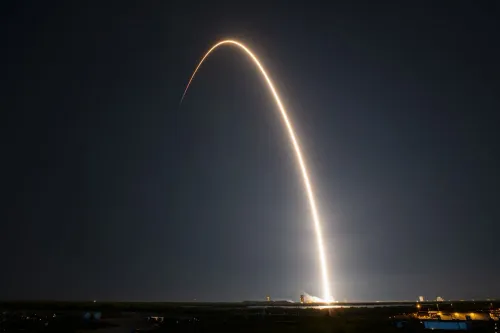
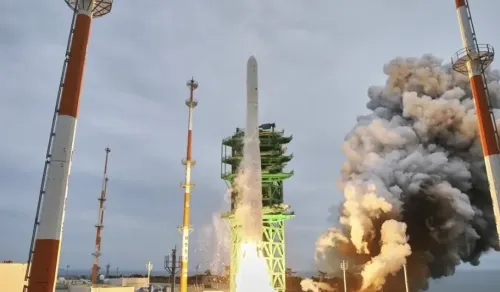
The NEONSAT-1A, which is designed for Earth observation, was propelled into space onboard the Electron rocket from the Mahia Launch Complex in New Zealand, courtesy of the US company Rocket Lab, according to Yonhap.
“LIFTOFF! The Electron rocket has embarked on its journey to orbit carrying NEONSAT-1A,” Rocket Lab shared on social media platform X.
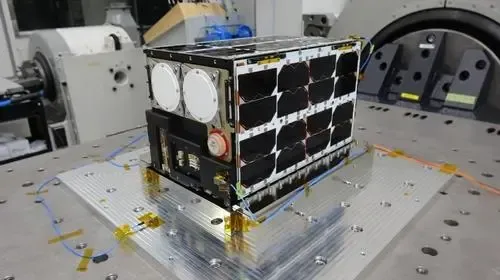
Engineered by the Korea Advanced Institute of Science and Technology (KAIST), this satellite is the second of a total of 11 nanosatellites that will comprise a constellation aimed at monitoring and imaging the Korean Peninsula and nearby regions.
Previously, only one satellite from this initiative, NEONSAT-1, had successfully reached low Earth orbit in April 2024.
The NEONSAT-1A is equipped with a cutting-edge high-resolution optical camera. However, it does not yet form a satellite constellation.
Developed to facilitate near-real-time monitoring of natural disasters affecting the Korean Peninsula, KAIST’s NEONSAT constellation involves collaboration among several Korean academic, industrial, and research entities, with SaTReC spearheading the system design and engineering, as per Rocket Lab’s announcement.
The NEONSAT initiative is financially supported by the Korean government’s Ministry of Science and ICT (MSIT).
This launch marked Rocket Lab's second mission of 2026 and its 81st overall.
Last year, the company executed a record-setting 21 missions.
“MISSION SUCCESS! Confirmation of payload deployment for the 'Bridging The Swarm' mission for KAIST,” Rocket Lab reported on X.
This launch is the second in just eight days and marks the 81st mission overall, with a perfect mission success rate in 2026, the US-based company added.
Point of View
I believe this launch represents a significant advancement in South Korea's space exploration efforts. The NEONSAT program not only enhances our monitoring capabilities of the Korean Peninsula but also reflects our nation's commitment to technological innovation and international collaboration in the field of space science.
NationPress
24 Sept 2026
Frequently Asked Questions
What is the purpose of the NEONSAT-1A?
The NEONSAT-1A is designed for Earth observation, especially for monitoring natural disasters in the Korean Peninsula and surrounding regions.
How many satellites are planned in the NEONSAT program?
The NEONSAT program plans to develop a total of 11 nanosatellites.
Who developed the NEONSAT-1A?
The NEONSAT-1A was developed by the Korea Advanced Institute of Science and Technology (KAIST).
What technology does NEONSAT-1A use?
The NEONSAT-1A is equipped with a high-resolution optical camera for advanced imaging.
Is the NEONSAT-1A part of a satellite constellation?
Currently, the NEONSAT-1A is not part of a complete constellation as it is the second satellite launched in the program.