Are South Korean Authorities Taking Bold Steps to Tackle Market Volatility?

Synopsis
In response to the declining Korean won and surging bond yields, South Korean financial authorities are preparing to implement decisive measures to stabilize the markets. This proactive approach aims to ensure economic resilience while managing potential risks. How will these measures impact the financial landscape in the coming months?
Key Takeaways
Proactive measures announced to stabilize market volatility.
Korean won faces significant decline.
Bond yields are on the rise due to economic factors.
Financial authorities are extending stabilization funds for bonds.
Economic resilience is a key focus for the FSC.
Seoul, Dec 15 (NationPress) On Monday, South Korea's financial authorities announced decisive and proactive measures aimed at mitigating market volatility, as the Korean won continues to decline and bond yields escalate.
During a discussion with top experts and senior officials from relevant government sectors, Lee Eog-weon, the chairman of the Financial Services Commission (FSC), noted that the nation’s financial markets had exhibited signs of stability in the latter half of the year, marked by improvements in economic conditions and a bull run in the stock market, as reported by Yonhap news agency.
However, bond yields have recently surged, and the currency market has experienced heightened fluctuations.
“Despite the rising market volatility, our economy remains resilient enough to withstand risks,” Lee emphasized, pointing to the stability of financial institutions, substantial foreign reserves, and low credit risk.
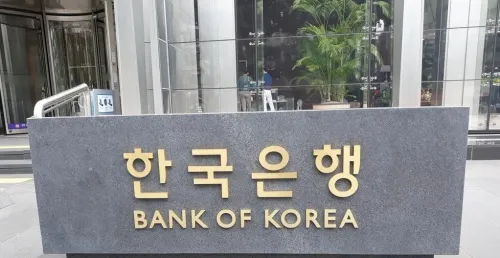
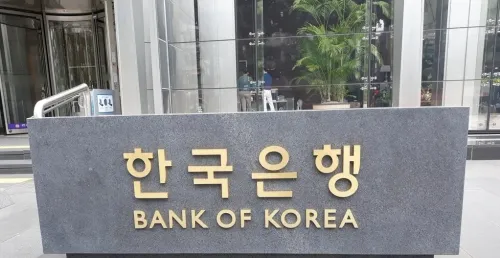
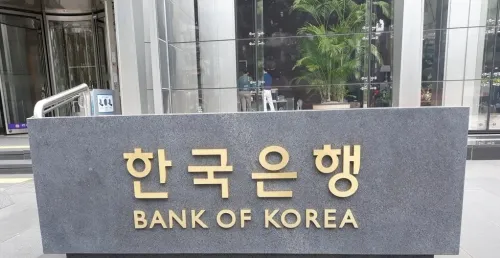
Bond yields have been climbing following the Bank of Korea’s (BOK) decision to maintain its key interest rate at 2.5% late last month to protect financial stability amid a weakening local currency and an unstable housing market.
Market participants believe that the central bank's easing cycle has likely reached its conclusion or could be prolonged.
As of Friday, the Korean won stood at 1,473.7 against the U.S. dollar, inching closer to the 1,500 won mark.
In response to the escalating market volatility, the authorities have opted to extend the bond market stabilization initiative throughout the coming year.
The FSC revealed that a total of 38 trillion won (approximately $25.7 billion) in bond market stabilization funds, alongside 61 trillion won for real estate project financing, will be prolonged for the next year.
The FSC chairman also reassured that household debts, loans related to real estate, and other potential risks are being effectively managed.
“While there is a possibility of increased market volatility in the future, we stand ready to implement decisive and proactive actions as needed, while closely monitoring market dynamics,” he stated.
Point of View
We recognize the vital role of financial authorities in maintaining market stability amid fluctuations. The proactive measures announced by the FSC are critical to ensuring economic resilience and public trust. Our commitment to reporting these developments reflects our dedication to keeping the nation informed during uncertain times.
NationPress
5 Oct 2026
Frequently Asked Questions
What measures are being taken to stabilize the market?
The South Korean financial authorities will extend bond market stabilization funds and real estate project financing measures to mitigate market volatility.
How is the Korean won currently performing?
As of Friday, the Korean won closed at 1,473.7 against the U.S. dollar, approaching the 1,500 won mark.
What caused the rise in bond yields?
Bond yields have surged following the Bank of Korea's decision to maintain the key interest rate at 2.5% to ensure financial stability.
How resilient is the South Korean economy?
Despite increased volatility, the economy shows resilience due to the soundness of financial institutions and ample foreign reserves.
What risks are being managed by authorities?
Authorities are effectively managing household debts, real estate-related loans, and other potential financial risks.