Is Sajad Lone Proposing Separation of Jammu from Kashmir Valley?
Synopsis
Sajad Lone's provocative statements on the potential separation of Jammu from Kashmir Valley stir political discourse, challenging existing narratives of unity and the socio-economic burdens faced by the Kashmiri youth.
Key Takeaways
Sajad Lone advocates for the separation of Jammu from the Kashmir Valley.
He questions the rationale behind the unity of Jammu and Kashmir.
Lone emphasizes the socio-economic burdens faced by Kashmiri youth.
He highlights personal sacrifices made for his political beliefs.
Calls for a reassessment of existing political narratives.
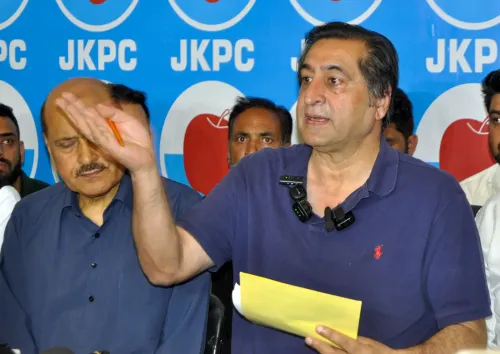
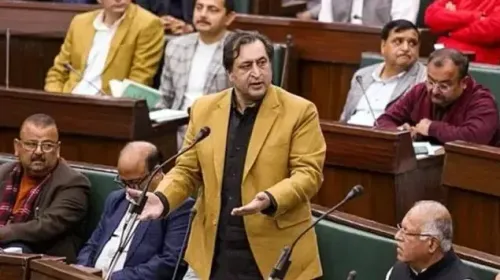
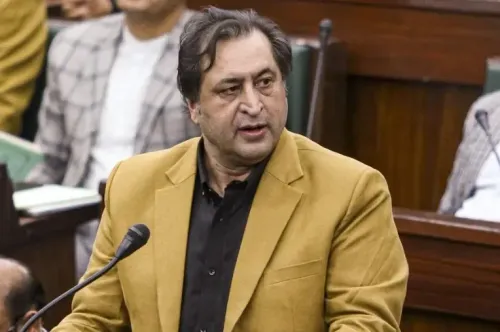
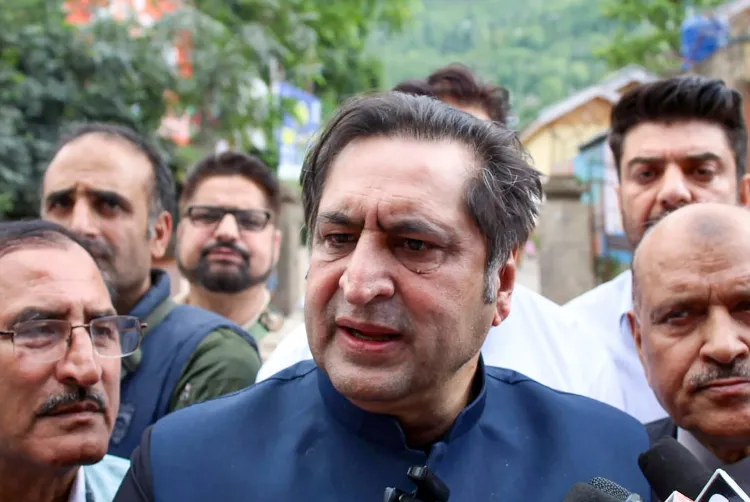
Srinagar, Jan 21 (NationPress) Following the recent calls by several BJP leaders for the division of Jammu from the Kashmir Valley, Sajad Gani Lone, president of the Peoples Conference (PC) and MLA from the Valley, expressed his hopes that such a separation could become a reality. In his statement, he remarked, “We didn’t take a contract for secularism. I pray to God for the separation of Jammu from Kashmir. This would be true liberation. However, caution is advised; the influential will concoct new tales tomorrow. Yet, we remain hopeful for this change.”
In his remarks, Lone challenged the justification for the unity of Kashmir and Jammu, advocating for a ‘friendly split’. His comments have ignited significant political discourse regarding the administrative future of the region, urging a thorough examination of the Kashmir-Jammu dynamic and openly supporting the idea of their separation.
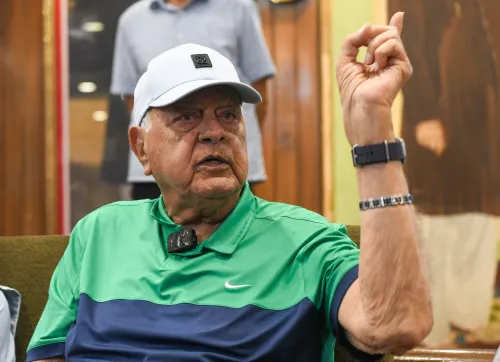
With a profound emotional appeal, Lone responded to recent comments made by National Conference President Dr. Farooq Abdullah, while emphasizing his respect for the senior politician. “Farooq Sahib is a respected elder. I hold him in high esteem, but politically, I oppose his views entirely,” he declared.
Lone questioned the logic behind Abdullah’s defense of the ongoing unity between Jammu and Kashmir, asking who truly bears the burden of this supposed unity—the entrenched political elite or the everyday citizens and unemployed youth who suffer its consequences daily.
“In a nation of 1.5 billion, we are merely six or seven million. Are we not overstepping our bounds?” he challenged. “Did we ever sign a contract to protect secularism?” Lone argued that while leaders from Kashmir often claim to uphold secular values, Kashmiri students are still facing violence and discrimination throughout the country.
He asserted that Kashmiris should not be expected to endure this uneven burden and highlighted the daily mistreatment faced by Kashmiri students and shawl sellers in mainland India as evidence of the hypocrisy behind the high-minded claims of secular unity that justify the continued amalgamation of Jammu and Kashmir.
The PC President revealed the escalating employment crisis confronting Kashmiri youth, blaming reservation policies for systematically stripping job opportunities away from Kashmir and redirecting them towards Jammu. “Who will bear the cost of these jobs being transferred to Jammu through these reservations? Will the Kashmiri youth take this loss? And for what fault of theirs?” he questioned.
He recalled the actions of the Congress-PDP coalition government, pointing out how the introduction of 30 percent reservations in 2007 and the restructuring of district and divisional cadres in 2010 led to the loss of thousands of jobs that rightfully belonged to Kashmir, which were diverted to Jammu.
In a personal narrative, Lone traced the roots of his political ideology back to 2006 when he wrote Achievable Nationhood, specifically referencing page 159, where he first proposed the concept of an “opt-out option.”
He shared the personal consequences he faced for expressing these views, including a four-year travel ban imposed by the Congress government. He recounted how his wife, holding a Pakistani passport, was denied entry to Kashmir for four years, leading his children to begin their education in Pakistan.
“I can testify. My children studied in Pakistan for their first three years because they were not permitted to return here,” he noted, starkly contrasting the freedom of speech enjoyed by individuals from Jammu with the peril faced by Kashmiris, stating, “for a Kashmiri, speaking out becomes a crime; the moment they voice their opinion, a noose tightens around their neck.”
Despite experiencing pressure and backlash since his remarks the previous day, Lone expressed with evident sorrow, “This is not Delhi speaking through me. This is the anguish of my bleeding heart.”
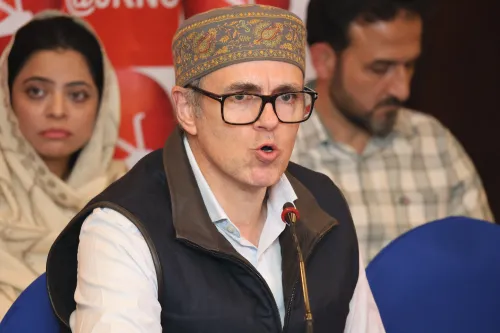
He directed criticism towards Chief Minister Omar Abdullah, questioning his understanding of unemployment and implying that he has never experienced such hardship firsthand. “You received everything on a platter. Our CM Sahib was served everything on a platter,” he remarked.
“Swear by the Quran and tell me, if Mr. Omar were to appear for the SSRB or PSC exams today, would he qualify for a job?” he added.
“If the child of a looter has everything, why turn against the innocent child? They too have aspirations—dreams of owning homes, nurturing families, and caring for their parents.” Lone vehemently refuted the narrative of sacrifice often used by mainstream parties to justify continued unity with Jammu, stating, “You speak of sacrifice and bloodshed. This arrangement does not entail sacrifice,” before posing a haunting question: “Whose massacre occurred in Jammu? Just tell me.”
He emphasized that Kashmiri Muslims are at the forefront of the fight against militancy, with almost 90 percent of police martyrs being Kashmiri Muslims, yet there is a glaring absence of solidarity from Jammu or support from the Centre during such critical times.
Lone noted that while Kashmiri youths are subjected to violence across India, the pervasive animosity from Jammu, with calls to “kill them, crush them, finish them,” cannot be separated from the hostile environment faced by Kashmiris nationwide.
He further criticized Chief Minister Omar Abdullah for spending 22 out of the last 30 days outside Kashmir, questioning his commitment and stating, “You can leave whenever you wish. You do not bear the consequences. The people do.”
Addressing economic disparities, Lone argued that Jammu’s economy relies heavily on Kashmir and Kashmiri labor, yet it continues to exhibit arrogance, with most major development initiatives directed towards Jammu at the expense of Kashmir.
However, he clarified that separation would not equate to hostility. “Are the people of Maharashtra not our brothers? Are those from Delhi or Gujarat not our brothers? Thousands come here, and they are welcomed.
“In this same spirit, the people of Jammu will continue to be our brothers in the future. God willing, even after separation, our brotherhood will endure.”
In one of his most controversial statements, Lone asserted: “By God, a solution for Kashmir will be found. You and Omar Sahib should retreat to Jammu. Request Delhi to divide Jammu from Kashmir and remain there. Half the solution lies in that. If Kashmir genuinely matters to you, take the PDP President with you as well. I would pledge this in blood. After that, no child from Kashmir will perish by a bullet.”
Anticipating backlash, Lone acknowledged the inevitable accusations that would follow. “I know what will happen in the next five or six days. They will claim the BJP is behind this, that Delhi is orchestrating this. Tomorrow it will become the Centre’s scheme, the RSS plot, the IB conspiracy.
“For the past 50 or 60 years, anything uncomfortable has been labeled a plot. Where is your rationale?” he queried.
He urged people to discard recycled narratives and to think independently, pointing out that even ordinary Kashmiris are, for the first time, starting to realize how much they have lost by remaining tied to Jammu.
His final remarks were a mix of despair and optimism. “This is a rare and precious moment for Kashmiris. Do not be swayed by empty slogans of ‘sacrifice.’ You have made no sacrifice. The sacrifice has been borne by the impoverished. It is the child of the poor who lies in the grave. The affluent have no graves to mourn, forgive me for saying so. My home has been sacrificed. We have sacrificed. What have you given up? You feast every day.”
Point of View
I stand with the nation in recognizing the complexities of Sajad Lone’s remarks. His advocacy for the separation of Jammu from Kashmir raises essential questions about unity and socio-economic justice, prompting a reevaluation of longstanding narratives that shape our understanding of the region's challenges.
NationPress
3 Oct 2026
Frequently Asked Questions
What prompted Sajad Lone's remarks about separation?
His comments came in response to recent statements by BJP leaders advocating for the separation of Jammu from the Kashmir Valley.
What does Sajad Lone believe regarding the unity of Jammu and Kashmir?
Lone questions the rationale behind the unity and argues for a 'cordial split' to alleviate socio-economic burdens on Kashmiris.
How does Lone view the political leadership in Jammu and Kashmir?
He criticizes the entrenched political class for not shouldering the consequences of the current unity and argues that ordinary people bear the brunt.
What personal experiences does Lone share?
Lone recounts the heavy personal costs he faced for his political views, including a travel ban affecting his family.
What is the overall message of Lone's statements?
He advocates for a reassessment of Kashmir-Jammu relations and highlights the need for justice and recognition of Kashmiri struggles.