Salman Khan threat case: Mumbai Police bust fake gang extortion plot

Synopsis
An alleged extortion attempt on Salman Khan didn't involve a real gang — just fabricated WhatsApp chats, a fake identity, and ₹1.30 lakh reportedly routed from Bihar. Mumbai Police say the accused confessed to engineering the entire threat, raising uncomfortable questions about how easily digital tools can be weaponised to simulate organised crime.
Key Takeaways
Mumbai Police claim to have busted a fake extortion plot targeting Salman Khan , disclosed on 25 August 2026 .
The accused allegedly fabricated WhatsApp chats and a false identity to simulate a gang threat against the actor.
Two mobile phones were recovered from near the Bandra seafront ; screenshots of fake chats were seized with witnesses present.
The accused allegedly received approximately ₹1.30 lakh via PhonePe from Siwan, Bihar , collected in cash through a Bandra agent.
Charges filed under BNS Sections 336(3), 351(3), 353(2), 271, 340, 248 and IT Act Sections 66(C) and 66(D) .
Police are investigating whether the accused acted alone or had accomplices.
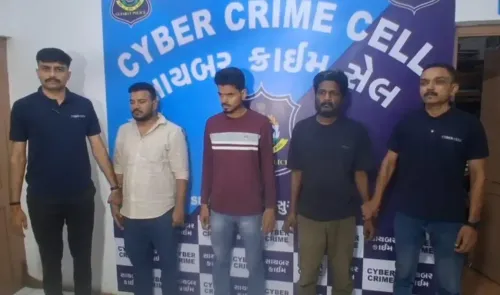
Mumbai Police have claimed to have dismantled an alleged extortion scheme targeting Bollywood superstar Salman Khan, in which the accused reportedly fabricated WhatsApp chats and fake identities to simulate a threat from an organised crime gang. The case came to light on 25 August 2026 after investigators found critical inconsistencies in the accused's account.
How the Fake Threat Was Constructed
According to police, the accused allegedly created a fictitious identity and engineered fabricated WhatsApp conversations using electronic means, with the intent of frightening Salman Khan and extorting money from him. Investigators discovered discrepancies within the chat records, and CCTV footage at the relevant locations failed to corroborate the accused's version of events.
The accused had reportedly concealed two mobile phones near the Bandra seafront. Both devices were subsequently recovered and seized based on disclosures made during questioning. Screenshots of the alleged fake chats were also seized in the presence of witnesses, police said.
Money Trail and Financial Links
The investigation reportedly traced a financial thread to Siwan in Bihar, where the accused allegedly received approximately ₹1.30 lakh via PhonePe. The funds were subsequently collected in cash through a money transfer agent in Bandra, according to police.
Charges Filed Against the Accused
The accused has been booked under Sections 336(3), 351(3), 353(2), 271, 340 and 248 of the Bharatiya Nyaya Sanhita (BNS), along with Sections 66(C) and 66(D) of the Information Technology Act. The charges encompass criminal intimidation, extortion, and identity fraud under digital law.
Investigation Ongoing
Mumbai Police have stated that the probe is continuing to determine whether the accused acted alone or whether any other individuals or organised gang members were involved in the alleged conspiracy. This comes amid a broader pattern of threats targeting Salman Khan in recent years, which have repeatedly drawn police attention and security reviews.
Notably, the use of fabricated digital evidence — fake chats, spoofed identities — marks a shift in how extortion attempts are being engineered against high-profile targets, raising questions about digital forensic protocols in celebrity threat cases.
Point of View
Spoofed chat trails — being deployed to simulate organised crime threats against celebrities. That the accused allegedly routed funds through PhonePe from Bihar before collecting cash in Bandra suggests a degree of operational planning that goes beyond a spontaneous hoax. Mumbai Police's ability to crack this through chat forensics and CCTV cross-referencing is noteworthy, but the ease with which such a scenario was constructed should prompt a wider conversation about digital evidence standards in high-profile threat cases. Whether this accused acted alone remains the critical open question.
NationPress
9 Oct 2026
Frequently Asked Questions
What is the Salman Khan fake threat extortion case?
Mumbai Police allege that an accused fabricated WhatsApp chats and a fake identity to make it appear that an organised crime gang was threatening Bollywood actor Salman Khan, with the intent of extorting money from him. The accused reportedly confessed to engineering the entire plot after investigators found inconsistencies in the chats and CCTV footage failed to support his claims.
How much money was allegedly extorted in the Salman Khan case?
The accused allegedly received approximately ₹1.30 lakh, routed via PhonePe from Siwan in Bihar and later collected in cash through a money transfer agent in Bandra, according to Mumbai Police.
What charges has the accused been booked under?
The accused faces charges under Sections 336(3), 351(3), 353(2), 271, 340 and 248 of the Bharatiya Nyaya Sanhita (BNS), as well as Sections 66(C) and 66(D) of the Information Technology Act, covering criminal intimidation, extortion, and digital identity fraud.
Did police recover any physical evidence in the case?
Yes. Two mobile phones hidden near the Bandra seafront were recovered based on disclosures made by the accused during questioning. Screenshots of the alleged fabricated WhatsApp chats were also seized in the presence of witnesses.
Is the investigation into the Salman Khan threat case closed?
No. Mumbai Police have stated that the investigation is ongoing to determine whether the accused acted alone or whether other individuals or gang members were part of the alleged extortion conspiracy.