Sambhali Trust Advocates for Comprehensive Human Rights Integration at UNHRC

Synopsis
Sambhali Trust urges a shift from symbolic human rights commitments to actionable integration in governance, highlighting key Indian initiatives at the UNHRC in Geneva.
Key Takeaways
Sambhali Trust emphasizes actionable human rights integration.
Highlighting key Indian initiatives showcases national commitment.
Engagement at UNHRC reflects civil society's growing influence.
Grassroots insights are crucial for global human rights policy.
Session discussions aim to translate commitments into tangible actions.
Jaipur, February 25 (NationPress) The Rajasthan-based non-governmental organization (NGO) Sambhali Trust has called upon the global community to transition from mere symbolic gestures to fully embedding human rights as a fundamental and actionable element in governance, policymaking, and development efforts on a worldwide scale.
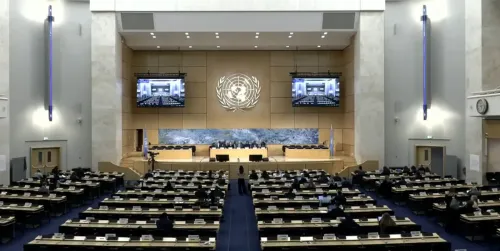
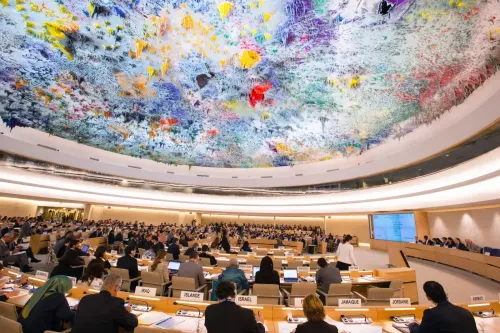
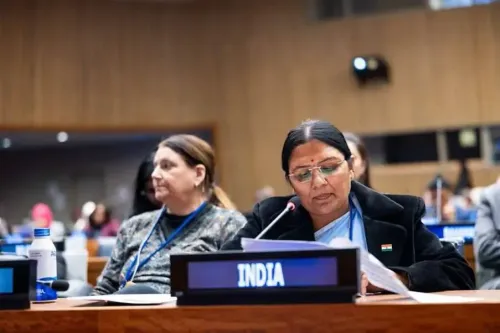
During the Annual High-Level Panel Discussion on Human Rights Mainstreaming at the 61st session of the United Nations Human Rights Council (UNHRC) in Geneva, Hansraj Singh, a representative of Sambhali Trust, stressed the necessity to shift human rights from theoretical concepts to practical and operational priorities within policies, institutions, and implementation frameworks at both national and international levels.
“Mainstreaming human rights should not be merely a theoretical commitment but must operate as a fundamental principle woven into policies, institutions, and their implementation frameworks,” Singh remarked while sharing the organization’s insights at this significant global forum.
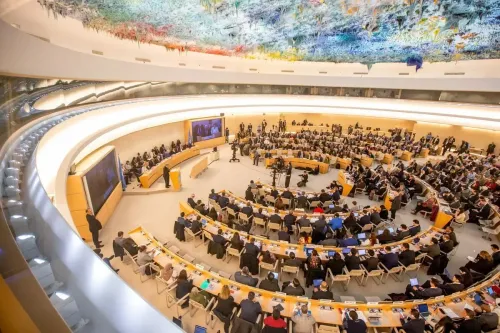
The ongoing 61st session of the UNHRC is taking place in Geneva from February 23 to March 31, 2026, gathering representatives from member states, civil society organizations, and international bodies to discuss urgent human rights matters.
In his address, Singh pointed out India's constitutional protections, progressive legislative framework, and various welfare initiatives as vital examples of efforts to embed human rights principles into national governance and development strategies.
He highlighted key initiatives such as Mission Vatsalya, which is centered on child protection, care, and holistic development with a focus on family-based care and support for vulnerable children.
Additionally, he mentioned POSHAN Abhiyaan, India's flagship National Nutrition Mission, aimed at enhancing nutritional outcomes for children, pregnant women, lactating mothers, and adolescent girls throughout the nation.
Singh also drew attention to the Pradhan Mantri Awas Yojana, a major housing initiative designed to provide affordable housing to economically weaker sections, thereby fostering dignity, security, and better living conditions.
Moreover, he highlighted the significance of Digital India initiatives focused on bridging the digital divide and improving access to essential services.
These programs include PMGDISHA (Pradhan Mantri Gramin Digital Saksharta Abhiyan), which promotes digital literacy among rural households, BharatNet, which seeks to expand high-speed broadband connectivity in rural areas, Aadhaar, the world’s largest biometric digital identity system facilitating access to government services, and DIKSHA, a national digital learning platform providing educational resources nationwide.
Singh emphasized that these initiatives demonstrate intentional and ongoing efforts to integrate values of dignity, equality, and justice into India's development agenda, aligning with the United Nations Sustainable Development Goals (SDGs).
Sambhali Trust’s engagement in the UNHRC session signifies the increasing role of civil society organizations from the Global South in influencing the global human rights narrative and policy discussions.
By contributing grassroots insights and field experiences at the international level, the organization plays a crucial role in discussions aimed at making human rights a tangible and actionable reality rather than just an abstract principle.
The 61st UNHRC session is also addressing several critical issues, including the protection of human rights defenders, economic, social, and cultural rights, enhancing international cooperation, and strengthening the global human rights framework.
Experts have noted that input from grassroots organizations like Sambhali Trust enriches UNHRC discussions by showcasing how local initiatives and community-based interventions can inform global human rights policy and implementation strategies.
Their contributions highlight the necessity of translating human rights commitments into actionable steps at community, national, and international levels.
The session will continue in Geneva with additional discussions, panel dialogues, and anticipated resolutions and policy outcomes in the weeks ahead.
Point of View
Showcasing a proactive approach to human rights.
NationPress
3 Oct 2026
Frequently Asked Questions
What is the main objective of Sambhali Trust's advocacy at UNHRC?
Sambhali Trust aims to transition human rights from theoretical concepts to actionable principles embedded in governance and development processes globally.
Which key initiatives were highlighted by Sambhali Trust?
Initiatives such as Mission Vatsalya for child protection, POSHAN Abhiyaan for nutrition, and Pradhan Mantri Awas Yojana for affordable housing were emphasized.
Where and when is the 61st session of UNHRC taking place?
The 61st session of the UNHRC is being held in Geneva from February 23 to March 31, 2026.
What role do grassroots organizations play in UNHRC discussions?
Grassroots organizations like Sambhali Trust enrich discussions by providing local insights that can inform global human rights frameworks.
How does Sambhali Trust contribute to human rights discourse?
Sambhali Trust brings field-level experiences to the international platform, advocating for the transformation of human rights commitments into real-world actions.