Himanta Sarma hits back at 'political tourists' inspecting Assam schools
Synopsis
Assam CM Himanta Biswa Sarma used an X post to swat back at Opposition activists conducting school inspections under the 'School Thik Karo' banner, calling them 'political tourists.' Behind the political barb lies a genuine contest of narratives: the government points to 218 Tea Garden Model Schools and 40,734 enrolled students; the opposition alleges damaged roofs and missing amenities. Both claims cannot be fully true — and neither side has invited an independent audit.
Key Takeaways
Assam CM Himanta Biswa Sarma posted on X on 3 November 2026 , dismissing Opposition school inspectors as 'political tourists.' The remark was directed at the Cockroach Janta Party , which visited schools in Palasbari and Dispur under the 'School Thik Karo' initiative.
The Opposition reportedly alleged damaged roofs, inadequate drinking water, and missing boundary walls at inspected schools.
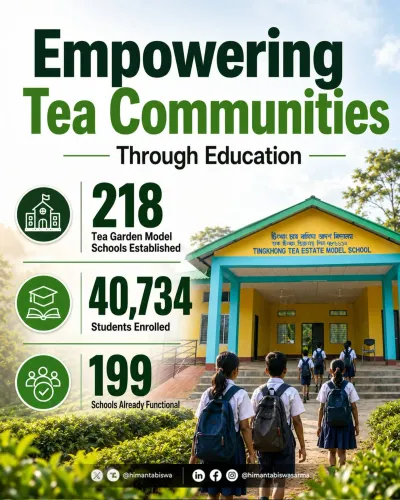
The Assam government claims 218 Tea Garden Model Schools have been established, with 199 functional and 40,734 students enrolled.
In May 2025 , 25 model schools were upgraded to offer Classes XI and XII ; in June 2026 , free transport was launched for 9,714 students across 11 districts .
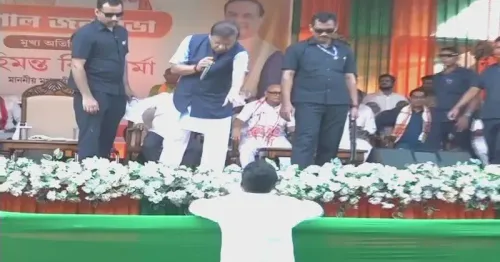
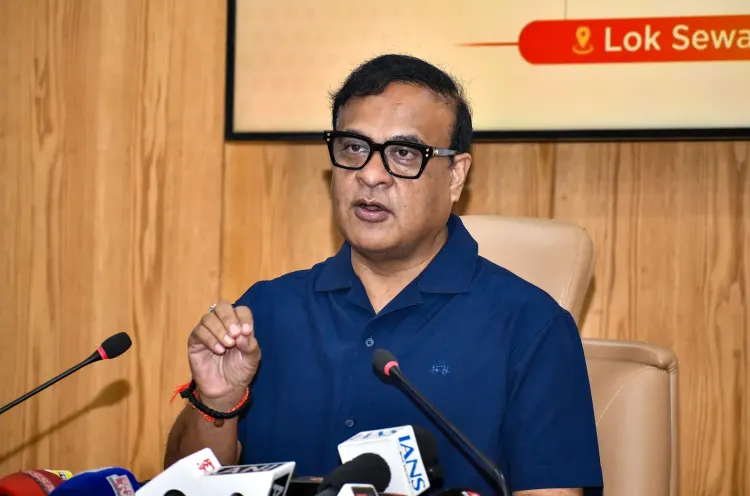
Assam Chief Minister Himanta Biswa Sarma on Tuesday, 3 November 2026, appeared to take a pointed swipe at Opposition-linked activists visiting government schools in the state, asserting that his administration's efforts to improve educational facilities in remote tea garden areas would continue regardless of what he dismissed as 'political tourists' passing through.
What Sarma Said
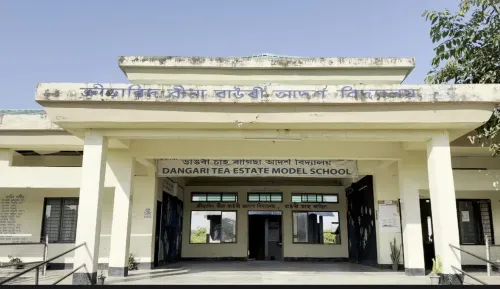
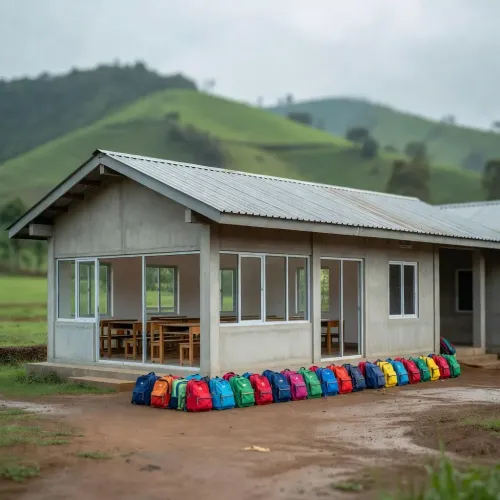
Sharing a photograph of students at a Tea Garden Model School on X, Sarma underscored the state government's commitment to providing quality education in some of Assam's most isolated tea-growing regions. 'Just a normal day in a Tea Garden Model School somewhere in one of the remote Tea gardens of Assam. Political tourists come and go but our efforts to provide the best educational facilities to our students remains firm,' the Chief Minister posted.
The Trigger: School Inspections by the Opposition
The remarks come in the wake of visits by representatives of the Cockroach Janta Party to government schools in the Palasbari and Dispur constituencies as part of their 'School Thik Karo' initiative to assess infrastructure and facilities. The organisation reportedly alleged deficiencies at the inspected schools, including damaged roofs, inadequate drinking water facilities, and missing boundary walls. Sarma's post is widely read as a direct response to those allegations and the accompanying media attention.
Tea Garden Schools: What the Government Claims
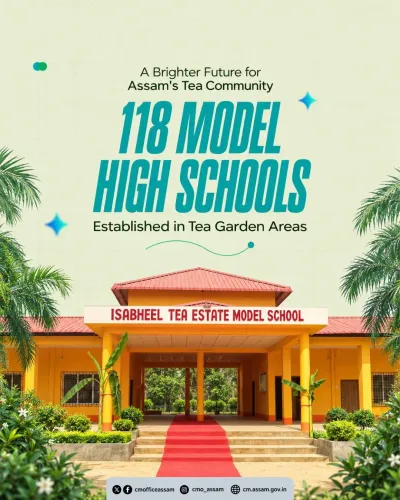
The Assam government has been pointing to a sustained push to expand educational access for children in tea garden communities — a population that has historically faced acute barriers to schooling. The state initially announced plans to establish 200 Tea Garden Model Schools across 800 tea estates. According to government figures cited in June 2026, 218 such schools had been established, with 199 already operational and roughly 40,734 students enrolled.
Notably, in May 2025, 25 model schools were upgraded to offer Classes XI and XII, reducing the distance students must travel for higher secondary education. In June 2026, the state launched free transport and escort facilities for 9,714 students from Classes I to X across 198 schools in 11 districts to tackle connectivity barriers.
Context and Broader Implications
Tea garden communities in Assam — largely comprising the descendants of migrant labourers brought in during British rule — have long been considered an educationally underserved population. Government-backed model schools represent one of the more visible policy responses to this historical gap. The opposition's 'School Thik Karo' campaign, by contrast, seeks to hold the administration accountable through on-ground audits rather than official data alone.
This comes amid heightened political activity in Assam ahead of the next assembly cycle, with both the ruling Bharatiya Janata Party (BJP) and opposition groups sharpening their engagement on public service delivery. Sarma's response on X, rather than through a formal statement, signals a shift toward social-media-driven political counter-narratives — a pattern seen increasingly among state executives across India.
What Happens Next
The opposition is expected to continue its school inspection drives in other constituencies, potentially expanding its documentation of infrastructure gaps. The government, for its part, is likely to amplify data on Tea Garden Model Schools and transport schemes as a counter-narrative. Whether independent audits of school conditions are conducted remains to be seen — and that gap between government figures and opposition claims may define the next phase of this debate.
Point of View
000 students should be able to withstand scrutiny — yet the response was a social media post, not an invitation to verify. The opposition's 'School Thik Karo' campaign, whatever its political motives, performs a function that underfunded state inspection machinery often cannot: on-ground documentation. The real accountability deficit here is the absence of any independent mechanism to reconcile government numbers with reported ground conditions, and Sarma's dismissal does nothing to close that gap.
NationPress
3 Nov 2026
Frequently Asked Questions
What did Assam CM Himanta Sarma mean by 'political tourists'?
Sarma used the phrase 'political tourists' in an X post on 3 November 2026 to describe Opposition-linked activists inspecting government schools in Assam. The remark was widely understood as a dismissal of the Cockroach Janta Party's 'School Thik Karo' inspection drive in Palasbari and Dispur constituencies.
What is the 'School Thik Karo' initiative in Assam?
'School Thik Karo' is a school inspection drive launched by the Cockroach Janta Party to assess infrastructure and facilities at government schools in Assam. Representatives visited schools in Palasbari and Dispur and reportedly alleged deficiencies including damaged roofs, inadequate drinking water, and missing boundary walls.
How many Tea Garden Model Schools has the Assam government built?
According to government figures cited in June 2026 , 218 Tea Garden Model Schools had been established across 800 tea estates , with 199 already functional and roughly 40,734 students enrolled. The original plan was to build 200 such schools.
What additional education benefits have tea garden students received?
In May 2025 , 25 model schools were upgraded to offer Classes XI and XII , reducing travel burdens for higher secondary students. In June 2026 , the state launched free transport and escort services for 9,714 students from Classes I to X across 198 schools in 11 districts .
Why are tea garden communities a focus for educational initiatives in Assam?
Tea garden communities in Assam — largely descended from migrant labourers brought in during British colonial rule — have historically faced barriers to quality education due to geographic isolation and limited infrastructure. Government model school programmes aim to address this long-standing gap in educational access.