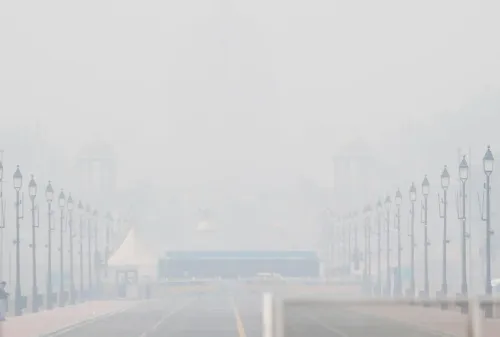
What Action Plans Have the SC Directed for Air Pollution in Delhi and NCR?
Synopsis
The Supreme Court has mandated the Delhi government and NCR authorities to submit actionable plans on CAQM’s recommendations, focusing on urgent measures to combat air pollution. This landmark directive highlights the critical need for immediate action and stakeholder accountability in addressing the pollution crisis affecting millions.
Key Takeaways
Immediate action is required to combat air pollution in Delhi-NCR.
The Supreme Court has mandated submission of action plans by concerned authorities.
CAQM's expert committee has outlined 15 long-term strategies .
Vehicular emissions are identified as a major contributor to pollution.
Stakeholder accountability is crucial for effective implementation.
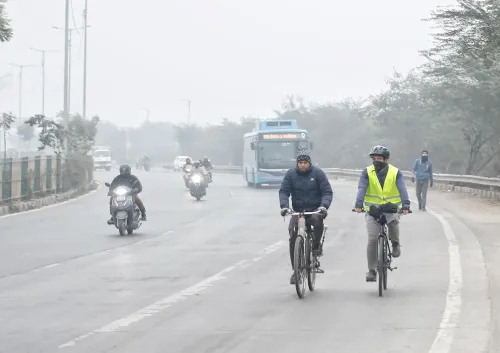
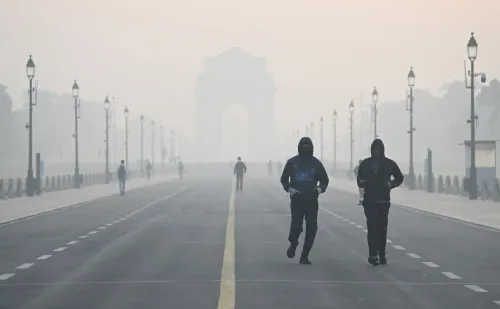
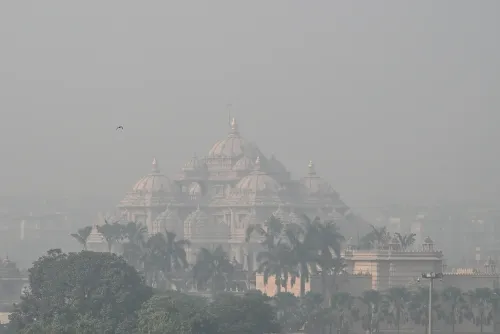
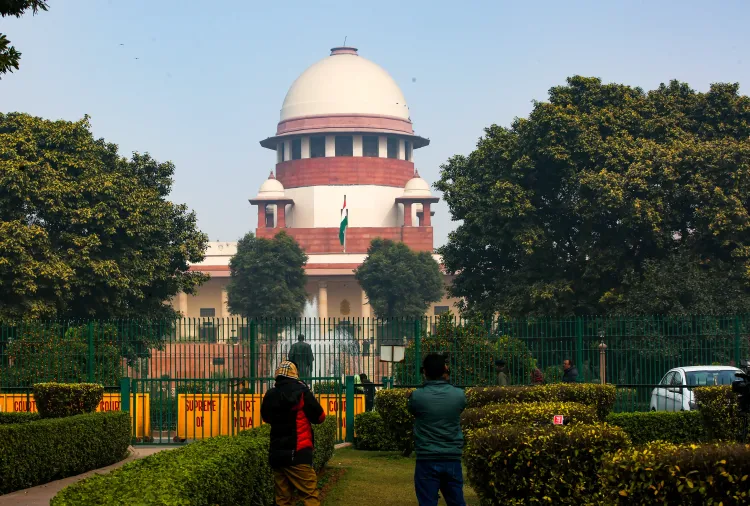
New Delhi, Jan 21 (NationPress) The Supreme Court has instructed the Delhi government, along with municipal authorities and the governments of NCR states, to present detailed action plans based on the Commission for Air Quality Management’s (CAQM) long-term strategies aimed at combating the ongoing air pollution crisis in the national capital and the surrounding NCR.
A bench comprising Chief Justice of India Surya Kant and Justices Joymalya Bagchi and Vipul Pancholi was reviewing a Public Interest Litigation (PIL) concerning the deteriorating air quality in the Delhi-NCR region.
Representing the CAQM, Additional Solicitor General (ASG) Aishwarya Bhati informed the court that the Commission’s expert committee has outlined 15 long-term actions, pinpointing the vehicular sector as the main factor contributing to air pollution in the area.
These strategies encompass a systematic removal of highly polluting vehicles from Delhi-NCR through scrapping or relocation, stringent enforcement of the updated Pollution Under Control framework (PUC 2.0), expansion of Metro and rail services, creation of additional Regional Rapid Transit System (RRTS) corridors, reevaluation of the Electric Vehicle policy, and increased incentives for the scrapping of old vehicles.
ASG Bhati elaborated that the CAQM has also identified relevant agencies responsible for executing each of these initiatives and has recommended utilizing Environment Compensation Charge (ECC) funds for seamless implementation.
Taking into account these submissions, the CJI Kant-led bench clarified that the Supreme Court will not consider any objections regarding the CAQM’s suggestions.
“There can be no doubt that these long-term measures need to be implemented without delay. We are not inclined to hear any dissent concerning these measures,” the apex court remarked, urging all involved parties to submit their respective action plans along with timelines for execution.
Senior advocate and amicus curiae Aparajita Singh also called upon the CJI Kant-led bench to establish definite timelines for implementation, emphasizing that further delays would exacerbate the pollution situation.
In its ruling, the Supreme Court also acknowledged CAQM’s additional discussions on traffic congestion at the border entry points of Delhi and the necessity for the timely adoption of cutting-edge technologies.
It directed the Municipal Corporation of Delhi (MCD) and other relevant agencies to clarify why the recommendations should not be acted upon promptly.
“We do not require objections. All that the relevant agencies, particularly the MCD and neighboring state agencies, need to do is submit the action plan and the timeline for compliance,” the bench stated.
It also invited the amicus curiae to propose any further long-term strategies that might be necessary to address the air pollution crisis, indicating that the CAQM would review and integrate them if appropriate.
The matter is scheduled for further hearing in four weeks.
Point of View
I believe that the Supreme Court's directive is a pivotal moment in the fight against air pollution in Delhi-NCR. It reflects a growing recognition of the need for structured and immediate action. The accountability of local governments and agencies is crucial in ensuring that we don't just have plans on paper, but effective execution that leads to tangible improvements in air quality.
NationPress
23 Sept 2026
Frequently Asked Questions
What are the CAQM's long-term recommendations?
The CAQM's long-term recommendations include measures such as removing highly polluting vehicles, enforcing stricter pollution control regulations, expanding public transport, and revising the Electric Vehicle policy.
Why is the Supreme Court involved in air pollution issues?
The Supreme Court is involved due to its role in addressing public interest litigations that impact the health and environment of citizens, ensuring that government bodies take necessary actions.
What is the significance of the Supreme Court's directive?
The Supreme Court's directive emphasizes the need for immediate action and accountability from local authorities to combat the severe air pollution crisis affecting Delhi and the NCR.