SC issues notice to CBSE on Gulf Class 12 students' plea for grace marks, fresh exams
Synopsis
The Supreme Court has stepped in after thousands of Gulf-based CBSE Class 12 students say war-related disruptions wrecked their 2026 board exams — and the government offered no remedy. The bench's notice to the Centre and CBSE puts the onus on authorities to justify an assessment scheme students say does not reflect their true capability.
Key Takeaways
The Supreme Court on 8 July 2026 issued notice to the Centre and CBSE on a petition filed by Gulf and West Asian Class 12 students.
The bench of Justices K.V.
Viswanathan and Alok Aradhe directed the petitioner to serve a copy of the plea to the Solicitor General .
The petition seeks one-time grace marks , Special Fresh Examinations , and a 'better-of-two' result protection for affected students.
A reduction in the DASA Scheme minimum aggregate from 75% to 60% for 2026-27 has been sought, along with similar relief under the CIWG category.
The petition challenges the CBSE assessment scheme of 27 March as discriminatory and calls for a transparent grievance redressal mechanism.
Students, parents, and institutions had earlier submitted representations to the CBSE and the Union Ministry of Education without receiving a comprehensive remedial response.
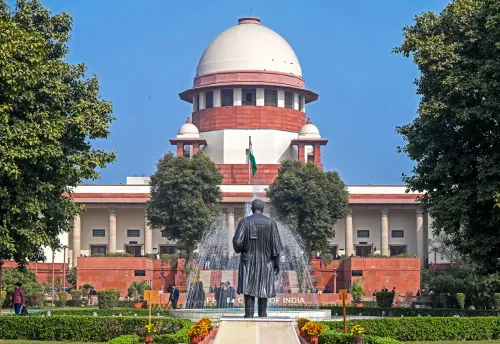
The Supreme Court on Wednesday, 8 July 2026 issued notice to the Centre and the Central Board of Secondary Education (CBSE) on a writ petition filed on behalf of Class 12 students based in Gulf and West Asian countries, seeking compensatory grace marks, special examinations, and protection against loss of an academic year following the disruption of the 2026 board examination cycle. The petition, filed under Article 32 of the Constitution, argues that thousands of students were subjected to extraordinary hardship caused by regional conflict beyond their control.
What the Court Said
A bench of Justices K.V. Viswanathan and Alok Aradhe issued the notice and directed the petitioner to furnish a copy of the plea to the Solicitor General before the next date of hearing. The bench's decision to admit the petition signals that the court considers the grievances prima facie worthy of a formal response from the government and the board.
Key Demands in the Petition
The writ petition, filed through advocate Vineet Jindal, contends that CBSE Class 12 students enrolled in schools across GCC and West Asian countries constitute a distinct and specially affected class entitled to equitable relief. Among the specific reliefs sought:
The petition prays for a one-time moderation and/or grace marks in recognition of the psychological stress, displacement, and examination irregularities faced by students. It further seeks Special Fresh Examinations and Special Improvement Examinations across all subjects, with a 'better-of-two' protection allowing students to retain whichever result is more favourable.
The plea has also challenged the CBSE assessment scheme dated 27 March, alleging it adversely affects the interests of the affected students, and has sought a transparent, time-bound grievance redressal mechanism for those assessed under that scheme.
Admission Relief and Academic Year Protection
Beyond examination-related relief, the petition seeks a one-time relaxation in eligibility criteria under the Direct Admission of Students Abroad (DASA) Scheme, proposing a reduction in the minimum aggregate marks requirement from 75 per cent to 60 per cent for the academic session 2026-27. A similar relaxation has been sought for admissions under the Children of Indian Workers in Gulf Countries (CIWG) category.
The petition also urges educational institutions, universities, and counselling authorities to permit provisional admissions and refrain from rejecting applications solely on account of delayed or revised results. It has sought the creation of a special admission and counselling window after the declaration of revised results, so that no student loses an academic year.
Background and Broader Impact
According to the petition, despite multiple representations submitted by students, parents, community organisations, and educational stakeholders to both the CBSE and the Union Ministry of Education, no comprehensive remedial framework has been introduced. The plea argues that the extraordinary circumstances — including war-related tensions, uncertainty, and psychological distress — affected all students irrespective of whether a particular subject examination was cancelled or conducted, maintaining that 'the entire examination environment stood compromised.'
The petition also highlighted an unusually low pass percentage recorded by at least one institution as evidence of the exceptional hardship faced by the affected student cohort. It argued that results declared under the current methodology do not accurately reflect the true academic capability of these students and have jeopardised their higher education prospects.
What Happens Next
The matter will come up before the Supreme Court on the next scheduled date of hearing, by which time the Centre and CBSE are expected to file their responses. The outcome could set a significant precedent for how Indian educational authorities handle board examination disruptions caused by geopolitical events affecting students abroad.
Point of View
And its unusually low pass percentages in at least one Gulf institution suggest it may have set an unrealistic baseline for students operating in a conflict zone. What is missing is any acknowledgement from the board that examination integrity cannot be cleanly separated from examination environment. If the court ultimately orders special examinations or mark moderation, it will also force a harder question: does India's centralised board system have an adequate protocol for students caught in geopolitical crises — or does it simply wait for litigation to compel one?
NationPress
7 Oct 2026
Frequently Asked Questions
Why did the Supreme Court issue notice to CBSE over Gulf-based Class 12 students?
The Supreme Court issued notice on 8 July 2026 after a writ petition argued that thousands of CBSE Class 12 students in Gulf and West Asian countries faced extraordinary disruption to their 2026 board examinations due to regional conflict. The court found the petition prima facie credible and directed the Centre and CBSE to respond.
What relief are Gulf-based CBSE Class 12 students seeking?
Students are seeking one-time compensatory grace marks, Special Fresh Examinations with a 'better-of-two' result protection, a challenge to the CBSE's March 27 assessment scheme, and a reduction in the DASA Scheme eligibility threshold from 75% to 60% for 2026-27. They also want provisional admissions and a special counselling window to prevent loss of an academic year.
What is the CBSE assessment scheme of 27 March that is being challenged?
The CBSE issued an assessment scheme on 27 March 2026 to evaluate students whose board examinations were disrupted. The petition alleges this scheme adversely affects Gulf-based students and does not accurately reflect their true academic capability, resulting in unusually low pass percentages at some institutions.
What is the DASA Scheme and why is relaxation being sought?
The Direct Admission of Students Abroad (DASA) Scheme facilitates admissions to Indian engineering institutions for students studying abroad. The petition seeks a one-time reduction in the minimum aggregate requirement from 75% to 60% for 2026-27, arguing that affected students cannot be held to standard thresholds given the disrupted examination environment.
What happens next in the Supreme Court case?
The Centre and CBSE are expected to file their responses before the next date of hearing. The petitioner has been directed to serve a copy of the plea to the Solicitor General. The court's eventual ruling could set a precedent for how Indian educational authorities handle board exam disruptions caused by geopolitical events affecting students abroad.