CBSE Delays Board Exams in Gulf Regions Due to Middle East Turmoil
Synopsis
In light of escalating tensions in West Asia, CBSE has postponed board exams for Class 10 and 12 scheduled for March 5 and 6 across Gulf nations. The situation follows significant military actions involving the US and Israel against Iran, raising concerns about regional stability.
Key Takeaways
CBSE postpones exams in Gulf nations due to ongoing conflict.
New dates will be announced later.
Situation reassessed on March 5 for future exams.
Escalating tensions following US and Israeli strikes on Iran.
Increased fears of wider regional conflicts.
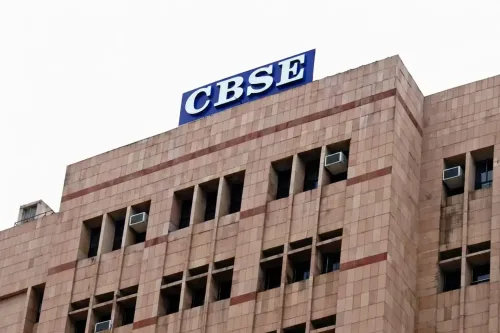
New Delhi, March 3 (NationPress) - The Central Board of Secondary Education (CBSE) has officially declared that the Class 10 and Class 12 board examinations, originally set for March 5 and 6, have been postponed in various Gulf countries due to the ongoing unrest in West Asia.
The decision comes in the wake of rising tensions resulting from coordinated US and Israeli military actions against Iran over the weekend, which triggered retaliatory strikes from Tehran.
In a formal announcement, the CBSE indicated that this action was taken following a thorough assessment of the current circumstances impacting parts of the Middle East.
According to Circular-2, dated March 3, 2026, the affected examinations for students located in Bahrain, Iran, Kuwait, Oman, Qatar, Saudi Arabia, and the United Arab Emirates have been deferred.
The Board further confirmed that updated examination dates will be communicated in due course.
Additionally, CBSE noted that it will conduct another evaluation of the situation on Thursday, March 5, to determine if examinations planned from March 7 onward can proceed as initially scheduled.
Previously, the Board had also delayed examinations for Class 10 and 12 that were meant to take place on March 2, 2026, stating at that time that revised dates would follow.
The necessity for this postponement arises amidst significant developments in the region.
On Saturday afternoon, the United States and Israel executed a series of missile and drone strikes on multiple locations in Tehran, including the residence of Iran's Supreme Leader, Ayatollah Ali Khamenei, situated in the city center.
Shortly thereafter, Iran confirmed the death of Khamenei as a result of the assault.
In retaliation, Iran launched strikes targeting Tel Aviv and other sites in Israel, as well as American military bases and diplomatic establishments throughout West Asia.
The Iranian attacks also impacted civilian and energy infrastructure in neighboring nations, targeting an oil refinery in Saudi Arabia and a luxury hotel in Dubai.
This exchange of military actions has escalated concerns of a broader regional conflict that could involve additional West Asian countries and significantly disrupt global energy markets.
Point of View
It is imperative to note that the decision by the CBSE to postpone examinations reflects a necessary response to the volatile geopolitical climate affecting West Asia. This situation is a reminder of the far-reaching impacts of international relations on education and student welfare.
NationPress
1 Oct 2026
Frequently Asked Questions
Why were the CBSE exams postponed?
The CBSE exams were postponed due to the ongoing conflict in West Asia, which has raised significant safety concerns for students in the affected regions.
When will the postponed exams be rescheduled?
The CBSE will announce new dates for the postponed exams at a later time, following further assessments of the situation.
Which countries are affected by the postponement?
The postponement affects students in Bahrain, Iran, Kuwait, Oman, Qatar, Saudi Arabia, and the United Arab Emirates.
What led to the escalation of tensions in the region?
The escalation was triggered by joint US and Israeli military strikes against Iran, which resulted in retaliatory actions from Tehran.
When will the CBSE review the situation again?
The CBSE will conduct another review of the situation on March 5 to determine if exams scheduled from March 7 onward can proceed.