CM Hemant Soren: India's industrial growth incomplete without Jharkhand
Synopsis
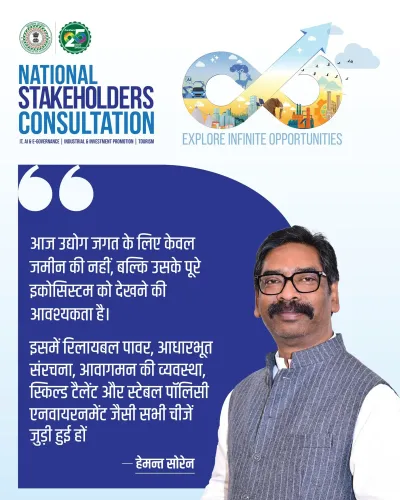
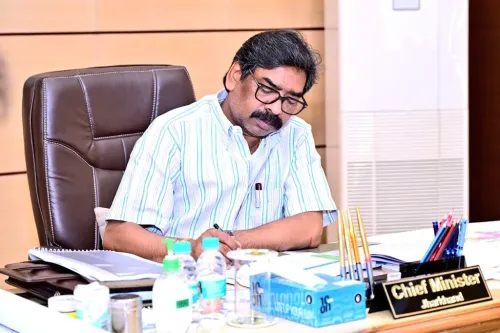
Jharkhand Chief Minister Hemant Soren, through the CMO's official X account on 8 July 2026, declared that India's industrial growth is incomplete without Jharkhand — asserting the mineral-rich state's indispensable role in national steel, power, and manufacturing supply chains.
Key Takeaways
CM Hemant Soren stated that India's industrial growth is 'incomplete without Jharkhand,' per the Chief Minister's Office of Jharkhand on 8 July 2026 .
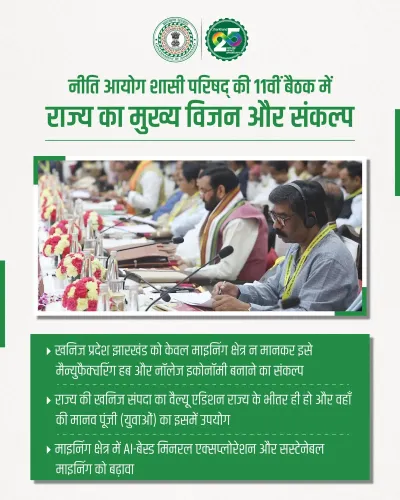
Jharkhand holds major national reserves of coal , iron ore , and bauxite , making it a backbone of India's steel, power, and infrastructure sectors.
The statement reflects the state government's push for recognition as a strategic industrial partner, not merely a raw-material supplier.
The Jharkhand Industrial Policy 2016 laid the groundwork for attracting investment in mineral-based and diversified manufacturing industries.
Jharkhand , Odisha , and Chhattisgarh together form India's critical mineral belt, central to national manufacturing and GDP targets.
Next steps to watch include announcements on investment summits , industrial corridors , and mining lease policy revisions.
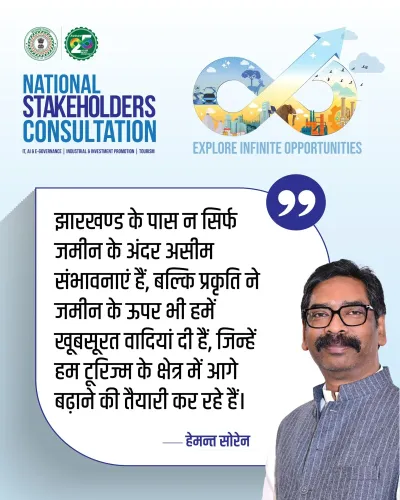
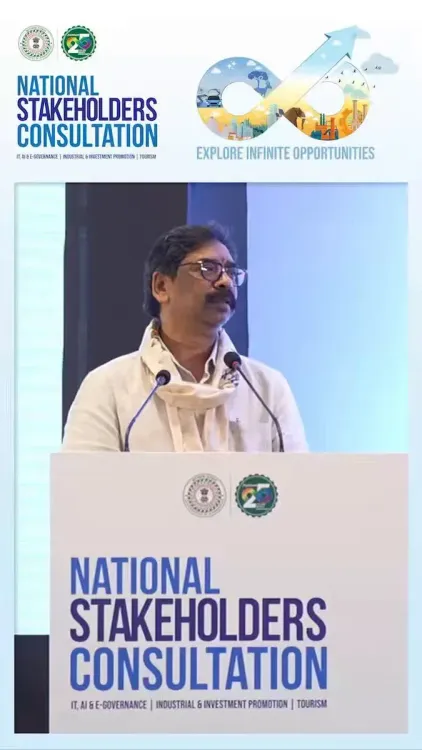
Jharkhand Chief Minister Hemant Soren on Wednesday, 8 July 2026 asserted that India's industrial growth cannot be complete without the contribution of Jharkhand, in a post shared by the Chief Minister's Office of Jharkhand on X. The statement underscores the mineral-rich state's central role in powering the country's manufacturing and heavy-industry sectors.
Context
The post, in Hindi, quotes CM Soren directly: 'Desh ki industrial growth Jharkhand ke bina adhuri hai' ('The country's industrial growth is incomplete without Jharkhand'). The remark is a pointed assertion of the state's strategic economic importance at a time when India is aggressively pursuing manufacturing expansion and infrastructure build-out.
Jharkhand sits atop some of the country's most significant mineral deposits, including coal, iron ore, and bauxite — raw materials that directly feed India's steel, power, and construction industries. The state's output is embedded in national supply chains that support everything from power generation to automobile manufacturing.
Policy Backdrop
The state has historically sought to convert its natural resource wealth into broader industrial development. The Jharkhand Industrial Policy 2016 was a foundational effort to attract investment in mineral-based industries and diversified manufacturing, setting the stage for subsequent investor outreach and infrastructure proposals.
CM Soren, who leads the Jharkhand Mukti Morcha (JMM) — the ruling regional party with a strong focus on tribal welfare and resource-based development — has consistently positioned Jharkhand as an indispensable partner in India's growth story rather than merely a supplier of raw materials. This framing is a deliberate political and economic argument for greater central investment and a larger revenue share from mineral extraction.
Stakeholders and Impact
The state's mining and heavy-industry ecosystem directly affects a wide range of stakeholders: mining companies, steel and power producers, domestic and foreign investors, and the large tribal and working-class communities whose livelihoods depend on industrial activity. Jharkhand, alongside Odisha and Chhattisgarh, forms a critical mineral belt that underpins India's ambitions in steel production and infrastructure development.
For investors, the Chief Minister's assertion signals the state government's intent to remain a proactive and assertive player in national industrial policy conversations — not a passive resource provider. The statement also carries weight for communities pushing for better royalties, employment, and environmental safeguards tied to industrial expansion.
What's Next
Observers will watch for concrete follow-through in the form of a Jharkhand investment summit, state budget allocations for new industrial corridors, or fresh announcements on mining lease policy. The Chief Minister's framing of Jharkhand as indispensable to national growth is likely to inform the state's negotiating position with the central government on mineral royalties and infrastructure funding in the months ahead.
Point of View
Central investment, and industrial infrastructure funding. The statement fits a broader pattern among mineral-belt states seeking to convert resource wealth into political and fiscal bargaining power within India's federal structure. Whether it translates into concrete policy gains will depend on follow-up at the Centre and the next investment cycle.
NationPress
8 Jul 2026
Frequently Asked Questions
What did Jharkhand CM Hemant Soren say about India's industrial growth?
CM Hemant Soren stated that India's industrial growth is incomplete without Jharkhand, highlighting the state's critical role as a supplier of coal, iron ore, and bauxite for the country's steel, power, and manufacturing sectors.
Why is Jharkhand important for India's industry?
Jharkhand holds some of India's largest reserves of coal, iron ore, and bauxite, which are essential raw materials for the steel, power generation, and construction industries that drive national economic growth.
What is the Jharkhand Industrial Policy?
The Jharkhand Industrial Policy 2016 was introduced to attract investment in mineral-based industries and diversified manufacturing within the state, forming the policy foundation for subsequent industrial development efforts.
Who is Hemant Soren?
Hemant Soren is the Chief Minister of Jharkhand and the national president of the Jharkhand Mukti Morcha (JMM), a regional party focused on tribal welfare and resource-based development in the state.
Which states form India's critical mineral belt?
Jharkhand, Odisha, and Chhattisgarh together constitute India's primary mineral belt, supplying the raw materials that underpin the country's steel production, power generation, and infrastructure targets.