CBSE Class 12 Gulf students results: Centre tells SC policy in works
Synopsis
Thousands of CBSE Class 12 private students in the Gulf have been left without results since March 2026, when exams across seven West Asian countries were cancelled due to the regional conflict. The Centre has now told the Supreme Court a dedicated policy is coming — but with college admission deadlines looming, the clock is running out for students like petitioner Pransu Jigarkumar Patel.
Key Takeaways
The Central government told the Supreme Court on 12 June that a policy to declare CBSE Class 12 results for Gulf-based private students is being formulated.
Solicitor General Tushar Mehta sought an adjournment to 22 June for the government to finalise the framework.
CBSE cancelled Class 12 exams in Bahrain, Iran, Kuwait, Oman, Qatar, Saudi Arabia , and the UAE for the period 16 March–10 April 2026 .
Nationally, nearly 1.86 million students were enrolled for Class 12 boards; Gulf-based private candidates remain a subset without declared results.
Student Pransu Jigarkumar Patel from Saudi Arabia filed a writ petition under Article 32 , arguing the result freeze has blocked his higher education admissions.
A bench of Justice Manmohan and Justice Vijay Bishnoi is hearing the case; next date is 22 June .
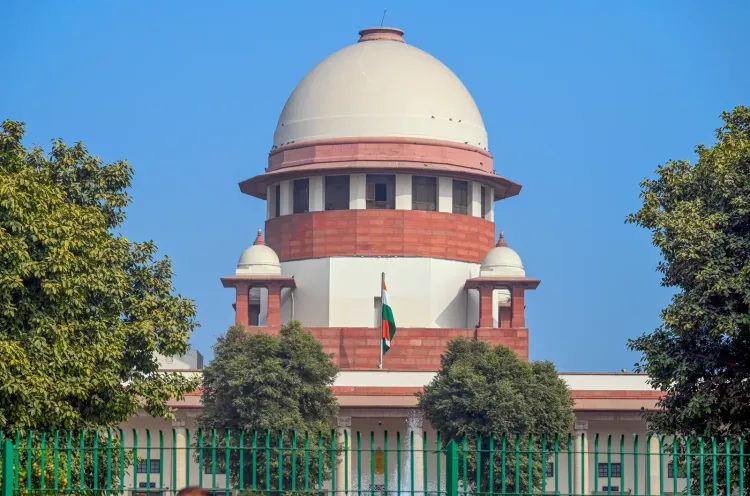
The Central government informed the Supreme Court on Friday, 12 June that a policy is being formulated to declare the Class 12 results of CBSE private students in the Gulf region whose examinations were cancelled due to the West Asia conflict. The disclosure came during a hearing on a petition filed by affected students seeking result declarations withheld since early 2026.
Government Seeks Time, Promises Policy
Solicitor General Tushar Mehta urged the bench to adjourn the matter to 22 June, stating that the government is actively examining concerns raised in the students' petition. He confirmed that a dedicated policy for CBSE private candidates in West Asia will be introduced shortly, and that the government is also considering a broader framework for students affected by similar conflict-related disruptions in the future.
How the Exam Cancellations Unfolded
In March 2026, the Central Board of Secondary Education (CBSE) cancelled Class 12 board examinations for students enrolled in schools across Bahrain, Iran, Kuwait, Oman, Qatar, Saudi Arabia, and the United Arab Emirates. The decision was formalised in the board's sixth circular since 1 March, which clarified that even previously postponed papers stood cancelled. According to the circular dated 15 March, the cancellations covered exams scheduled between 16 March and 10 April 2026.
Scale of the Crisis
Nationally, more than 4.37 million students had registered for CBSE board examinations this year. Of these, approximately 2.51 million appeared for Class 10 exams, while nearly 1.86 million candidates were enrolled for Class 12 boards. The Gulf-based cohort represents a subset whose results remain in limbo, distinct from the domestic student population whose results have since been processed.
The Patel Case: A Flashpoint
On 8 June, the apex court issued notice to the CBSE and its Regional Officer in Dubai, United Arab Emirates, on a plea filed by Class 12 student Pransu Jigarkumar Patel from Saudi Arabia. Patel's writ petition, filed under Article 32 of the Constitution, contended that the non-declaration of his result had jeopardised his higher education prospects and deprived him of admission opportunities. A bench of Justice Manmohan and Justice Vijay Bishnoi is hearing the matter.
During a previous hearing, counsel for the CBSE told the court that assessment of private candidates such as Patel could not be completed because no school-level assessment records existed for them — a structural gap the proposed policy is expected to address.
What Comes Next
The Supreme Court is expected to take up the matter again on 22 June, by which point the government has indicated a policy outline should be ready. Until then, the results of an unknown number of CBSE private candidates across the Gulf remain undeclared, with admission deadlines for higher education institutions potentially narrowing their options with each passing week.
Point of View
But the timeline is uncomfortably tight. College admission windows in India and abroad do not pause for court schedules, and every week without a result is a week a student cannot apply. The structural flaw exposed here — that CBSE's special assessment scheme was designed for school-enrolled students and left private candidates entirely unaddressed — was foreseeable the moment exams were cancelled in March. That it took a Supreme Court petition to surface this gap, three months later, raises questions about the board's own student-impact assessment process. The 22 June hearing will be the real test of whether the Centre has a concrete plan or is still buying time.
NationPress
29 Jul 2026
Frequently Asked Questions
Why have CBSE Class 12 results not been declared for Gulf students?
CBSE cancelled Class 12 board examinations across seven West Asian countries — Bahrain, Iran, Kuwait, Oman, Qatar, Saudi Arabia, and the UAE — between 16 March and 10 April 2026 due to the ongoing regional conflict. Without completed exams, results could not be processed, and a special assessment scheme framed for affected students did not cover private candidates who had no school-level records.
What did the Centre tell the Supreme Court on 12 June?
Solicitor General Tushar Mehta informed the Supreme Court that the government is formulating a dedicated policy to declare results for CBSE private students in the Gulf region. He sought an adjournment to 22 June, indicating the policy framework is still being finalised.
Who is Pransu Jigarkumar Patel and why is his case significant?
Pransu Jigarkumar Patel is a Class 12 student from Saudi Arabia who filed a writ petition under Article 32 of the Constitution, arguing that the non-declaration of his CBSE result has blocked his higher education admissions. His case highlighted a gap in the CBSE's assessment scheme, which applied only to school-enrolled students and not private candidates.
When will the Supreme Court next hear the CBSE Gulf students case?
The Supreme Court is scheduled to hear the matter again on 22 June, by which date the Central government has indicated it will present a policy outline for declaring results of affected private candidates.
How many students are affected by the CBSE exam cancellations in West Asia?
While the exact number of Gulf-based private candidates without results has not been officially disclosed, the broader context involves nearly 1.86 million students enrolled nationally for CBSE Class 12 boards in 2026. The Gulf cohort is a subset whose exams were cancelled across seven countries due to the West Asia conflict.