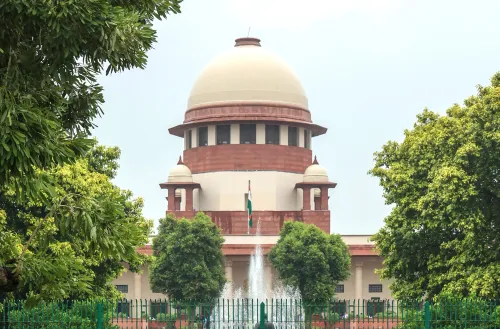
Supreme Court mandates 4-year third-party cover for new cars, 6 years for two-wheelers
Synopsis
India's Supreme Court has gone beyond regulator advice — overruling both the IRDAI and General Insurance Council — to extend mandatory third-party cover for new vehicles by a full year. With 56 per cent of vehicles on Indian roads uninsured, the bench is now tying enforcement to ANPR cameras, police apps, and even petrol pump access. This is the most sweeping motor insurance reform in nearly a decade.
Key Takeaways
The Supreme Court on 4 August mandated four years of third-party insurance for new cars and six years for new two-wheelers at the time of purchase.
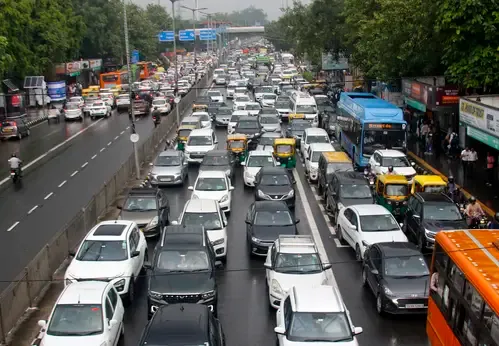
Nearly 56 per cent of vehicles on Indian roads are currently uninsured, according to the court's order.
The IRDAI and General Insurance Council had opposed the extension; the Supreme Court overruled both bodies.
A four-layer insurance structure — one mandatory, three optional — has been approved for private vehicles, with a mandatory customer option form for all buyers.
ANPR cameras will be integrated with the Insurance Information Bureau and VAHAN database to auto-detect uninsured vehicles and issue e-challans.
All stakeholders must file compliance affidavits by 14 August ; next hearing is on 18 August .
The Supreme Court on Tuesday, 4 August directed that mandatory third-party insurance for new vehicles be extended by one year, requiring four years of cover for new cars and six years for new two-wheelers at the time of purchase. The ruling, aimed at strengthening compliance with the Motor Vehicles Act (MVA) and improving road safety, came from a bench of Justice Sanjay Karol and Justice P.K. Mishra while disposing of an appeal filed by National Insurance Company Ltd.
Why the Court Acted
The bench noted that despite an earlier mandate — requiring three-year third-party cover for new cars and five-year cover for new two-wheelers — a large proportion of vehicles continue to operate without valid insurance. According to the court's order, nearly 56 per cent of vehicles on Indian roads remain uninsured, directly undermining the statutory purpose of compulsory insurance under the MVA.
'It is shocking to learn that nearly 56 per cent of vehicles plying on Indian roads remain uninsured,' the judgment stated, adding that accident victims and their families are frequently forced into prolonged litigation to secure compensation.
Overruling Regulator Recommendations
The Insurance Regulatory and Development Authority of India (IRDAI) and the General Insurance Council had, during proceedings, advised against extending the mandatory insurance tenure. They contended that longer-tenure policies would push up premiums and had not demonstrably reduced uninsured vehicle numbers. The Supreme Court disagreed, holding that the extension was warranted in the larger interest of road safety. The bench directed the IRDAI to immediately issue necessary directions to implement the order.
Four-Layer Insurance Structure Approved
In a significant structural reform, the apex court approved a four-layer insurance framework for private vehicles: a mandatory third-party policy; optional legal liability cover for occupants or pillion riders; optional personal accident cover for the owner-driver and passengers; and optional own-damage cover. Every customer purchasing motor insurance — whether offline or online — must be provided a mandatory 'customer option form' with a checkbox mechanism to opt for additional covers. The IRDAI has also been directed to formulate uniform policy wordings and mandate a consumer-friendly information sheet clearly distinguishing between mandatory and optional coverage.
Technology-Driven Enforcement Ordered
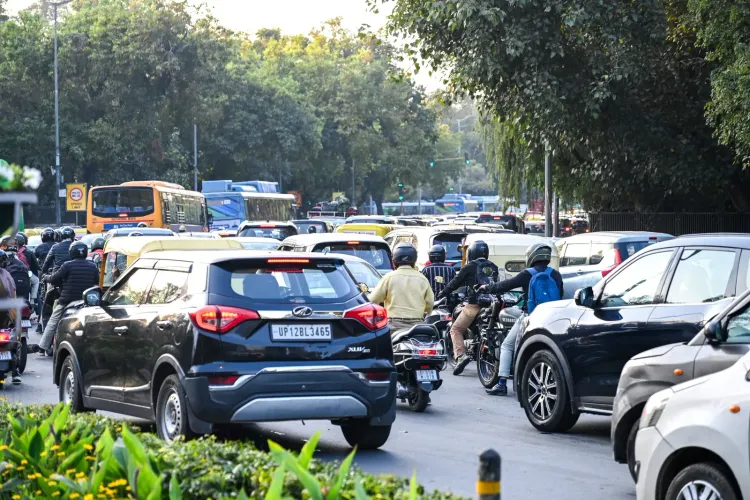
To curb uninsured vehicles, the court directed that Automatic Number Plate Recognition (ANPR) cameras be integrated with the Insurance Information Bureau and VAHAN database to automatically detect uninsured vehicles and issue e-challans. State police are to be equipped with handheld devices or mobile applications linked to insurance databases for real-time verification. The court further asked the IRDAI and the Ministry of Road Transport and Highways to explore pilot projects enabling citizens to verify vehicle insurance status, and to examine linking fuel supply at petrol pumps to valid insurance status.
Compliance Deadline and Next Hearing
The Supreme Court directed all stakeholders to file compliance affidavits by 14 August, with the matter listed for review on 18 August. On the specific facts of the case, the bench dismissed National Insurance Company Ltd.'s appeal against a Telangana High Court judgment that had awarded compensation to the legal heirs of a deceased vehicle owner, holding that a comprehensive insurance policy covered the owner travelling in his own vehicle as an occupant. The court cautioned that motor accident claim courts must not adopt a 'hyper-technical approach' in adjudicating such matters.
With enforcement mechanisms now being tied to digital infrastructure, the ruling marks a substantive shift from compliance-on-paper to compliance-in-practice — one that could reshape the motor insurance landscape for millions of new vehicle buyers.
Point of View
But it raises a pointed question: if eight years of a prior mandate left 56 per cent of vehicles uninsured, will adding one more year to the purchase-time cover actually move that number? The real innovation here is not the tenure extension but the enforcement architecture — ANPR integration, police apps, and the proposed petrol-pump linkage. If those mechanisms are implemented with fidelity, they could do more for compliance than any tenure tweak. The risk is that the technology directives become the next set of orders filed and forgotten.
NationPress
18 Sept 2026
Frequently Asked Questions
What has the Supreme Court ordered regarding third-party vehicle insurance?
The Supreme Court has directed that new cars must carry mandatory third-party insurance for four years and new two-wheelers for six years at the time of purchase — an increase of one year each over the previous requirement. The order was issued on 4 August by a bench of Justice Sanjay Karol and Justice P.K. Mishra.
Why did the Supreme Court extend the mandatory insurance period?
The court found that nearly 56 per cent of vehicles on Indian roads remain uninsured despite an existing mandate, leaving accident victims without recourse. It held that extending the insurance tenure was in the interest of road safety, overruling recommendations from the IRDAI and General Insurance Council against any extension.
What is the four-layer insurance structure approved by the Supreme Court?
The court approved a four-layer framework for private vehicles: a mandatory third-party policy, optional legal liability cover for occupants or pillion riders, optional personal accident cover for the owner-driver and passengers, and optional own-damage cover. Insurers must provide a consumer-friendly information sheet explaining the structure to every buyer.
How will the Supreme Court's order be enforced?
The court directed that ANPR cameras be integrated with the Insurance Information Bureau and VAHAN database to detect uninsured vehicles and issue e-challans automatically. State police will also be equipped with handheld devices or apps for real-time insurance verification. Linking fuel supply at petrol pumps to valid insurance status is being explored as an additional compliance mechanism.
When must stakeholders comply with the Supreme Court's directions?
All stakeholders have been directed to file compliance affidavits by 14 August. The Supreme Court has listed the matter for review of those affidavits on 18 August.