Giriraj Singh: PM E-DRIVE subsidy for e2Ws extended to FY28
Synopsis
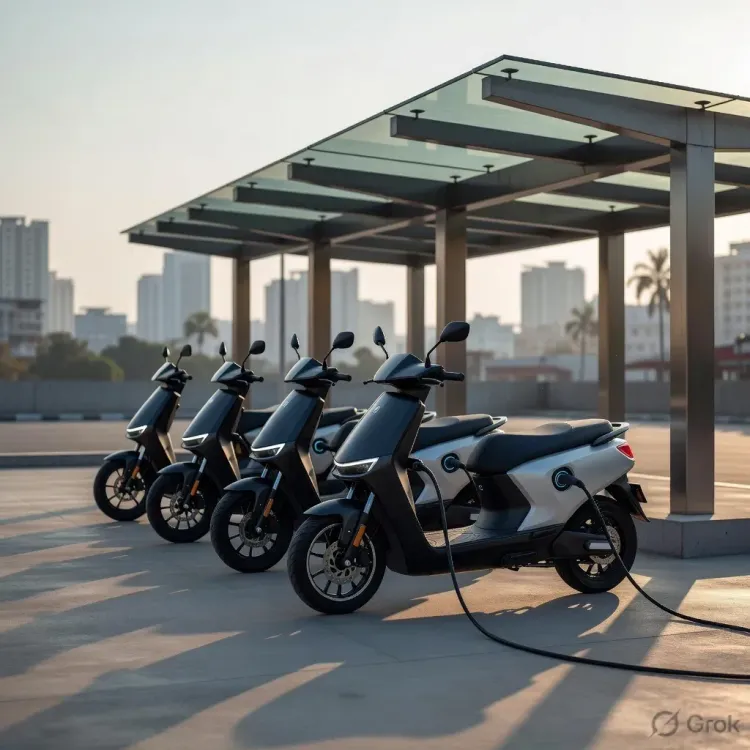
The central government has extended the PM E-DRIVE demand subsidy for electric two-wheelers to FY2028 and approved an additional ₹1,000 crore, deepening India's long-running policy push to accelerate EV adoption in the country's largest vehicle segment.
Key Takeaways
The PM E-DRIVE subsidy scheme for electric two-wheelers ( e2Ws ) has been extended to FY2028 .
The government has approved an additional ₹1,000 crore under the scheme.
Union Minister Giriraj Singh shared the announcement on 12 August 2026 via the NaMo App.
Electric two-wheelers are the largest segment of India's vehicle market and a consistent focus of central subsidy support.
The scheme follows the policy lineage of FAME-II , which ran from 2019 onward to incentivise EV adoption.
Disbursement progress and any guideline revisions in the next Union Budget will determine on-ground impact.
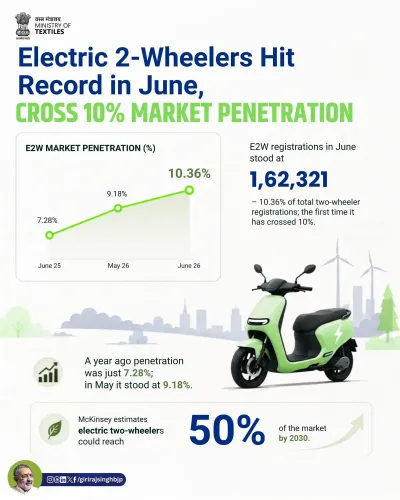
India's electric two-wheeler market just got a significant policy lifeline. Union Textiles Minister Giriraj Singh shared on Wednesday, 12 August 2026 that the central government has extended the PM E-DRIVE subsidy scheme for electric two-wheelers (e2Ws) through FY2028, with an additional allocation of ₹1,000 crore.
The post, shared via the NaMo App, announced: 'सरकार ने e2W के लिए PM E-DRIVE सब्सिडी को FY28 तक बढ़ाया, ₹1,000 करोड़ अतिरिक्त मंजूर' ('Government extends PM E-DRIVE subsidy for e2Ws to FY28, additional ₹1,000 crore approved').
Why electric two-wheelers are the frontline of India's EV push
Electric two-wheelers are not a niche segment — they are the backbone of India's vehicle market and the single largest category in the country's electric mobility transition. Millions of daily commuters, delivery workers, and small-business owners depend on two-wheelers. Making the electric switch affordable for this segment has a direct, outsized impact on fuel import bills and urban air quality. The PM E-DRIVE scheme provides demand-side incentives — essentially subsidies passed on to buyers at the point of purchase — to bridge the price gap between electric and petrol-powered two-wheelers. This approach follows the logic of its predecessor, the FAME-II scheme, which ran from 2019 onward and established the template of central subsidy support for EV adoption.What ₹1,000 crore more means for buyers and manufacturers
The fresh ₹1,000 crore allocation is not just a budget line — it is a demand signal. For EV manufacturers, an extended and funded subsidy window removes the uncertainty that typically causes production slowdowns and inventory hedging ahead of scheme deadlines. For buyers, it means continued price relief on electric two-wheeler purchases through FY2028. The extension also sends a message to the supply chain: tooling up for electric drivetrains, battery packs, and charging infrastructure now has a government-backed demand floor for at least two more years.India's long march away from fossil-fuel dependence
India has run successive central schemes — from FAME-I to FAME-II to PM E-DRIVE — each building on the last, each incrementally deepening the subsidy architecture and broadening the eligible vehicle categories. The pattern is deliberate: use public money to compress the cost curve until the market can sustain itself. The extension to FY28 suggests the government believes that point of market self-sufficiency has not yet arrived — and is willing to keep the bridge funded until it does. Disbursement rates under the scheme and any guideline revisions in the next Union Budget will be the real test of whether this allocation translates into vehicles on the road. Two thousand crore reasons, and counting, for India's electric future to arrive on two wheels.Point of View
000 crore injection reflects the government's acknowledgement that demand-side subsidies remain essential to sustain EV momentum — the market has not yet reached the cost parity that would allow subsidy withdrawal without a sales collapse. Coming in the context of India's broader energy security calculus, the move fits a decade-long pattern of successive EV schemes, each extending the runway rather than letting the sector stand alone. The political optics are also clear: electric two-wheelers touch the everyday economics of middle India, making this a visible, voter-legible intervention. The harder question — whether the supply chain, charging infrastructure, and battery ecosystem are maturing fast enough to justify winding down subsidies by FY29 — remains unanswered.
NationPress
27 Sept 2026
Frequently Asked Questions
What is the PM E-DRIVE scheme?
PM E-DRIVE is a central government scheme that provides demand-side subsidies and incentives to accelerate the adoption of electric vehicles in India, with a particular focus on electric two-wheelers.
How long has the PM E-DRIVE subsidy for electric two-wheelers been extended?
The government has extended the PM E-DRIVE subsidy for electric two-wheelers to FY2028 , as announced on 12 August 2026 .
How much additional money has been approved for PM E-DRIVE?
An additional ₹1,000 crore has been approved under the PM E-DRIVE scheme for electric two-wheelers.
What was the scheme before PM E-DRIVE for electric vehicles in India?
The predecessor scheme was FAME-II (Faster Adoption and Manufacturing of Electric Vehicles), which ran from 2019 onward and established the framework of central demand incentives for EV adoption.
Who benefits from the PM E-DRIVE electric two-wheeler subsidy?
The primary beneficiaries are electric two-wheeler buyers, who receive price relief at the point of purchase, and EV manufacturers, who gain a more stable demand environment due to the extended subsidy window.