Giriraj Singh: EV Bookings Doubled After PM Modi's Appeal
Synopsis
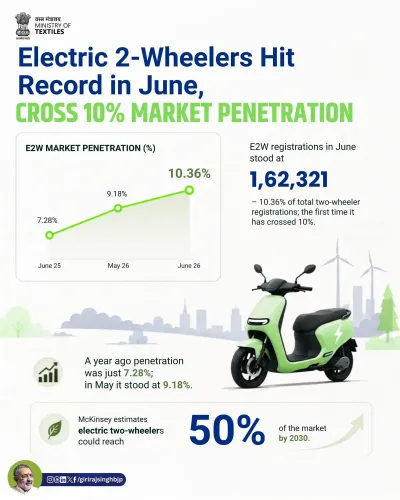
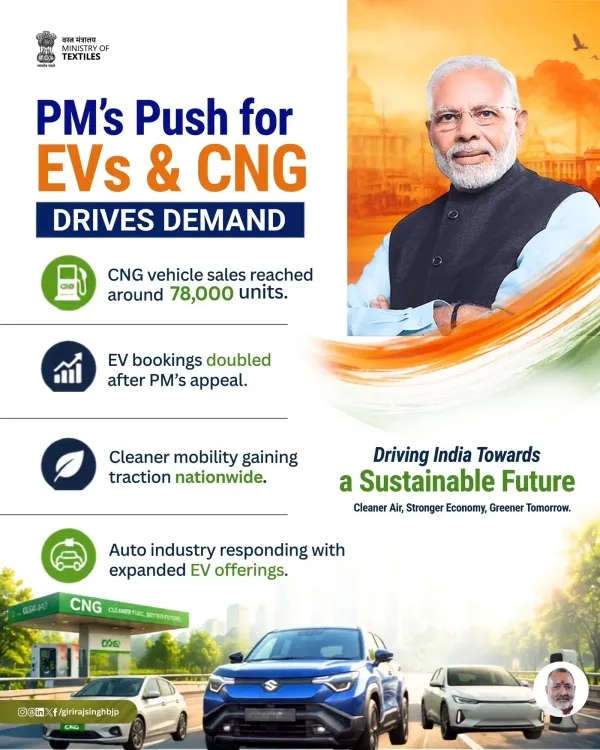
Union Textiles Minister Giriraj Singh credited PM Modi's public appeal for doubling EV bookings and pushing CNG vehicle sales to approximately 78,000 units, calling it fresh momentum for India's green mobility revolution under the BJP government.
Key Takeaways
EV bookings doubled following a public appeal by Prime Minister Narendra Modi , according to Union Textiles Minister Giriraj Singh .
CNG vehicle sales reached approximately 78,000 units in the period referenced by Singh's post.
Singh attributed the surge to the BJP government's sustained encouragement of green mobility, framing it as a 'revolution.' India's clean vehicle policy traces back to the National Electric Mobility Mission Plan (2013) and the FAME India scheme (2015) .
The dual-track strategy promoting both EVs and CNG aims to cut oil imports, reduce urban pollution, and support India's 2070 net-zero goal.
Further revisions to EV subsidy norms and state-level CNG network expansion tenders are expected in upcoming policy cycles.
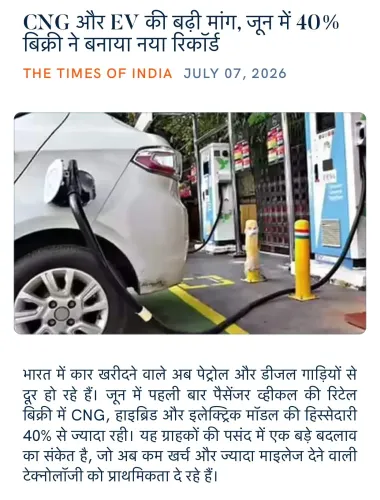
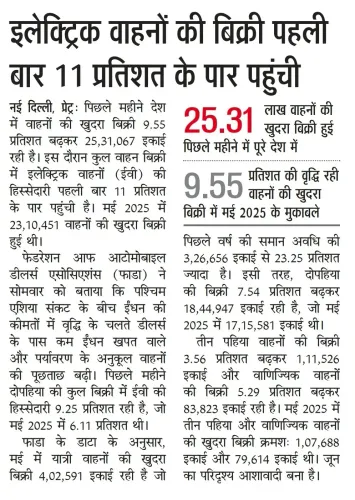
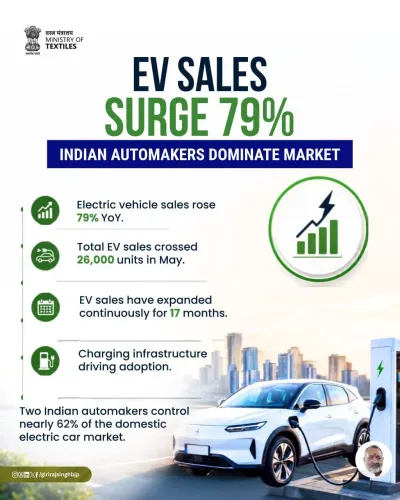
Union Textiles Minister Giriraj Singh on Monday, June 8, 2026, cited a surge in green mobility adoption across India, stating that electric vehicle bookings doubled and compressed natural gas vehicle sales reached approximately 78,000 units following a public appeal by Prime Minister Narendra Modi.
In his post on X, Singh wrote: 'माननीय प्रधानमंत्री श्री नरेन्द्र मोदी जी की अपील के बाद ईवी बुकिंग्स दोगुनी हो गई और सीएनजी वाहनों की बिक्री लगभग 78,000 यूनिट्स तक पहुंच गई' ['After the appeal of honourable Prime Minister Shri Narendra Modi ji, EV bookings doubled and CNG vehicle sales reached approximately 78,000 units']. He added that the BJP government's sustained encouragement has given fresh momentum to a 'green mobility revolution' in the country.
Context
Prime Minister Modi has repeatedly made public appeals urging Indian citizens to shift toward cleaner modes of transport, framing the transition as both an environmental and economic imperative. Singh's post positions the latest sales figures as a direct response to that outreach, attributing the uptick to the Prime Minister's personal intervention rather than to subsidy cycles or market forces alone.
India has pursued a dual-track clean mobility strategy — promoting battery electric vehicles alongside CNG — to reduce dependence on crude oil imports, curb urban air pollution, and work toward its 2070 net-zero commitment. The government has consistently bundled this push under the Make in India umbrella.
Policy Backdrop
India's policy architecture for clean vehicles dates back to the National Electric Mobility Mission Plan of 2013, which set the foundational targets for electric and hybrid vehicle adoption. The FAME India (Faster Adoption and Manufacturing of Electric Vehicles) scheme, launched in 2015, provided demand-side incentives and manufacturing support; Phase I ran through 2019, and Phase II extended the subsidy framework through 2022.
Successive BJP-led governments have layered public communication campaigns on top of these fiscal instruments, using Prime Ministerial addresses and social media outreach to shape consumer sentiment. Singh's post is consistent with this pattern of attributing market outcomes to political leadership and governance messaging.
Stakeholders and Impact
Domestic EV manufacturers stand to benefit from any demand surge, as higher booking volumes can justify expanded production capacity and attract further investment in battery supply chains. CNG vehicle buyers, particularly in urban and peri-urban markets, gain from a growing refuelling network and relatively lower running costs compared with petrol or diesel alternatives.
For Bihar and other states where CNG infrastructure is still expanding, a national-level demand signal can accelerate state government decisions on city gas distribution tenders and public transport fleet upgrades. The figures cited by Singh, if sustained, would represent a meaningful acceleration in India's clean vehicle transition.
What's Next
Analysts tracking India's mobility sector will watch for further revisions to EV subsidy norms and new state-level CNG network expansion tenders in upcoming policy cycles. The government is also expected to outline the next phase of demand incentives as earlier FAME provisions have wound down.
Whether the momentum cited by Singh translates into sustained sales growth will depend on the pace of charging and refuelling infrastructure rollout, financing availability for first-time buyers, and the trajectory of global battery component prices — factors that public appeals alone cannot fully address.
Point of View
Referencing both EV and CNG in a single breath, reflects the government's careful balancing act between a full electric transition and the near-term realities of India's fuel infrastructure. Whether the figures hold up to independent scrutiny will determine whether this becomes a durable campaign talking point or a one-cycle data flash.
NationPress
26 Oct 2026
Frequently Asked Questions
Why did EV bookings double in India recently?
Union Textiles Minister Giriraj Singh attributed the doubling of EV bookings to a public appeal made by Prime Minister Narendra Modi encouraging citizens to adopt cleaner vehicles, though independent verification of the specific figures is pending.
What is the FAME India scheme for electric vehicles?
FAME India (Faster Adoption and Manufacturing of Electric Vehicles) is a central government scheme launched in 2015 that provides demand-side subsidies and manufacturing incentives to accelerate EV adoption; it ran in two phases through 2022.
How many CNG vehicles were sold after PM Modi's appeal?
According to Giriraj Singh's post on June 8, 2026, CNG vehicle sales reached approximately 78,000 units following PM Modi's appeal for green mobility adoption.
What is India's plan to promote green mobility?
India has pursued a dual-track strategy promoting both battery electric vehicles and CNG vehicles, backed by the FAME scheme, the National Electric Mobility Mission Plan, and public outreach campaigns, all tied to the country's 2070 net-zero target.
What role does Giriraj Singh play in India's EV policy?
Giriraj Singh is the Union Minister of Textiles and a senior BJP leader; while EVs fall outside his direct ministerial portfolio, he regularly amplifies the BJP government's policy achievements on social media as part of the party's broader communication strategy.